Book 2 - (1962 - 1984)
Here's what I traded it in for: a 1962 Oldsmobile F-85. Yes, in puke green...
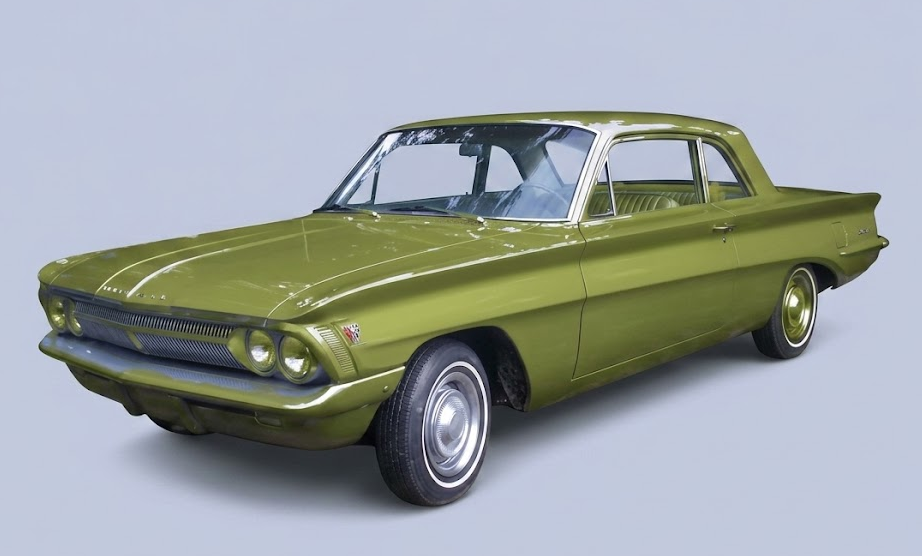
Forshadowing...
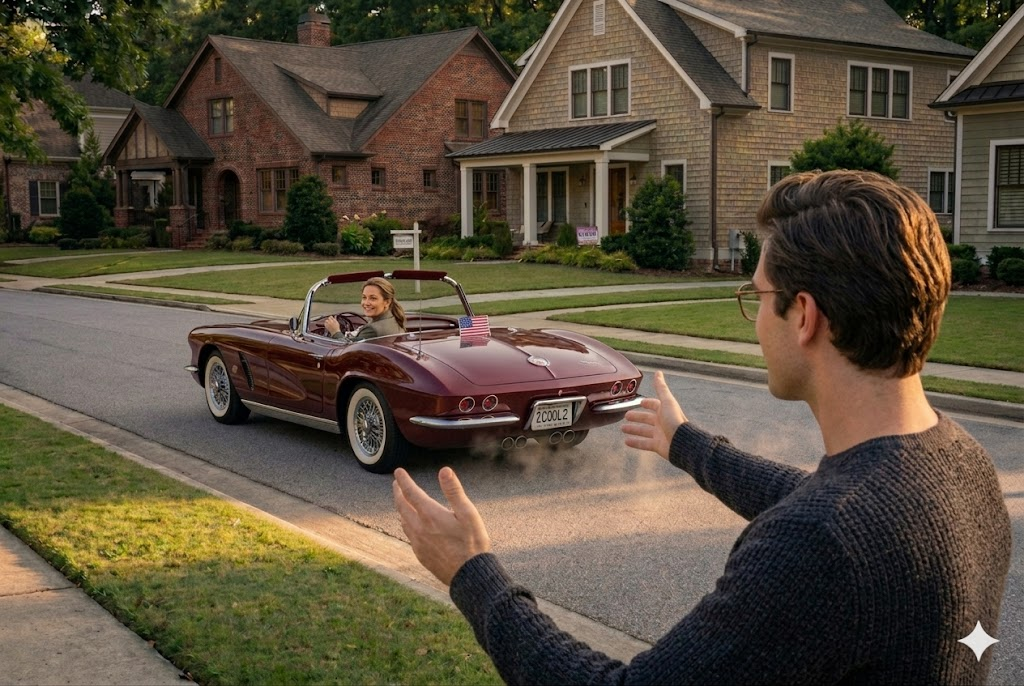
There's an old joke: "When my wife and I were first married we were very happy. But then, as we were leaving the church..."
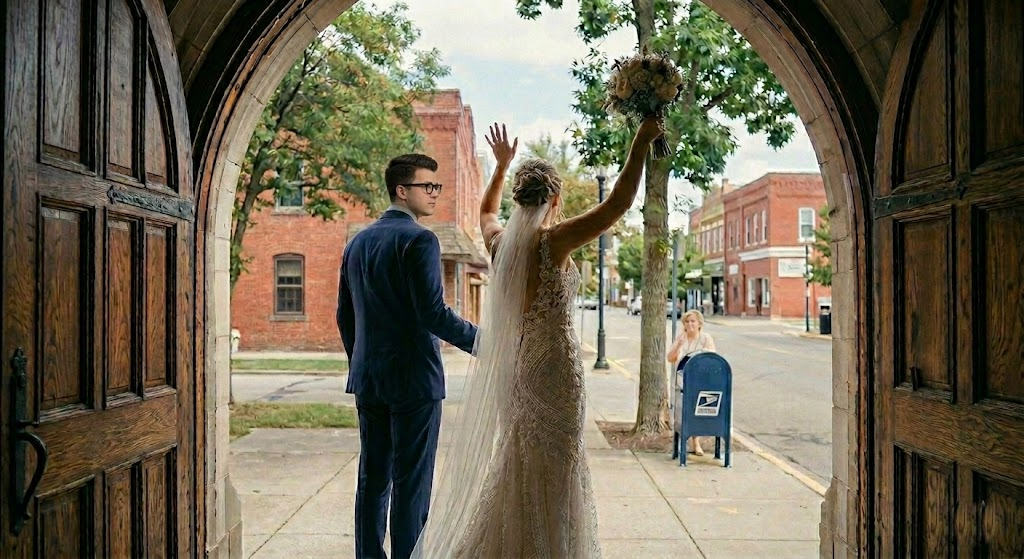
After the wedding ceremony, as we were coming down the steps outside the church, my new bride started waving both arms above her head vigorously:
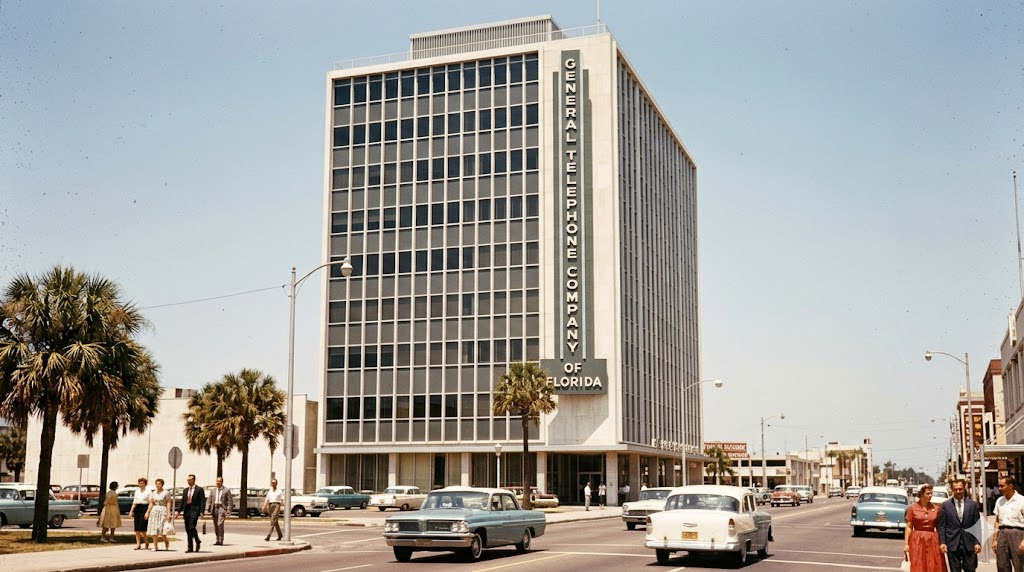
... had a 1401 system that was maxed out (every feature you could buy) for their customer billing application -- and it wasn't working. They were threatening to throw it out and install an RCA 301 system (a major competitor). In fact, RCA had installed their system across the hall (for free) and were working on the problem. This was going to be a "battle of the bands."
Losing this account would have been a very bad thing for IBM. They needed two experienced 1401 Systems Engineers in there in a hurry but they had budget constraints. The Tampa office didn't have anyone experienced enough. They had the bright idea of shifting us to Tampa ("on our way" to Atlanta) for three months to save the account. The reasoning was that they could get two-for-the-price-of-one since our expenses would be less than two unrelated people. And we were available as we were already sort of "in-transit".
They offered to pay full expenses (we could bank our salaries) and hold the Atlanta jobs open for the duration of the three-month project. We would put all our stuff in storage, drive down to Tampa for the summer and complete the move to Atlanta in September.
We'd only been married a month when all this happened. Off we went to Tampa.
We rented an apartment on Davis Island (in Tampa Bay):
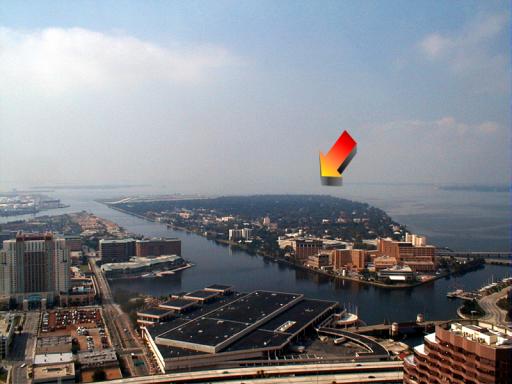
.. and went to work writing programs to handle the billing. It wasn't a difficult assignment per se, but the time pressure (win or lose by the end of August) made it stressful.
And then we found out that Babe was pregnant. We were going to have a child in March, 1963! As if we didn't have enough to think/worry about.
It was hotter than you-know-what in Tampa that summer and it rained every afternoon at precisely 5pm. The work was stressful and Babe wasn't herself for much of the time.
But..we saved the account.
Back to Atlanta!!
IBM, true to its word, completed our move to Atlanta. We got an apartment at 15 Habersham Road in Buckhead:
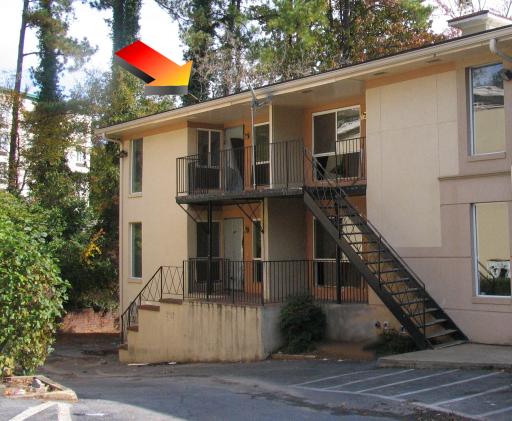
..where we met a compatible young couple in the apartment downstairs (Lana and Gwynn Jordan) and settled in to married life. Oh, and we got the "programmed-in-the-plan-for-life" barbecue grill.
Soon we started hunting for a house. (Remember the life-plan?) and found one priced at $19,900 that we thought we could afford payment-wise; it would be $136/month. But we didn't have the downpayment. I called my Dad and asked if we could borrow the $2,400 downpayment. He thought it was insane for people our age to own a home (while everyone else on the planet thought this was precisely the right thing for young folks to do).
I asked Dad if he minded if I called (rich) Uncle Dave. He said, "Do whatever you want".
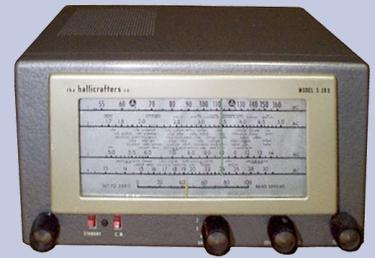
It didn't take three sentences in my call to (rich) Uncle Dave (he gave me my first ham radio receiver, remember?) before he asked, "Where do I send the check?". We made arrangements to pay him $100/month for 24 months; he wouldn't take interest.
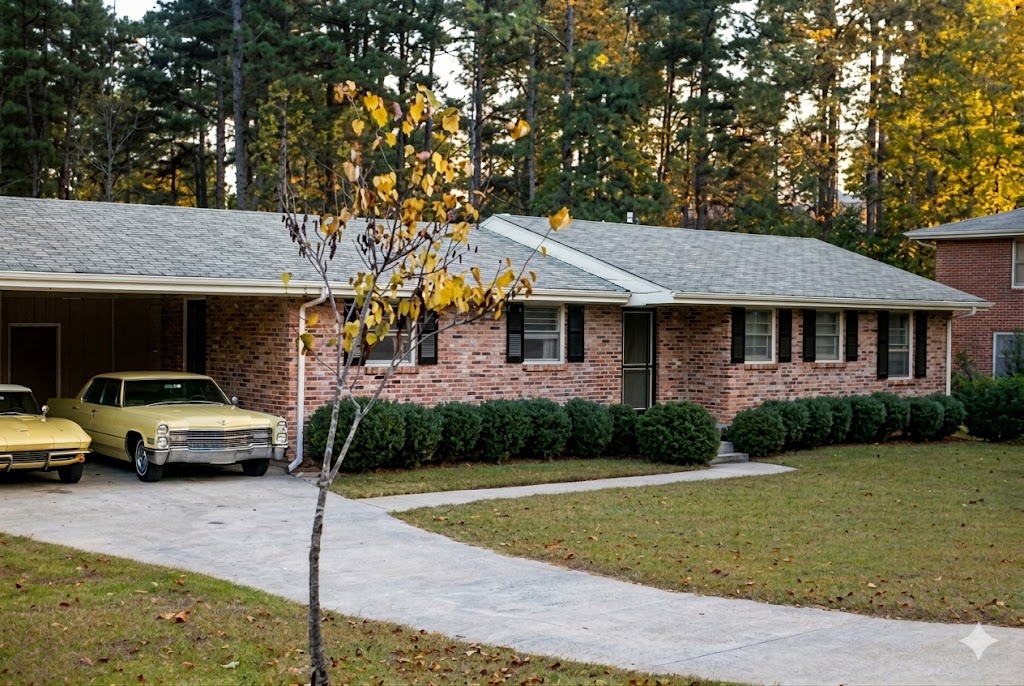
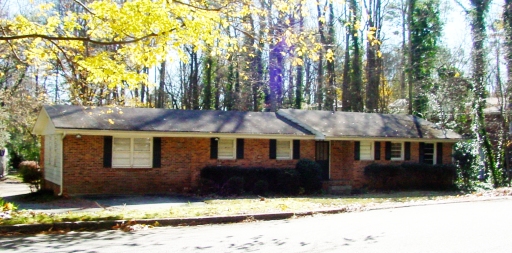
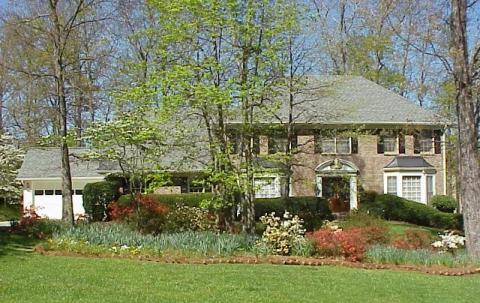
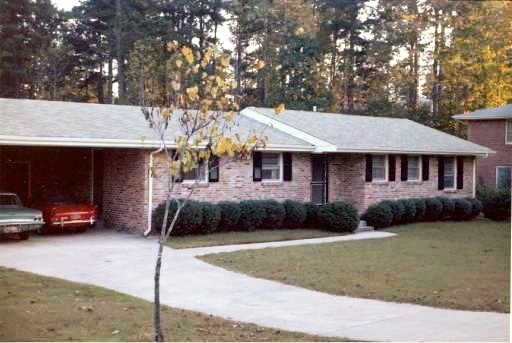
So we bought 535 Windsor Parkway:
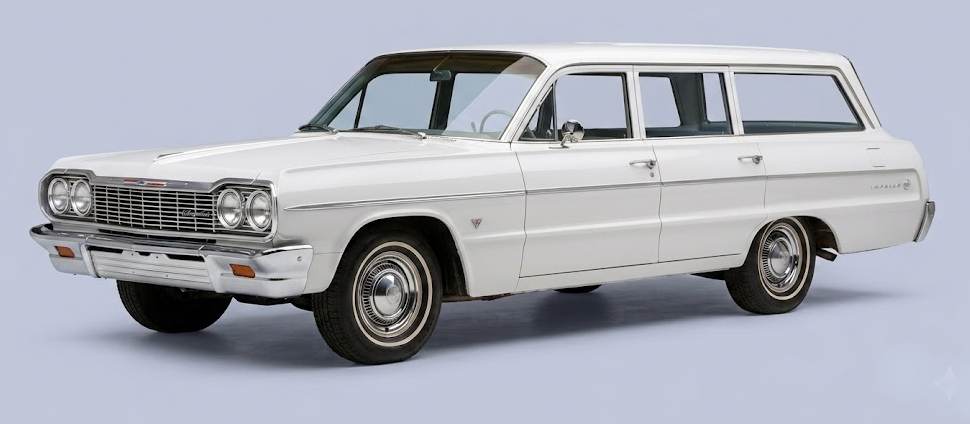
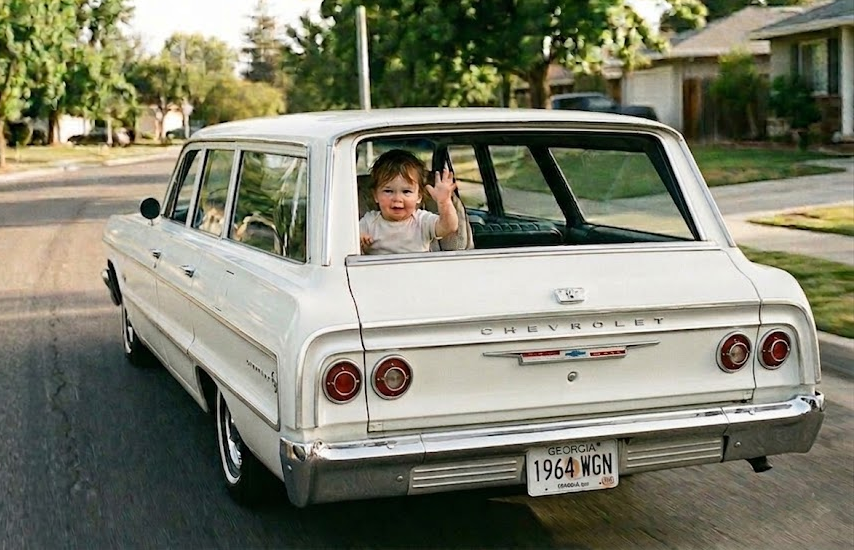
It was the first car I bought for which I had no passion whatever -- so naturally I made the best deal I ever made. It was white (looked a lot like a refrigerator, actually) with red vinyl interior. Now we have a 1964 Chevy wagon and a 1960 Sunbeam Alpine.
I went inside and cried for hours.
I was a wreck. Two-and-a-half years and kaboom! The first person in my family to ever be divorced. A failure at marriage, a bust at the "life-plan". I felt worthless. I called my folks and talked about it.
| |
An aside: THIRTY years later I found out that my Mother had been married and divorced before marrying Dad. I really resent now that when I was hurting she never told me; never said, "You'll get through it", never said "You're not the first to have this happen in the family". Nothing.
|
|
|
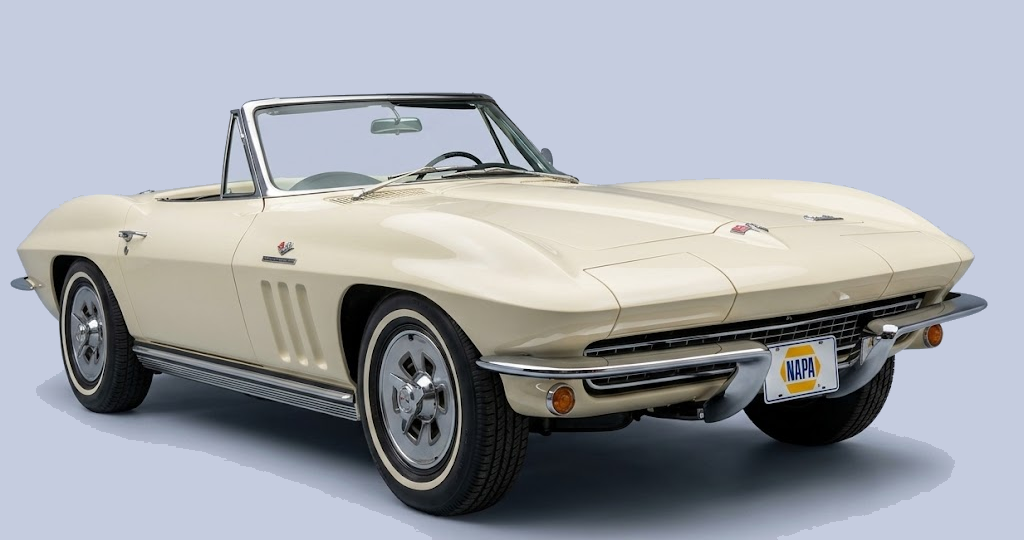
Notice the NAPA tag on the front; that'll become significant soon.
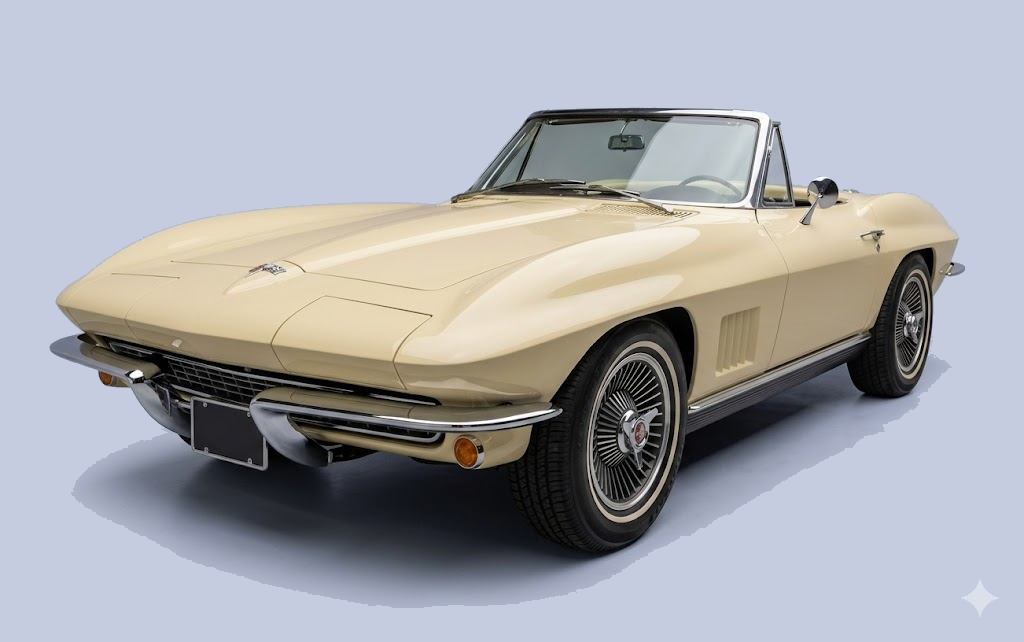
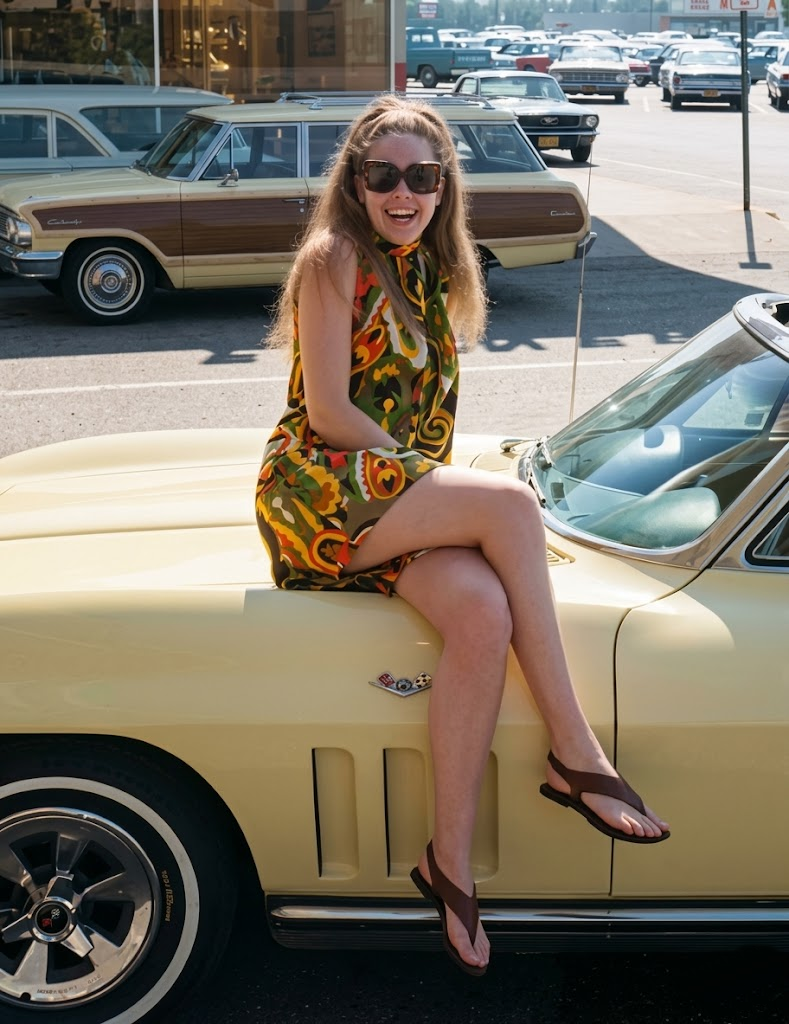
I was going to buy a white one, but the girl I was seeing at the time said "YELLOW!" I'm used to being told what to do by women, so yellow it was. I always get cheap at the end of the buying cycle so I ordered the car with "radio delete" figuring I'd hang a transistor radio from the mirror. Honestly.
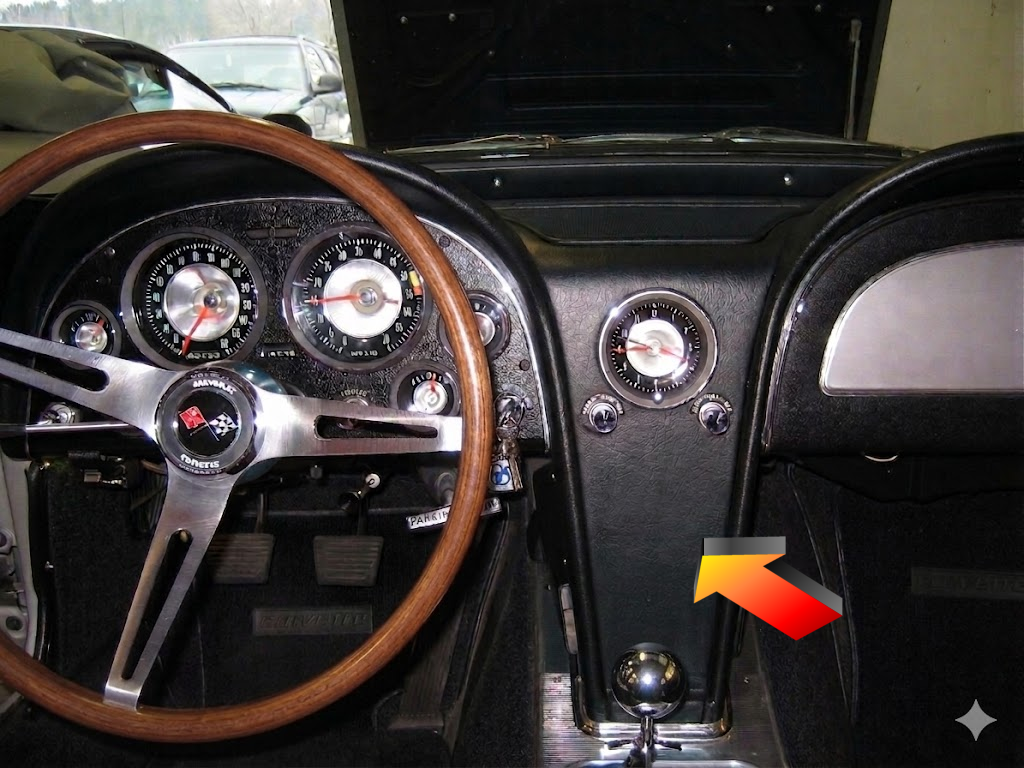

.. had only one computer installed in any of their locations in 1964 -- their warehouse in New York City. Genuine Parts was and is headquartered in Atlanta. The computer installation in New York was the responsibility of the IBM New York Distribution office -- but the 1401 installed there was really small potatoes to them -- but the first computer in Genuine Parts Company was a HUGE deal to the Atlanta IBM office.
Just like General Telephone in Tampa last year, this installation wasn't going well; and RCA had threatened to install across the hall (again). They were still stinging from getting whipped by us in Tampa.
Based on all this, Paul decided that it would be good for me to have a change of scene and good for IBM and Genuine Parts for me to go to NY for a few weeks and save the day.
I was to go to New York for six weeks (again on full expenses, banking my salary), live in a nearby hotel and work at Genuine Parts to save the IBM 1401 account. Meantime, I'd get a couple of fraternity brothers to move into the house, pay me enough to make the mortgage payment and leave the master bedroom for me to use when IBM flew me home every other weekend to see toddler daughter Debbie. Flying me home every two weeks to see my daughter was a non-negotiable part of the deal.
I was eager to do this (though I'd miss driving the new 'Vette). Fraternity brother Ken Lane and a friend of his named Phil moved into the house and I was off for New York.
I'd only been to NYC once or twice before and the prospect of living in Manhattan, the hub of the world, was pretty darned attractive! I booked myself at a weekly rate at the Holiday Inn at 57th street and Ninth Avenue:
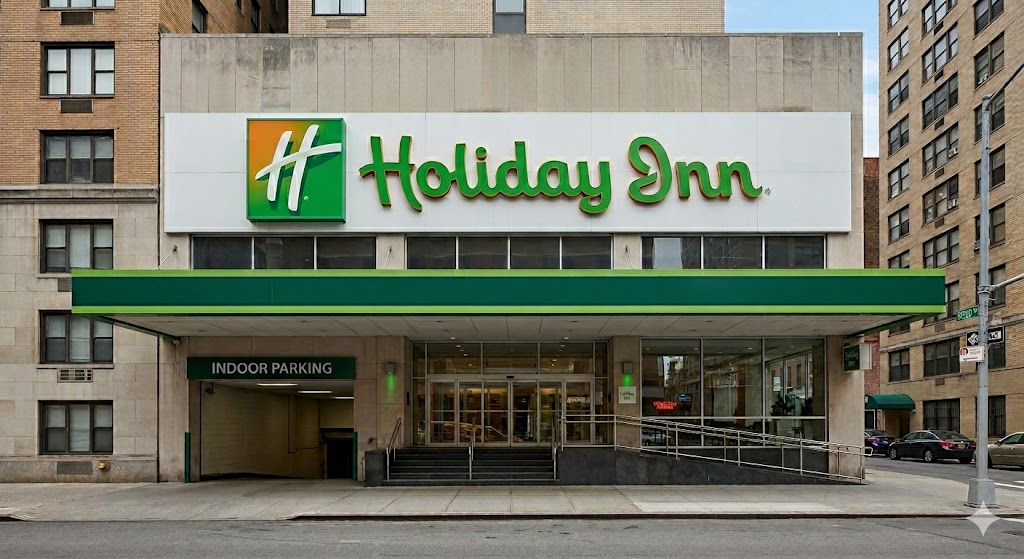
If you're unfamiliar with NYC, Ninth Avenue does not run through the optimum part of NYC. But the GP warehouse was at 59th and Tenth so it was only a short walk to work.
Living in a hotel ain't bad. Someone makes your bed every day, vacuums your room and, if you put your dirty clothes in a bag, they come back clean. A person could get used to that. And I did. The trips home to Atlanta to see Debbie every two weeks took care of my loneliness.
After all, it was only for six weeks -- riiiight...
1965
Six weeks?! Ten months later I was still there!
The project grew and grew and grew and.. I asked my bosses repeatedly to let me get an apartment instead of paying the hotel rates but everyone thought the project would be complete "any week now". Genuine Parts saw me as a free resource and kept moving the goal posts and adding work to the project.
Meanwhile, back in Atlanta, Ken had moved his girlfriend "Liz" (not her name):
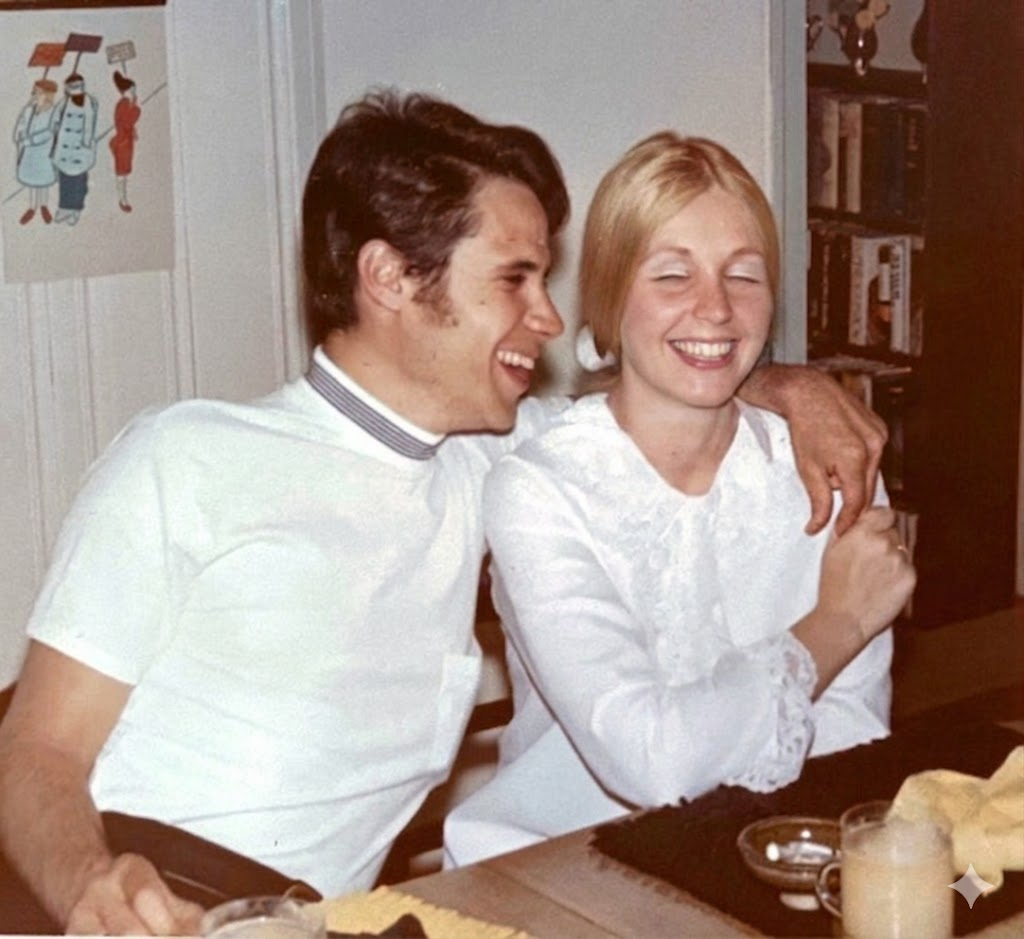 .. into the house. They shared a room (naturally) and, as sometimes happens, she found herself in a "family way". In 1965 there was no other choice but to marry. Their plans were complicated by family problems. Ken is Jewish, Liz is Catholic. As soon as her family heard about their plans they disowned her. The wedding, therefore, was to be in Baltimore where Ken's parents lived instead of Boston where Liz was from. He called me and asked me to be in the wedding. I agreed at once; Baltimore isn't far from New York City and I'd never been there.
...And then I met...
So one fine September Thursday I left work mid-afternoon and, in my Haspel khaki suit with my guitar gig bag on my back,...
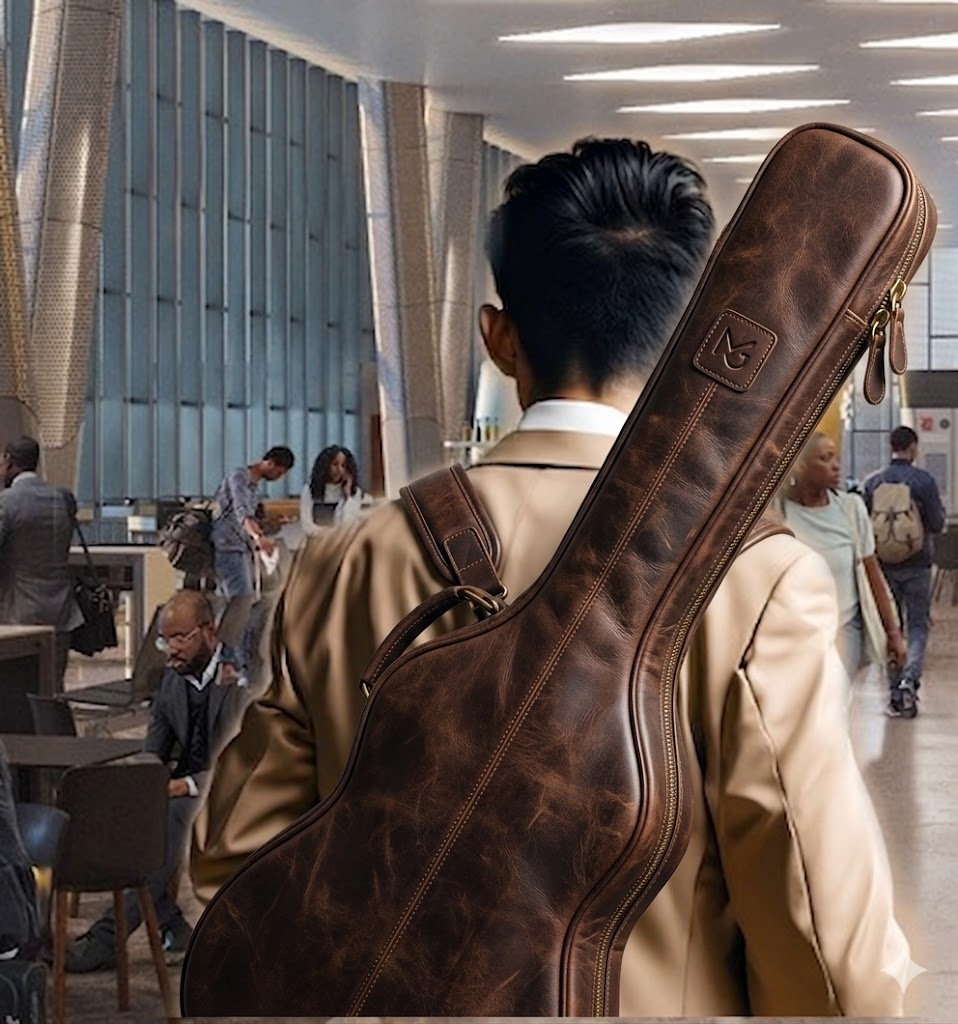 .. I took a Port Authority bus to Newark Airport to catch the shuttle to Baltimore. The shuttle was operated by Eastern Airlines (remember them?) and ran every couple of hours to Baltimore. The shuttle flights had their own check-in counter.
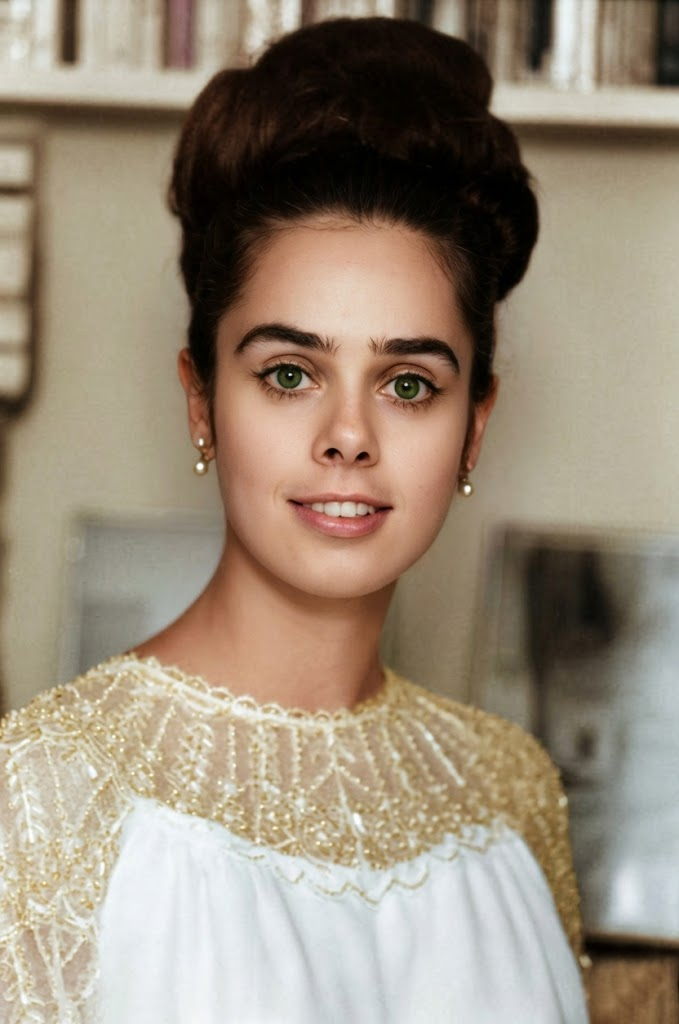
I walked up to the counter and asked the agent, "Which gate for the Baltimore shuttle?" I thought we'd made eye contact but he kept on walking. I turned to the really cute girl standing next to me and said something like, "Isn't it strange how sometimes you think you've made eye contact with someone and you're mistaken?" She looked at me, did a "nose in the air" sniff and turned away without a word. She was a looker, by the way: Long brown hair down her back, little white Coureges boots, short little grey and white striped dress.
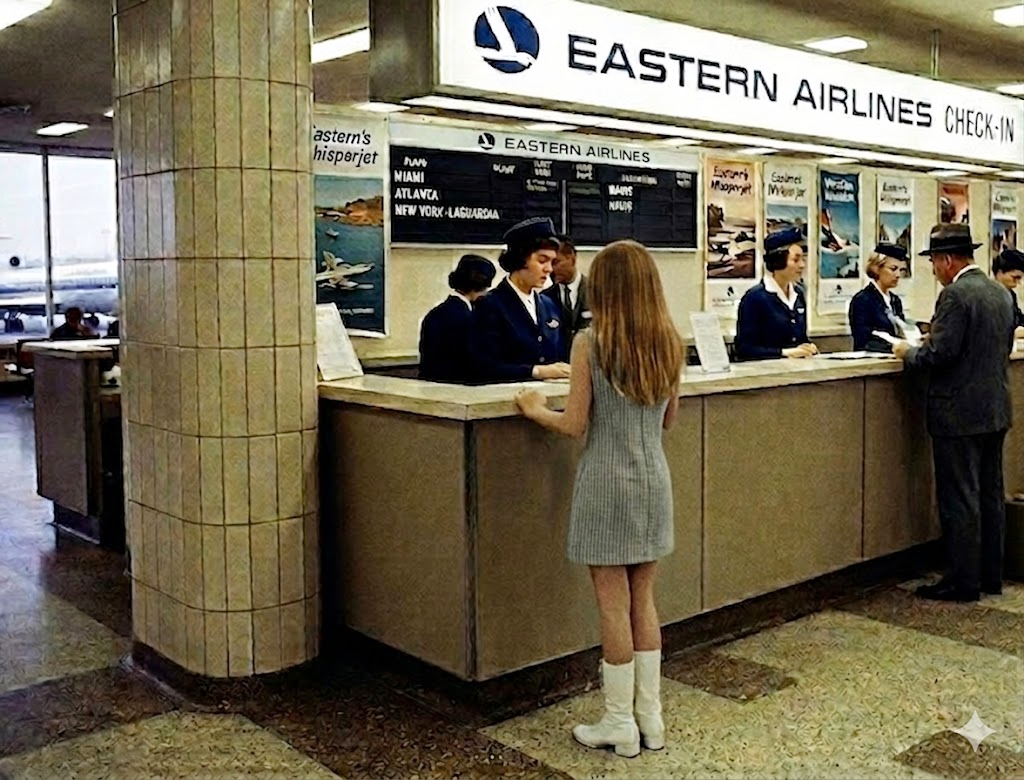
Note: When I used AI to generate the above image, Gael insisted that I make
her about nine years old to support her "claim" of being 15 years younger than I.
Anyway, the guy came back and I repeated my question and got my answer. As I turned to go,
The really cute girl said, "Have a nice trip."
I stopped and said, "Pardon me?"
She repeated, "I hope you have a nice trip."
I said, "Thanks! My name is Chaz Cone and I work for IBM. I've been married and divorced but I don't think one mistake should ruin one's life. Can I buy you a drink?"
She said, "I don't drink."
I said, "A cup of coffee?"
She said, "I don't drink coffee."
I said, "A Coca-Cola?"
She said, "You'll have to ask my Mother."
And, as if by magic (poof!), her mother appeared. She was fairly weighed down with clothes over both arms, including what looked like a ball gown. I went through my litany again and she agreed that I could, indeed, buy this doll a Coke.
We went into the coffee shop, talked for a while and I learned that her name was Gael and she was on her way to a football weekend at the University of North Carolina. I asked for her number, wrote it on the back of one of my business cards and put it in my pocket. I asked if she'd like to come to the gate to see me off. Her mother sat in a phone booth (laughing, I'm told) and Gael walked me to the gate.
On the plane, my seat was on the window on the right side. Newark had an observation deck back then and, when I looked out, there she was, waving merrily.
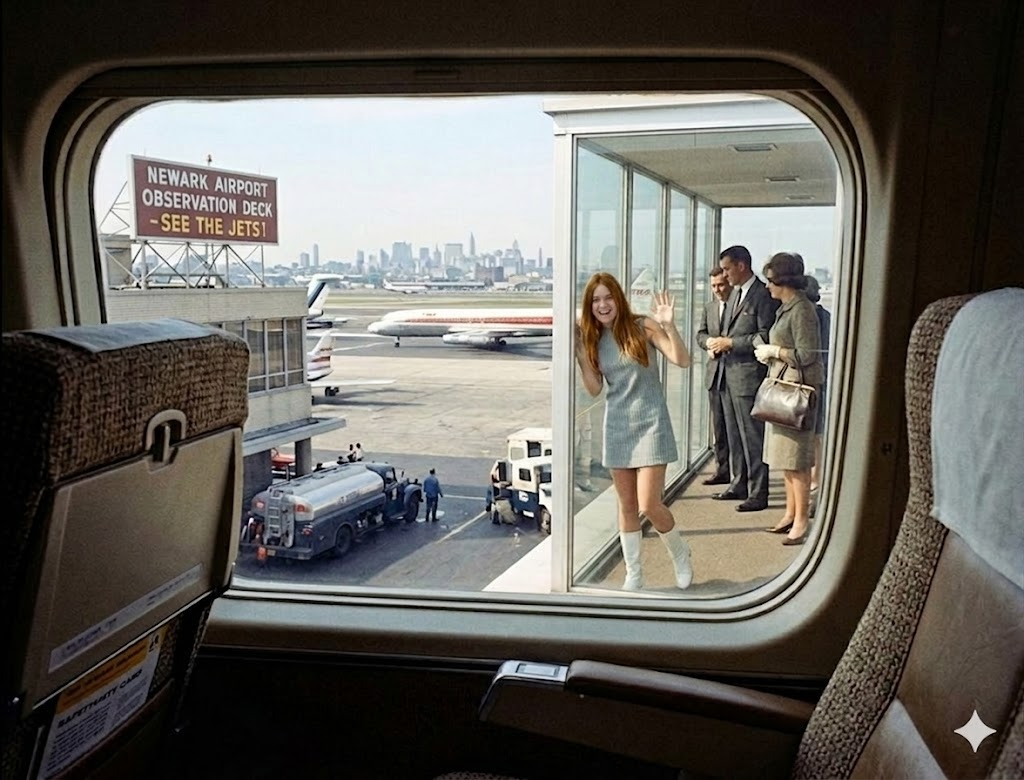 I pointed her out to my seatmate and told him I'd just met her and there she was waving at an airplane without any idea whether or not I could see her. Impressive.
When I got back from Ken and Liz' wedding, I found I'd misplaced the card with her number on it. And I'd given her no way to get in touch with me. It was four weeks before I found that card behind the hotel TV set where it had fallen. I called her and was invited out to New Jersey for the day. I got on a Port Authority bus, rode out Route 46 and spent the day with Gael and her Mom and Dad. I sewed up her Mom by playing the piano for her; mothers are suckers for that kind of thing!
And, wouldn't you know it, after ten months in New York and dating no one, two weeks after I met and visited Gael in NJ -- I got transferred back to Atlanta; the project was over. It ended successfully, by the way, and RCA slunk away again. They soon got out of the computer business and I like to think I had something to do with that.
1966
But I flew up to NYC frequently over the next year for Genuine Parts-related visits and (somehow  ) found the opportunity to see Gael. We had several favorite restaurants (all but one, gone now) where we'd spend time.
I was dating two other ladies in Atlanta at the same time as Gael in New York. All three knew about the others (I was nothing if not transparent...).
I had this idea of taking one of the Atlanta ladies and Gael to Miami Beach (serially). Jane was a co-worker and I'd helped her pick out a Mercedes. I asked her if I could borrow it to take Gael to Miami Beach for a few days stipulating that Jane would fly down the same day that Gael would fly home to New Jersey. Then, see, Jane and I would spend a few days in Miami Beach and then drive back to Atlanta together. Unbelievably, she agreed so I called Gael to set it up. She was all in favor!
So...
- Gael flies to Atlanta
- Gael and I drive Jane's Mercedes to Miami Beach
- Gael and I enjoy a few days in Miami Beach
- I take Gael to the airport and she flies home to NJ
- Jane flies to Miami arriving minutes after Gael departs
- Jane and I enjoy a few days in Miami Beach
- Jane and I drive her Mercedes back to Atlanta
Simple.
I know what you're thinking; this cannot work out well.
Well, you're wrong. Gael and I had a wonderful time and that little vacation cemented for me that she was "the one". We called this adventure "Doin' Miami on $5 a Day". We took all our meals at Fun Fair amusement spot on the 79th Street Causeway...
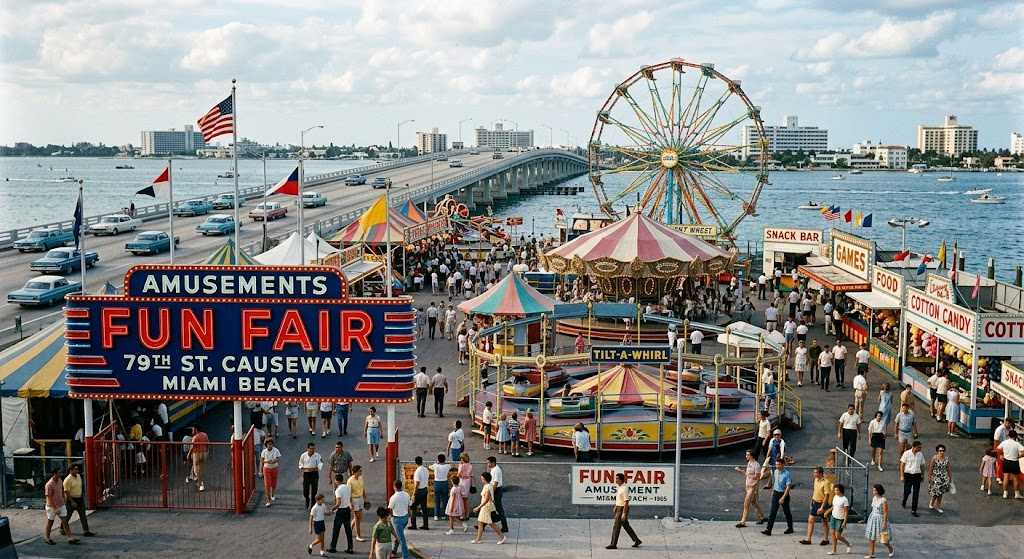
I attribute much of the fun memories that Gael and I had compared to Jane's subsequent attitude which wasn't all that great. The "Jane and I enjoy a few days..." line in the bullet above wasn't accurate. She'd told some girlfriends about the arrangement, thought about it all, and decided she'd been wrongfully used.
I pointed out that she had exactly the same opportunity as Gael did. The net outcome was that Jane was a poor comparison in attitude and performance to Gael (whom I knew now was the love of my life).
By the way, the hotel was the Sovereign Hotel:
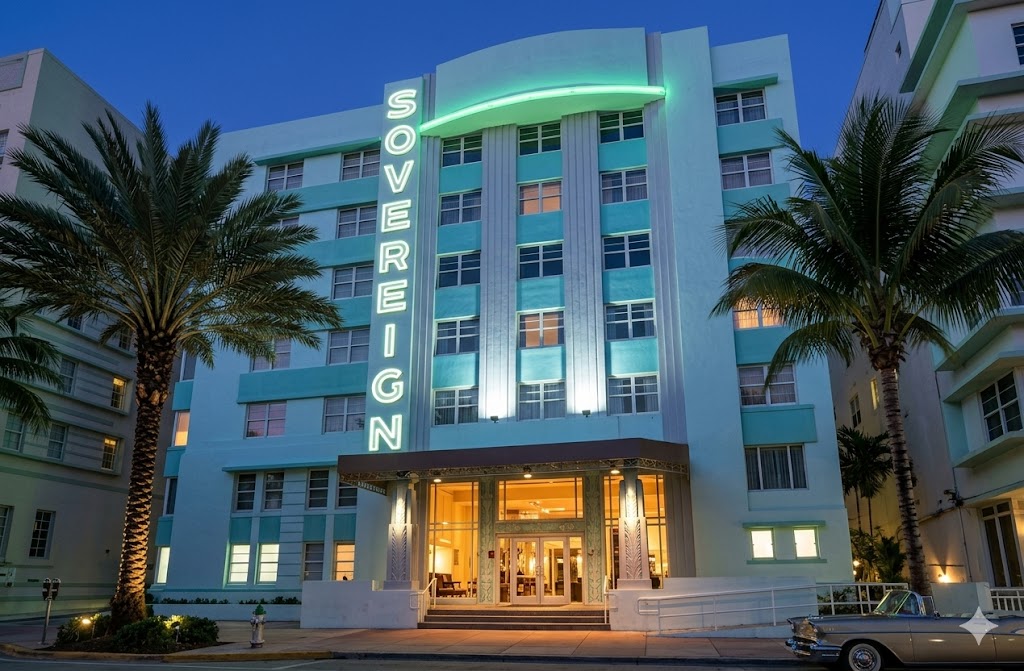
..which was located next door to the Fountainbleu. Oddly, their letterhead had the tag line "In the shadow of the Fountainbleu" which is strange advertising for a sun-filled vacation spot!
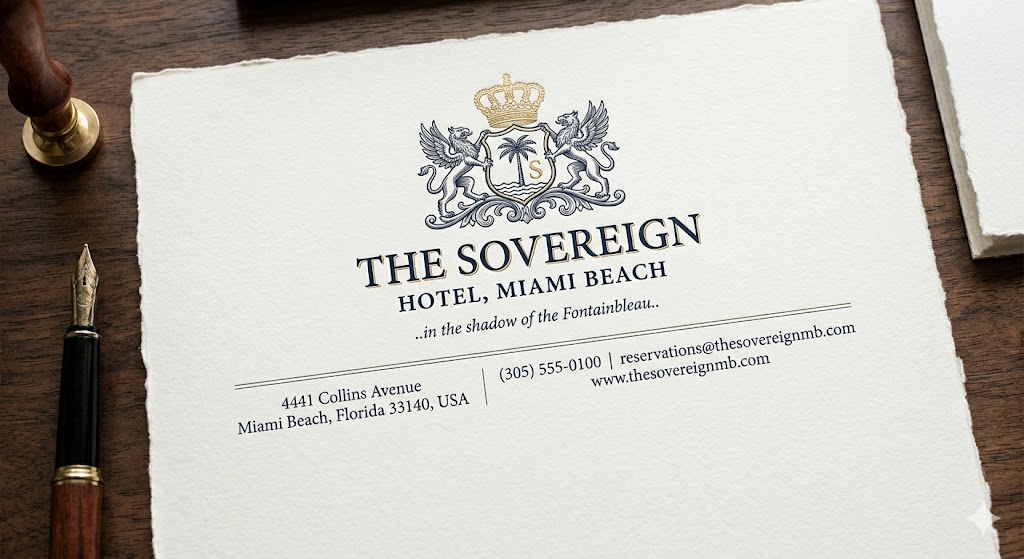
The drive home with Jane was definitely chilly (it wasn't the air-conditionng) and we never went out again.
About this time, Babe decided to move home from Atlanta to Columbia, SC. This meant that my visitations with Debbie were going to become very difficult. I consulted with my attorney and he advised me that this would be the opportunity to "cut the cord" and let Babe and Debbie get on with their lives. I would still be responsible for child support, of course, but if I stopped seeing her it would be easier for her when her mother inevitably met someone and built a new life.
I know now that this was miserable advice. Because of it, I lost touch with my daughter for nearly ten years. We did hook up again (I'll include that story later in 1973) and we're great friends now.
The Whiskey Business
One of Dad's distillery lines at F. Strauss & Sons was Schenley:

.. a distillery which had a broad range of products. Their CEO, a gentlemen named Louis S. Rosenstiel:
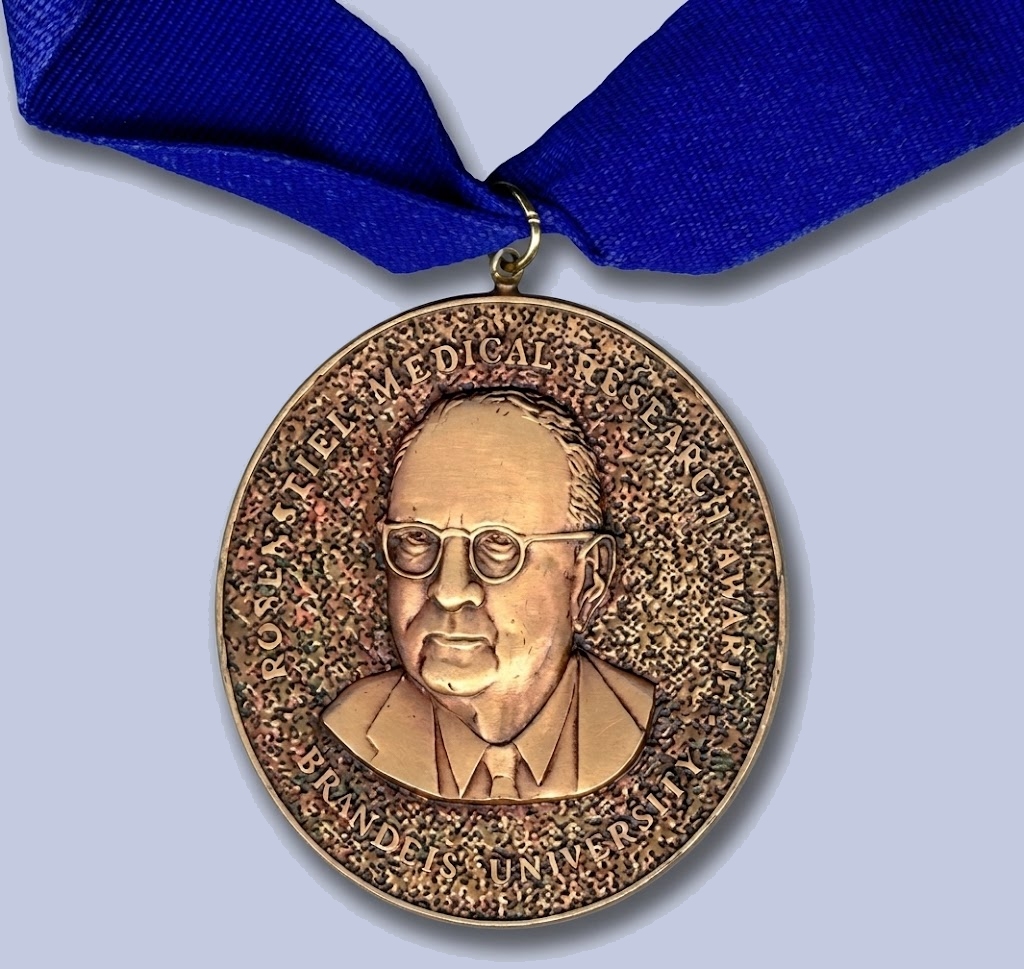
Mr. Rosenstiel sponsored an award to Brandeis University
.. had turned seventy-five a couple of years back but enjoyed the "75th celebration" thing so much that he had one annually. This was to be the "Third Annual 75th Birthday Celebration" at the New York Hilton. It was pretty much a command performance for Schenley distributors. Mom and Dad along with (rich) Uncle Dave and Aunt Dorothy were going to be there.
I'd pretty much decided that Gael was "the one". It was a hard call because I hadn't been really good at the marriage thing so far. I didn't think it was all my fault (frankly, I didn't think it was any my fault..) so I thought I might be ready to try again. I called Gael, told her my folks were coming and asked that she call the hotel and try to get together with them. You know, a kind of joint "show and tell".
My folks knew about Gael from letters and pictures but they'd never met. She called them, introduced herself, and made arrangements to go into the city and meet them for lunch.
Later that night she called me and said that lunch ran all afternoon and they insisted she join them for dinner as well. I called the folks and they went on and on and on about how wonderful she was. She clearly was a BIG hit!
That morning, in July of 1966 the US suffered a huge, crippling airline strike. Flights were being cancelled right and left. But I felt that now that the folks and Gael had met and they both had apparently passed muster with each other, I'd fly up and surprise the folks and go along with Gael to the Rosenstiel dinner. I asked Gael to rent me a tuxedo up there and I called (rich) Uncle Dave and asked that he get two more tickets to the dinner without telling my folks.
I called the airlines and they all just laughed at me...

"You want to fly to New York tomorrow?" Their advice was to come to the airport right now and see if I could get on something going somewhere. That's what I did.
I sat/slept at the airport for 36 hours before getting a flight to New York on noon the day of the dinner. Took a cab to the hotel, met Gael and my folks (they were surprised) and napped until time to go.
No expense was shared for this gala. The Lester Lanin Orchestra:
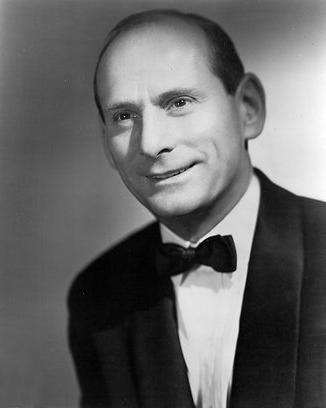
.. was hired and Lester himself was there to lead it. Not a big deal today, but in society bashes in 1966 - it was a big deal. While still outside the hotel, Gael and I were talking about the possibility of her moving to Atlanta, moving in with me and attending Georgia State to complete her degree. She asked, with a plan that signficant, "Doesn't love have anything to do with it?" I said, "Well, you love me, don'tcha?" She said she did. I said, "I guess that settles it then!" I'm a hopeless romantic.
In the ballroom, the tables were set for ten and the centerpiece featured a giant 3" plastic diamond ("75th" celebration, y'know).
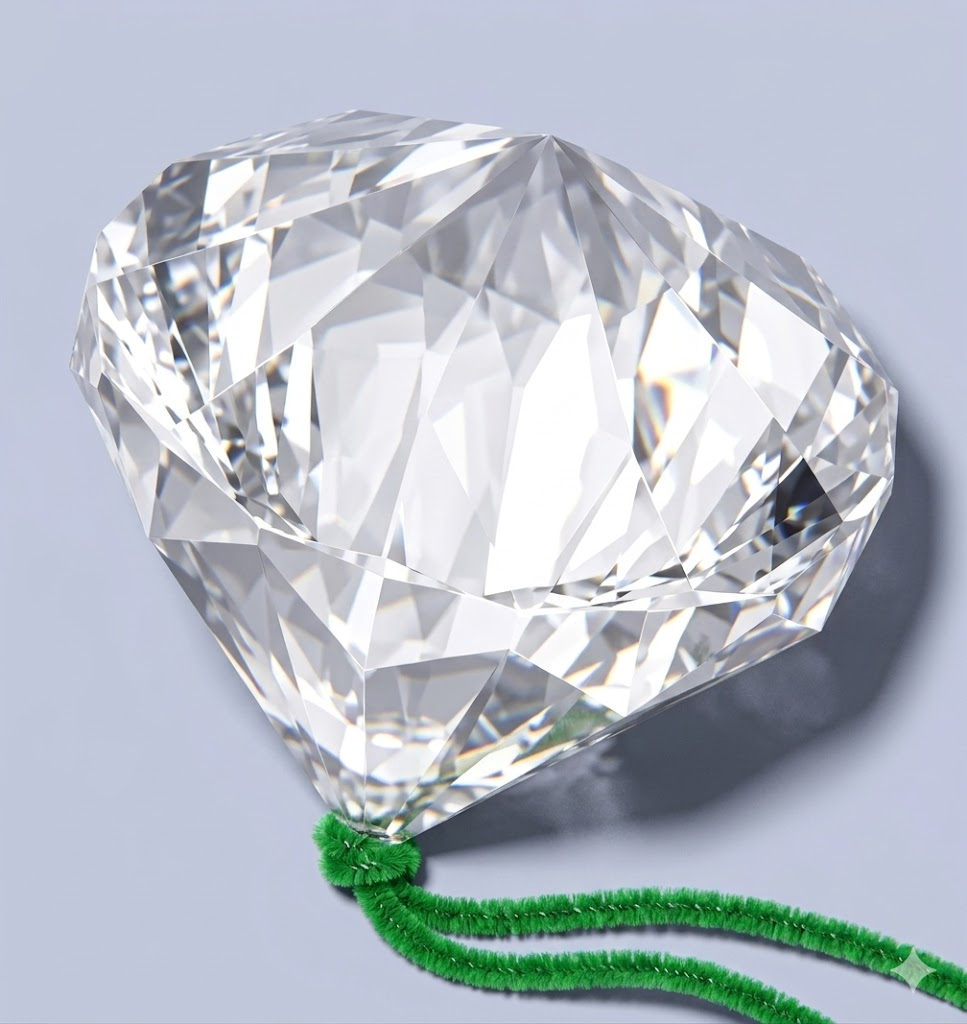
Sometime during the meal I removed the plastic diamond from the centerpiece (it was held in place by a pipecleaner). I offered her the big plastic diamond and asked if she'd marry me. I wrapped that green pipe cleaner around her finger and she had the biggest diamond in the room!
The word spread up and down the table until it got to my father. He was pretty much in his cups and Mother had to tell him what was going on a couple of times. He called Gael over and told her not to hurt me. I liked that. And, she hasn't (much )
We left the table and called her parents; they were more than OK with it. We decided that we'd invite them and everyone at the table to an engagement lunch the next day at our favorite restaurant, Whyte's on 57th street up the street from Carnegie Hall. We went there often whenever I was in New York and became friends with the owner, the captains and the waiters.
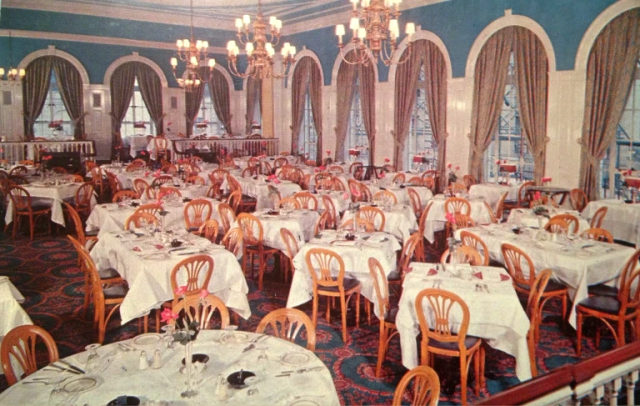 We met there and the owner, George Machrist, came over and treated us all to cocktails; it was very nice. And then he said that, if we would come to the restaurant on our wedding day, he would treat us crepe-suzette and champagne! We said we'd be there.
I wanted to be married on my birthday, November 1st (Dad and Mother had married on his birthday) but that was a Tuesday and unsuitable (I was informed) for a wedding. We agreed on the next Saturday after my birthday: November 5th:
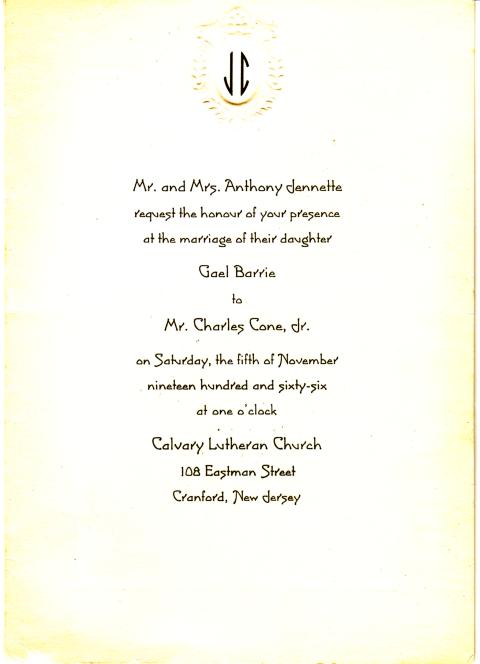
Four months isn't all that much time to put a wedding together but Gael and her Mom were up to the challenge. I was no help and, in fact, couldn't find but two good reasons for a business trip to NYC between July and the wedding!
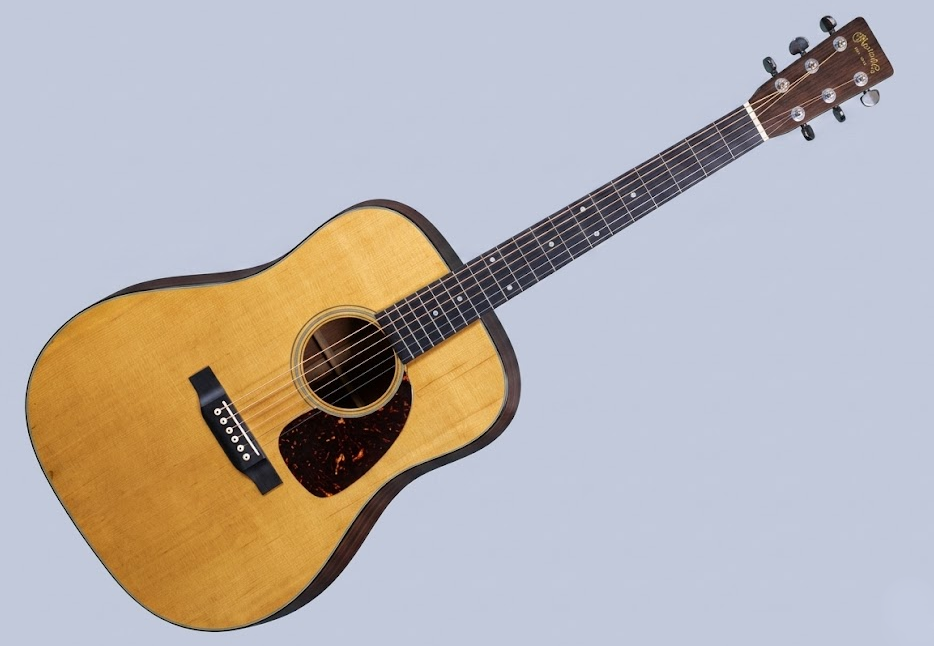
To make sure the deal closed, Gael's Mom bought me a Martin D-18 guitar as an engagement gift. Her strategy worked; I have both Gael and the guitar today!
Exposing Gael to Little Rock (and vice-versa)
Now that Gael was officially "the one", it was time to bring her to Little Rock (my home town) to expose her to the Cone family and friends. Over the years, I had brought several young ladies to Little Rock with spotty success -- but this was the "good" one.
Gael had met and won over my folks and (rich) Uncle Dave and Aunt Dorothy in New York (click HERE...) but she needed to meet the rest of the family. Mother and Dad were great hosts as always. The afternoon that we arrived we were all sitting around the kitchen table enjoying drinks and snacks. Gael had a Coke. The flight in had been bumpy and her stomach was a little upset.
Do you remember the corn snack called "Bugles"?
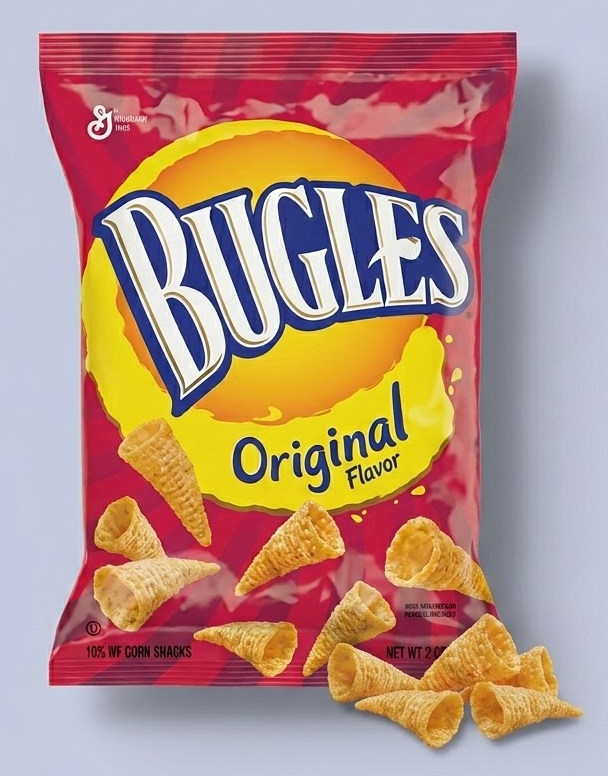
I offered Gael a bugle...
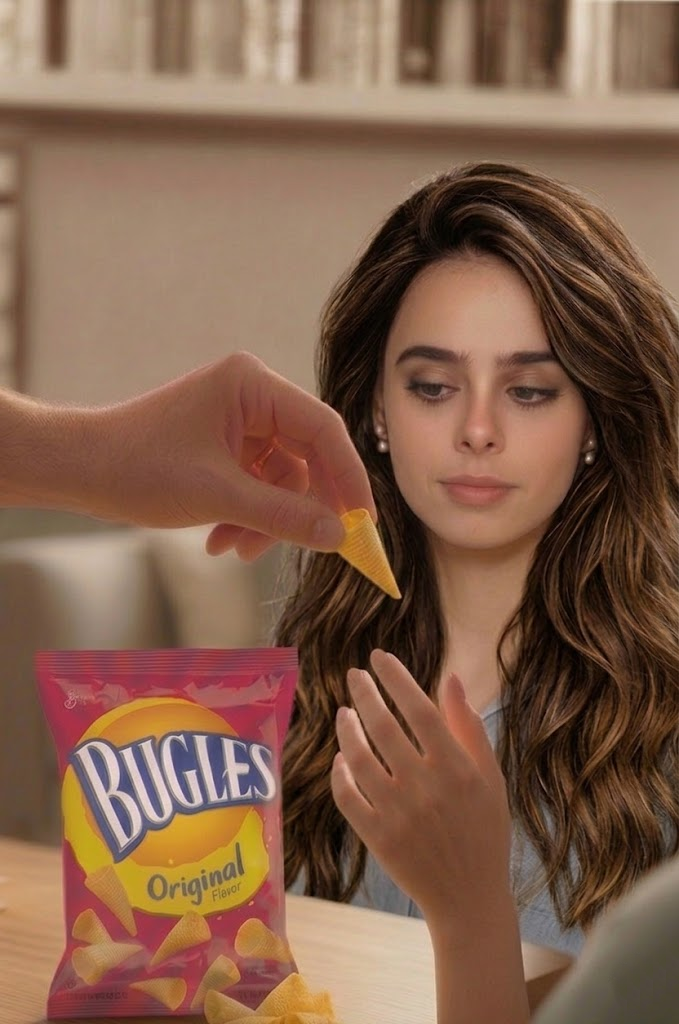
She said she didn't want it. I insisted. She said, "I don't want one." I said, "How about this one?...
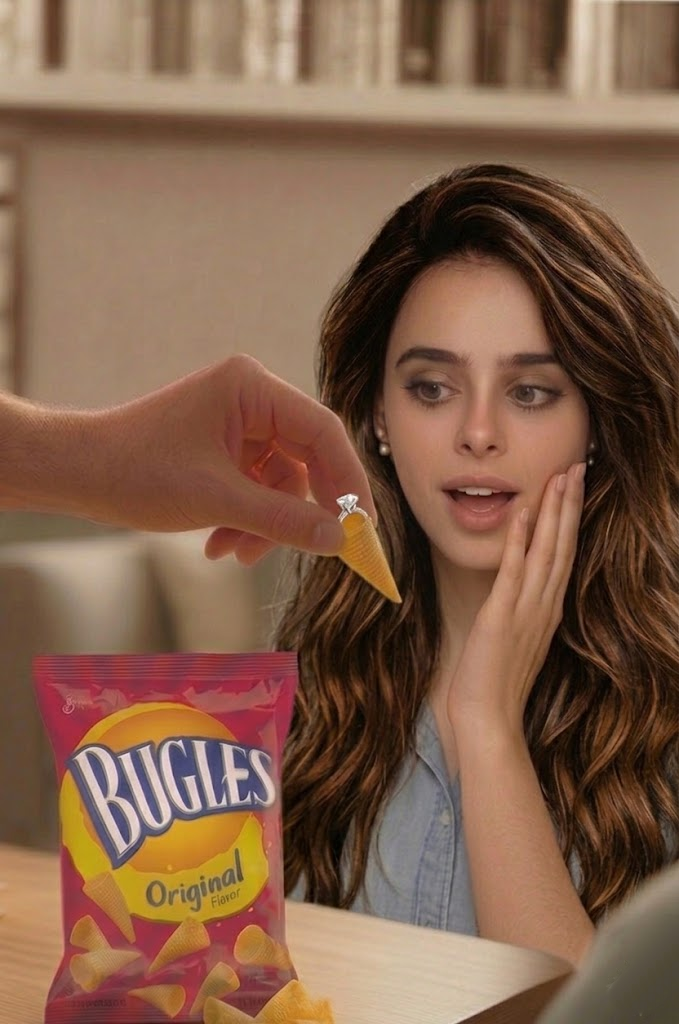
And that's how she got her engagement ring!
Kreplach
During the several-day visit, I implored my Mother to make kreplach (pronounced; krep-lock). One of my favorite childhood memories was my Mother's kreplach soup. Kreplach are traditional Jewish cuisine triangular-shaped dumpings usually served in chicken soup:

Mother didn't make them often because it was very time-consuming; when she agreed to make them, it was a very special treat. "I spend all day making kreplach and you and your father 'inhale' them all in minutes!"
But I wore her down and she agreed. Since this is a favorite meal of mine, Gael asked Mother if she could watch to learn how to make them. Mother agreed. A batch of kreplach is ~100 dumplings and here's how you make 'em:
- Make the dough.
- Make the seasoned ground meat filler.
- Roll out the dough.
- Cut the dough into 2½" squares.
- Put a dab of seasoned ground meat in the center.
- Fold the square of dough into a triangle.
- Pinch the edges to close the dumpling.
- Rinse and repeat.
About 50 kreplach into this marathon Gael, who had watched carefully, asked Mother, "May I make one?"
My Mother, sensitive soul that she was said, "Oh, no, darling. I don't have enough for you to ruin one."
This crushed my fiance as you could imagine. Mother always said exactly what she was thinking. This is why Gael spent much of the early years of our marriage when we visited in Little Rock screaming in the bathroom.... Sigh...
The Days Before the Wedding
When I arrived in New Jersey a couple of days before the wedding I was informed that the Lutheran minister who was performing the ceremony wanted to talk with us. Standard fare, pre-marital counseling. As we were leaving that session, Gael told me that it's customary to tip the minister after the ceremony. I assured her that I knew that.
She asked, "How much are you going to give him?"
I said, "I dunno; twenty dollars?"
She said, "I think that's too much; how about $10?"
I said, "No, I think $20 is about right."
She said, "We shouldn't argue about this; why $20?"
I said,
.. (and this was one of the best extemporaneous lines of my life) ..
"I always give them twenty dollars!"
Thank you, thank you; I'm here all week. Please remember your servers!
The Wedding Day
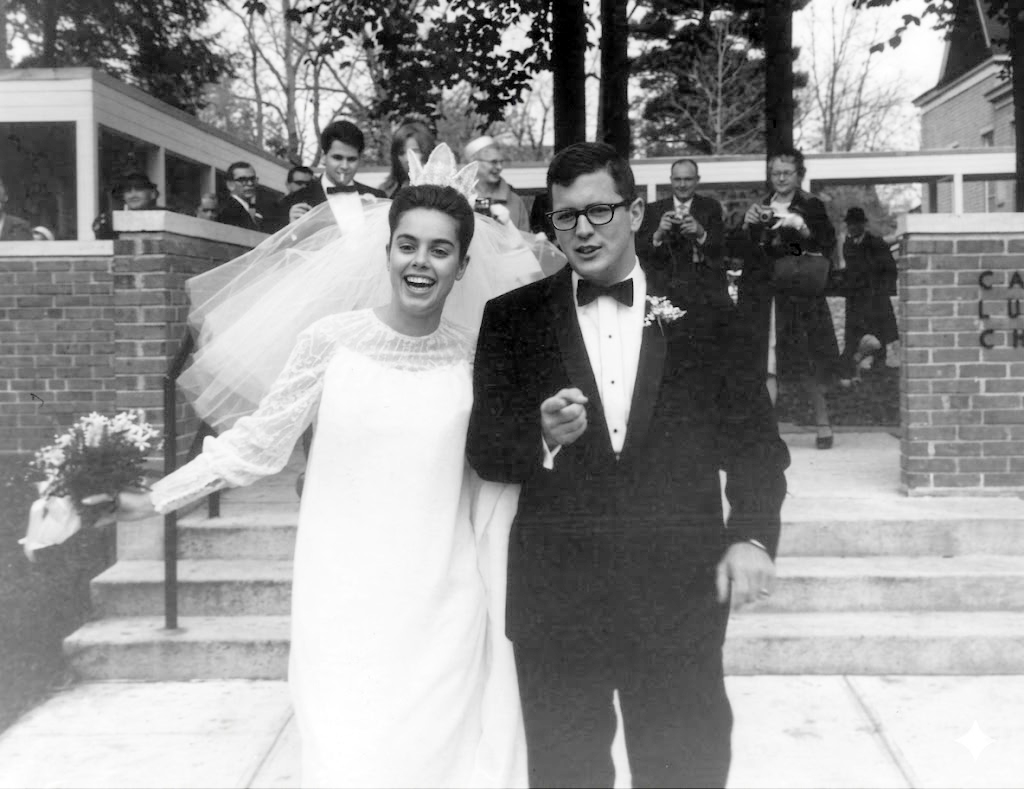
The wedding went off beautifully (regardless); here we are coming out of the church:
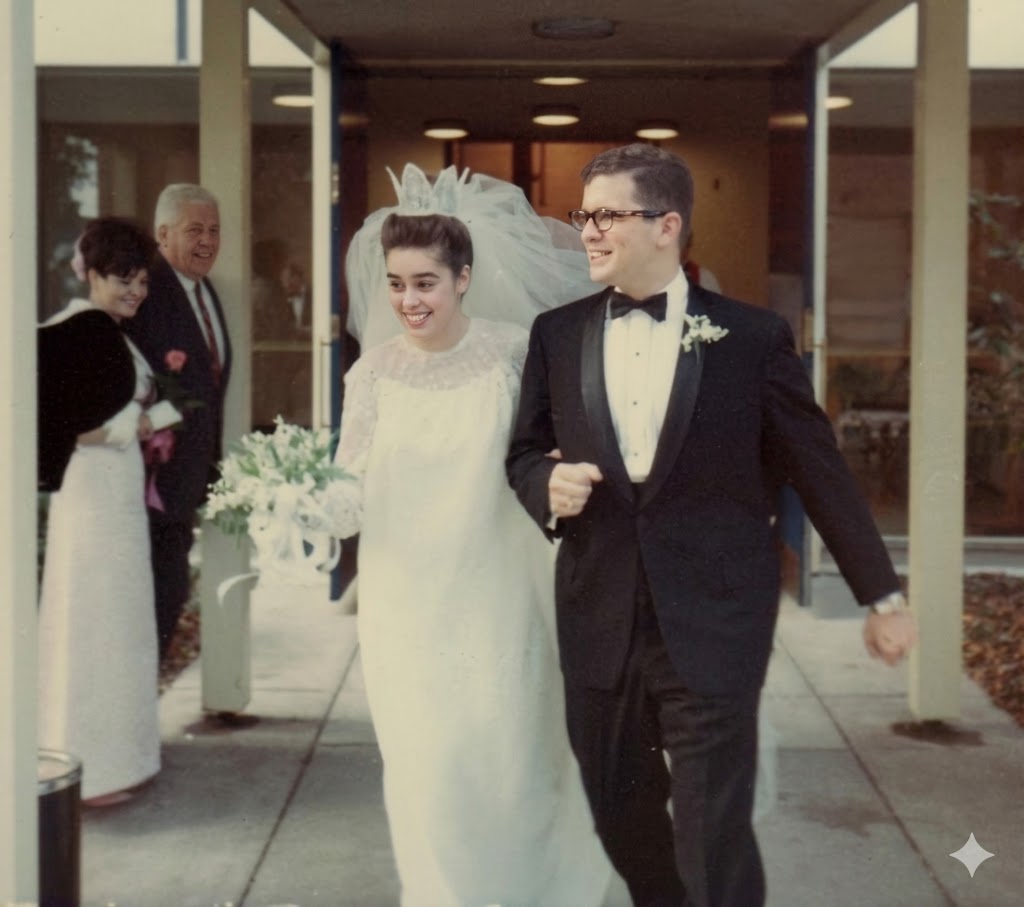
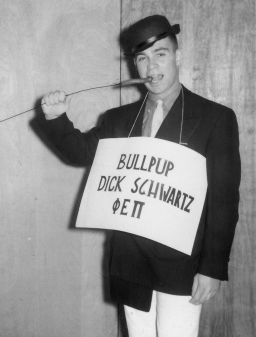
The reception at the Governor Morris Hotel in Morristown was terrific. During the meal, one of my groomsmen, fraternity brother Dick Schwartz, asked me for the key to our honeymoon suite; he had left film for his camera there. I gave it to him. Gael asked me what I was doing and I told her. She looked at me like I was the biggest idiot on the planet. "What?!??" She said that Dick and the others were going to "do something" to our room; that never occurred to me.
After the reception we went back to Gael's house for another informal celebration. And then we remembered George Machrist's invitation to come to Whyte's in NYC for complimentary crepe-suzette and champagne. It's now 10pm in New Jersey -- but we got into Dick Schwarz's Buick Riviera and he drove us into the city:
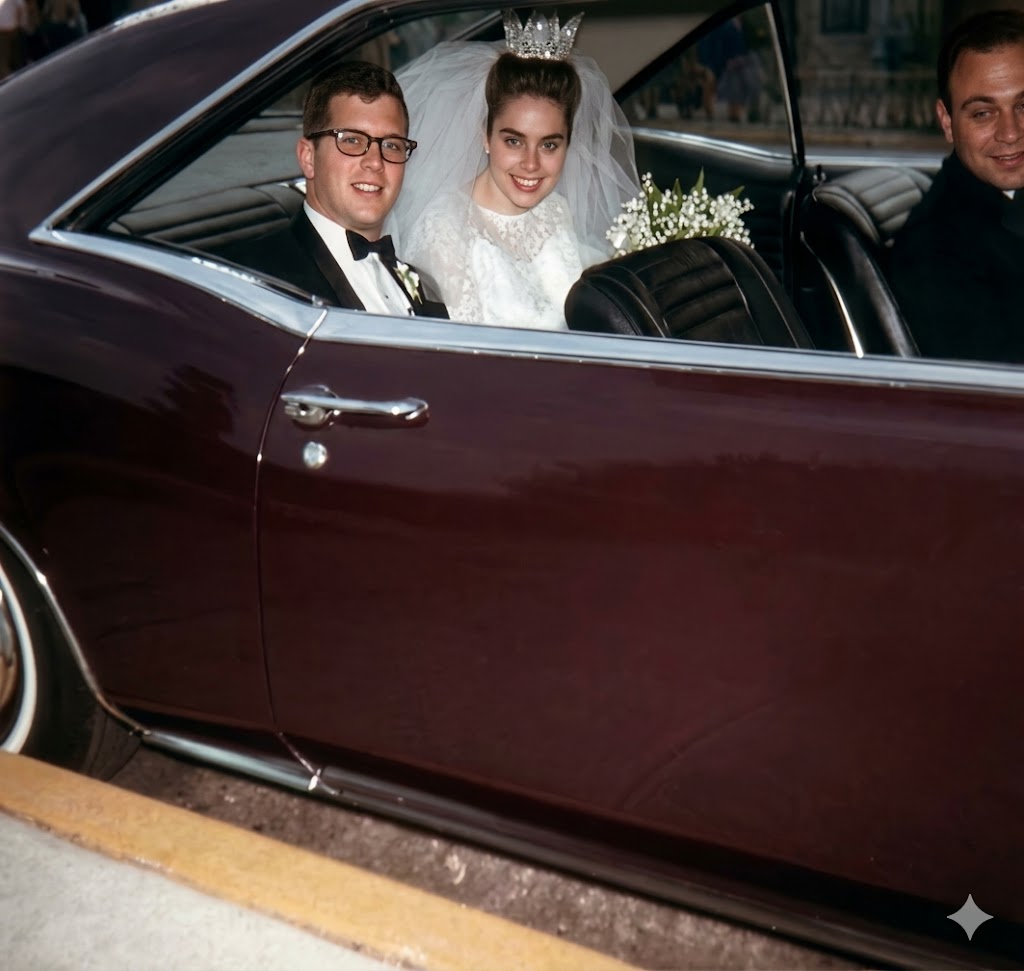
When we walked into Whyte's at about 10:30, Gael in her wedding dress, me in my tux, the whole place went silent, forks in the air, mid-bite. And then, someone started to applaud -- and we got a standing ovation -- from jaded New Yorkers who didn't know who the hell we were.
They quickly manufactured a table for three in the middle of the restaurant (Dick had to sit somewhere) and George made an announcement that he'd offered us dessert on our wedding day and here we were to collect. Another ovation.
And then the champagne started coming. I think every dinner party there sent a bottle of champagne. At one time there were eight or ten champagne buckets arrayed around the table. Champagne isn't my favorite drink and it's not Gael's either. Fortunately we had Dick Schwartz along.
All in all it was a wonderful experience. But now we have to drive back to Morristown, NJ with Dick who, on his best day, isn't a great nighttime driver. He has narcolepsy AND he'd had lots of champagne. But the gods must have been smiling and we arrived back at the hotel safely.
When we got to our room, it looked just fine. I told her that her earlier fears about giving Dick the room key were groundless; Dick had just needed his film.
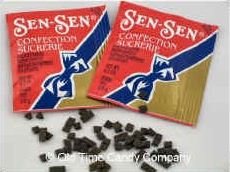
And then we tried to turn down the bed. In the bed were about 10lbs of Sen-Sen (a breath mint):
.. and another 10lbs of peppermint lifesavers:
I'm not sure I understand the significance, but they did render the bed pretty messy. We dumped the mess onto the floor (sorry, Governor Morris housekeeping staff) and slept on top of the bare mattress.
We met my folks for breakfast the next morning and then headed out for Gael's home. We had rented a car and a U-Haul trailer one-way from New Jersey to Atlanta. We loaded the trailer up with wedding gifts and Gael's stuff and hit the road. Remember that I'm a hopeless romantic. The plan was to stop overnight with fraternity brothers on the way to Atlanta. Perfect honeymoon, huh?
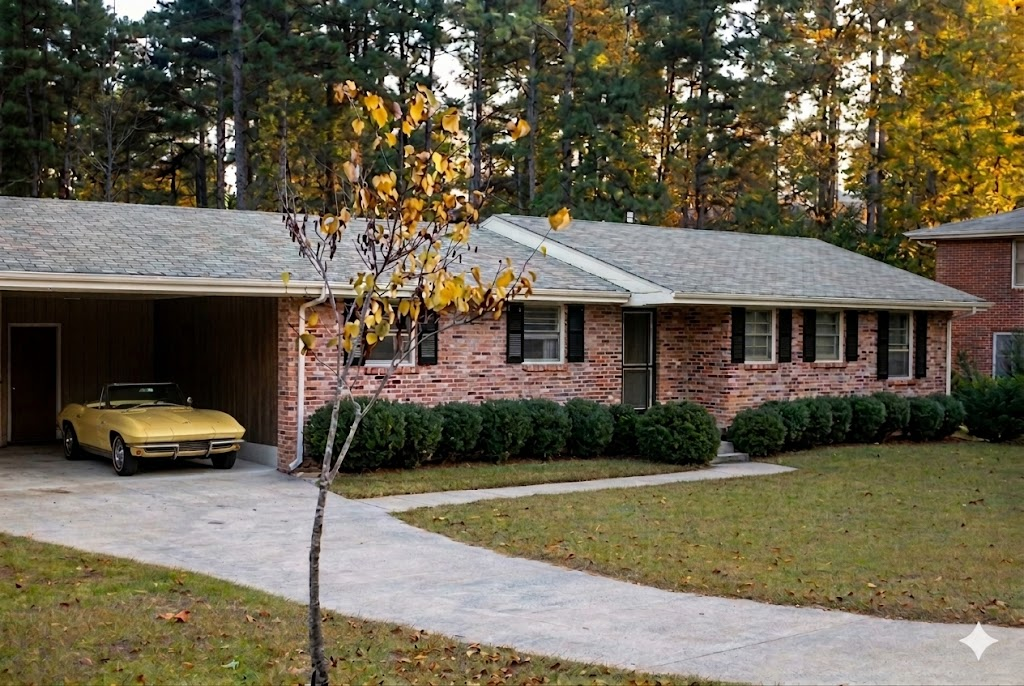
We spent one night in Washington DC with Darryl and Huddie Mexic and the next in Charlotte with Steve and Carolyn Brenner. And, when we reached our home in Atlanta we found the refrigerator had been emptied and then filled with bottles of Frostie Root Beer (my (then) drug of choice):
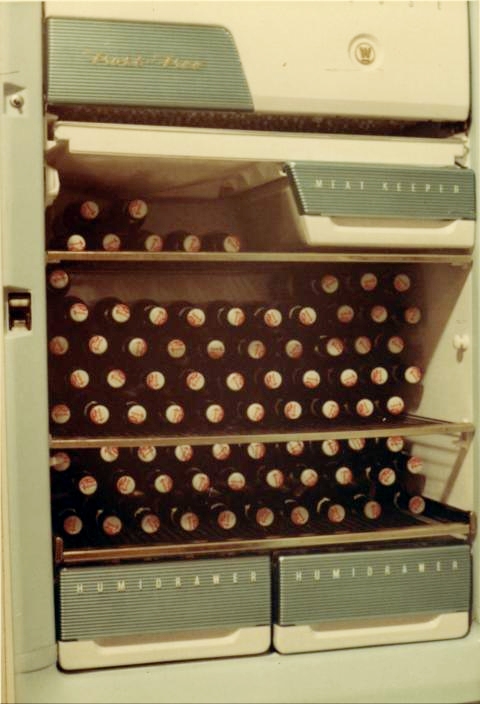
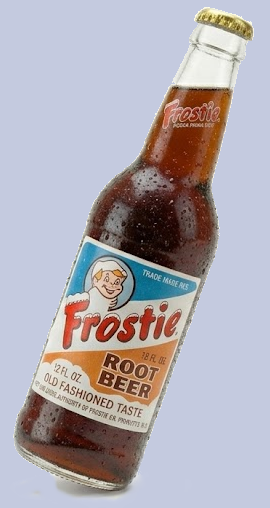
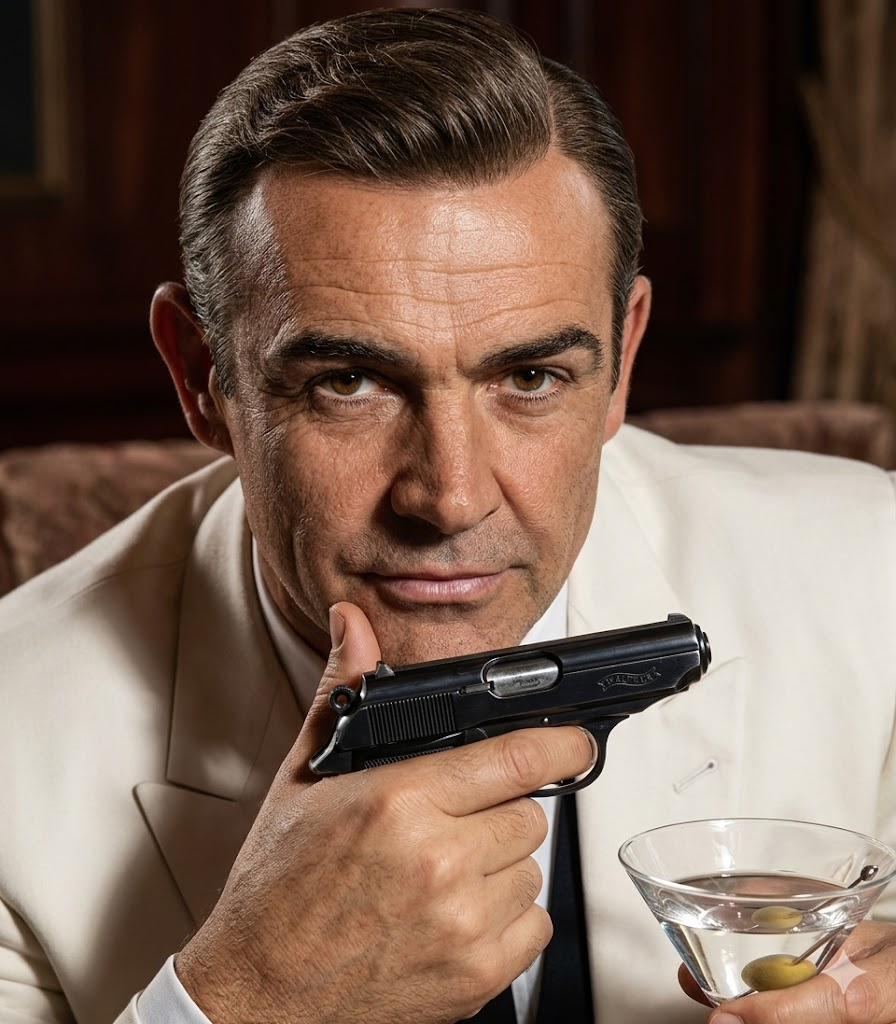
... and my Smith & Wesson .357 magnum 6" barrel revolver.

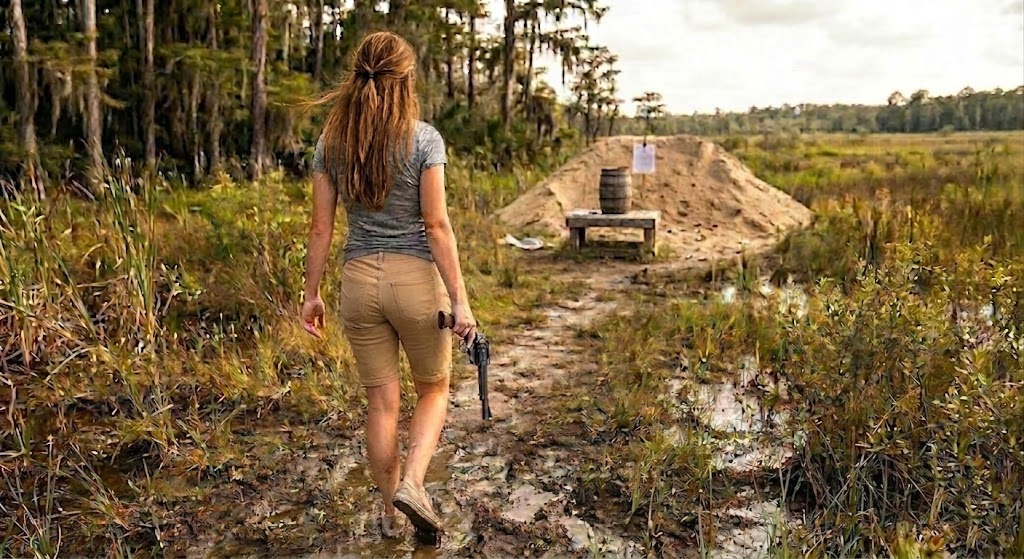
I repeated my range safety lecture. There was a bunch of trash in the area so I set up a nail keg, paced off 20 feet and handed her the PPK (small). I said I'd take one shot to her three and we targeted the nail keg. I took my shot and she took her three -- all in about a 6" circle on the nail keg. What?!? She'd never fired a gun before; really?
After a few magazines, we switched to the Magnum. It weighed nearly three pounds. Same deal. Same results. Turns out she prefers the heavy (large-frame) revolver. Go figure.

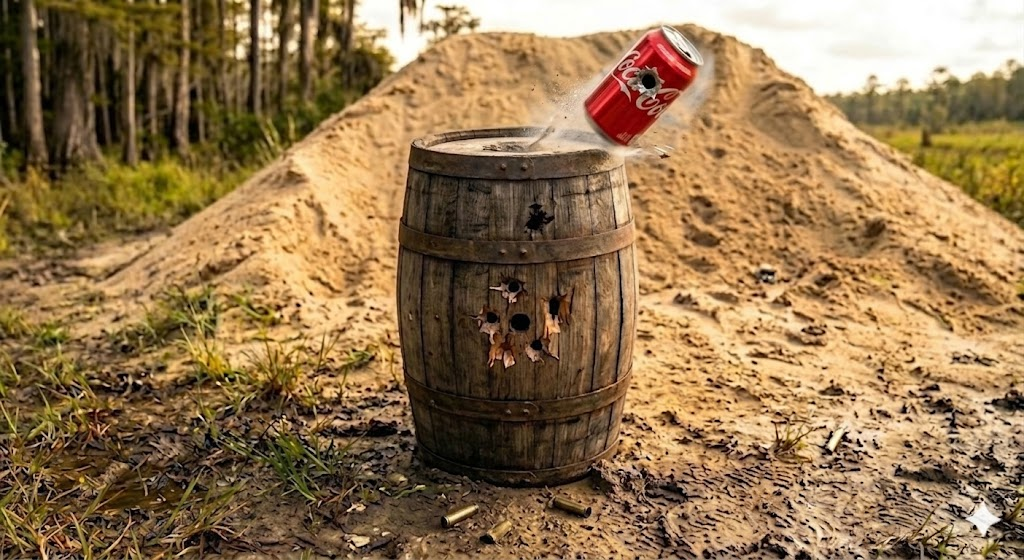
After 24 rounds or so (of .38 special) we both judged that this was not sufficently challenging. We moved to coke cans. Same deal. Same results.
By the end of the session we were shooting at .38 special cartridge casings, perched atop a coke can, perched atop the nail keg and she's hitting one out of six.
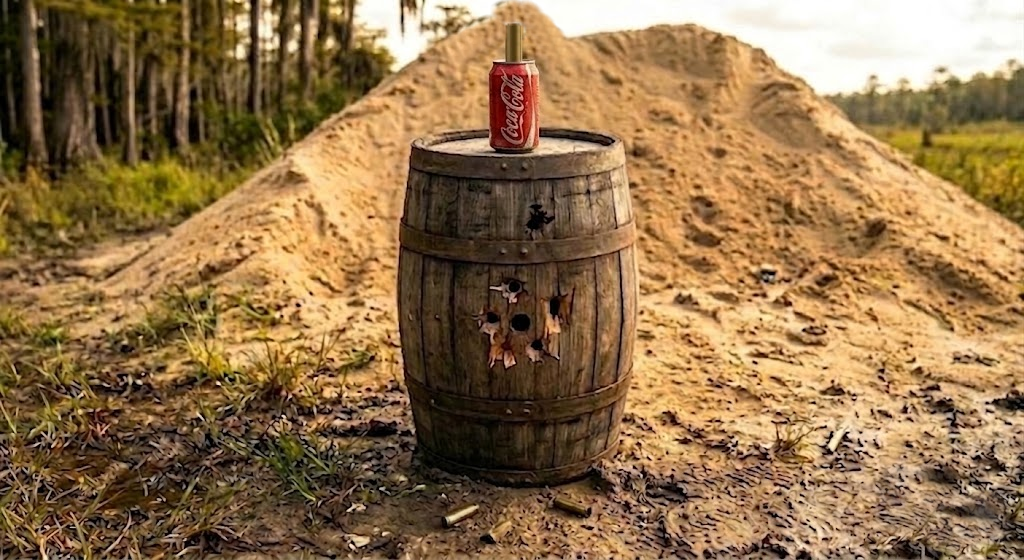
My little darlin' is a crack shot! Who knew?
I tired of setting up targets for her and sent her downrange to set them herself. On her first journey she stepped into quicksand and sank to her ankles.
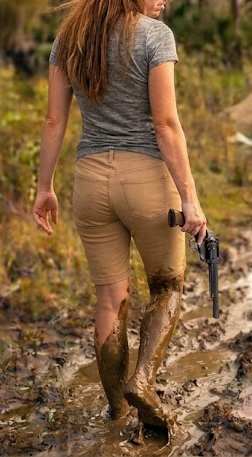
While I was laughing my ass off, she lost one of her sneakers forever while extricating herself. She reminded me that laughing at her (and calling her "old mud foot") was contra-indicated when she was heavily armed. Good Point. Fortunately, the gun was empty...
But when I was traveling a lot she had no fear because that .357 Magnum was near at hand!
Our First Thanksgiving
Our first Thanksgiving was memorable. Gael had never so much as boiled water before we were married. Despite that, she'd invited friends Rich and Phyllis Wolf to join us for Thanksgiving dinner just three weeks after our wedding. Phyllis contributed her turkey prep recipe (look for it a little later in this treatise) and they agreed to join us, committing to bringing side dishes.
Gael made reservations at a local restaurant (Bonnie Brooks Farm) as a backup, just in case dinner prep was a disaster.
Our guests were scheduled for 1pm and the turkey had to cook for six hours (she'd bought a big one). She dragged me out of bed at dawn to help her put the bird in the oven. I handled that task and then looked around the kitchen; I asked her where the plastic bags were.
"Plastic bags?", she said; "What plastic bags?"
I said, "The plastic bags with the turkey neck and giblets".
She said, "There weren't any plastic bags, just the turkey."
I said, "There are always two plastic bags inside the turkey."
"No," she said, "there were no such bags."
I rescued the bird from the oven, removed the stuffing -- and then the two plastic bags from the cavity. Showing them to my bride elicited surprise. I was sworn to secrecy, which I honored until today.
Dinner turned out splendidly; the best Thanksgiving I could remember; Bonnie Brooks lost revenue and the triptophans kicked in at about half-time.
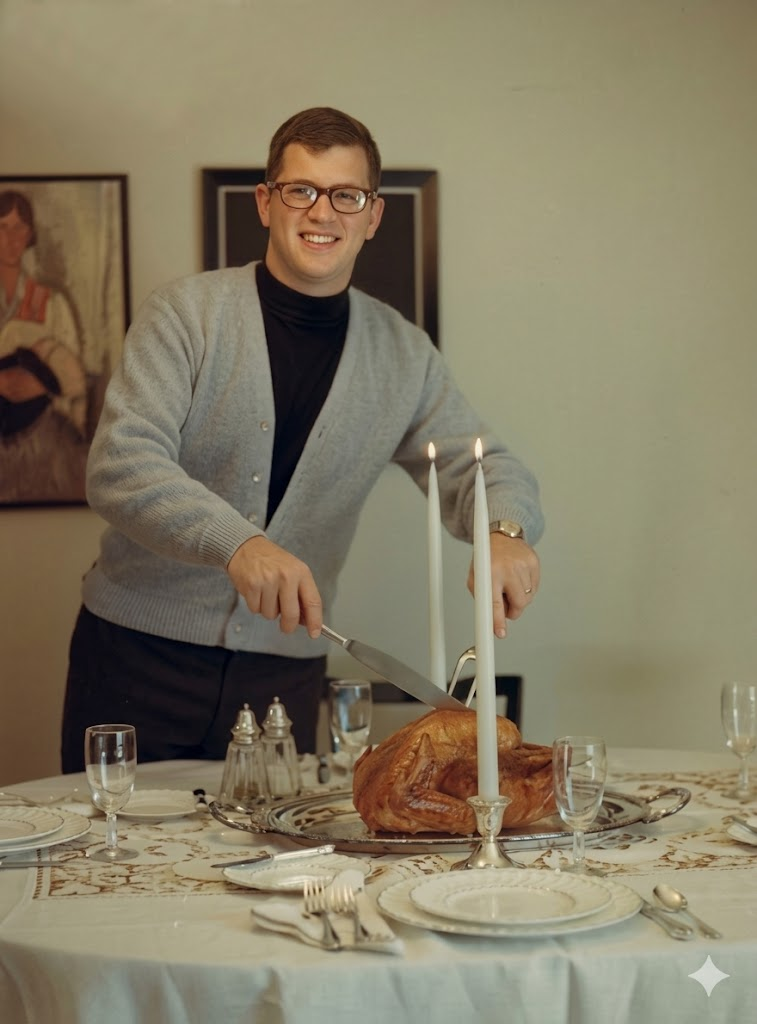
Click HERE for Phyllis' (and now our) turkey prep methodology.
Working together at IBM
Gael interviewed and got a job with IBM Office Products Division as a receptionist. In those days, the Office Products Division was where the real IBM salesmen worked; "OP" sold typewriters, copiers and dictation equipment.
Gael grew bored pretty quickly in the receptionist job and started embellishing it. She loved to answer the phone in her best Marilyn Monroe voice: "Good morning (huskily)....... IBM". Men would stammer, hang up, get themselves back together, and then call back.
The Office Products Division office was just a block away from my office so we'd drive to and from work together in the Corvette every morning. Often my hours were later than hers and it became clear that one car wasn't going to cut it long.
Pay Close Attention To This!!
Around the first of December I made a really big mistake. A REALLY BIG MISTAKE.
| |
NOTE: This mistake has cost me hundreds of thousands of dollars over the next 60+ years.
DO NOT REPEAT THIS MISTAKE IN YOUR OWN LIFE!
|
|
|
Ready?
TIMELINE: We married on November 5th. Christmas comes on December 25th. We have one car, a two-seater.
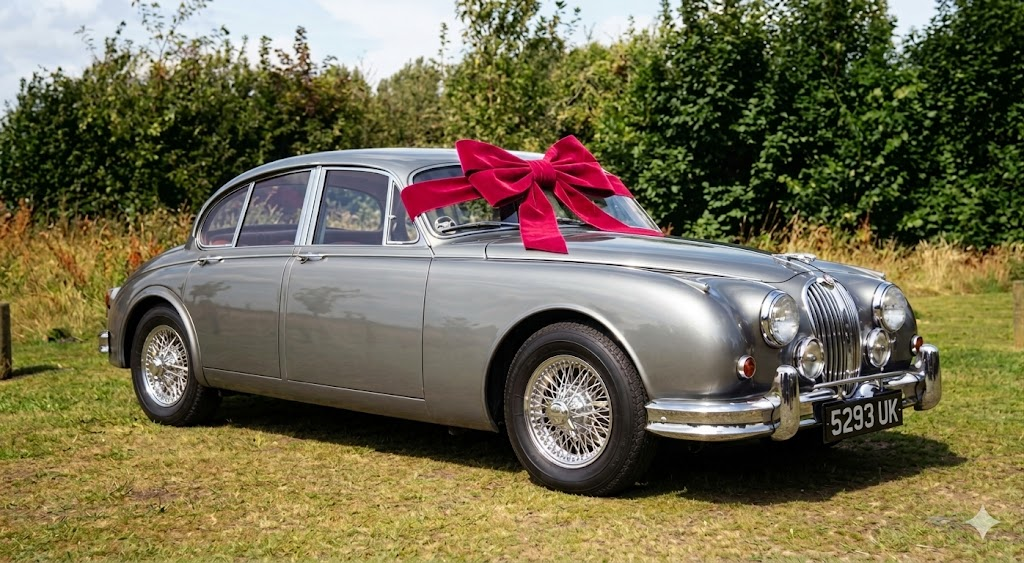
I decided to buy Gael a car as a Christmas surprise.
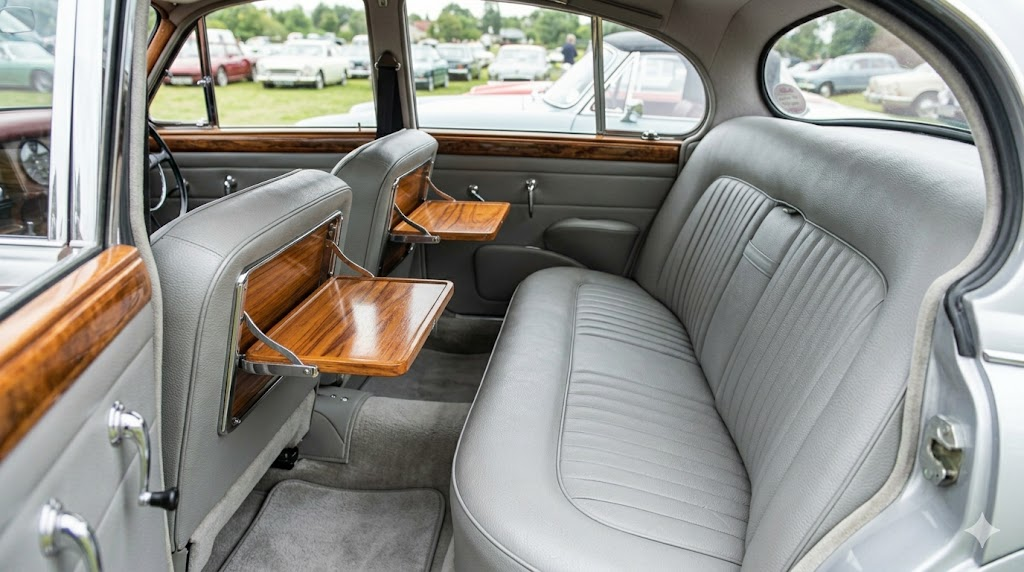
Friend Malcom Ringel had a 1963 Jaguar 3.8 Sedan that he wanted to sell. If you're not familiar with this particular car, let me just say that it is one of the sexiest pieces of coachwork ever. It's the car that Elizabeth Taylor...

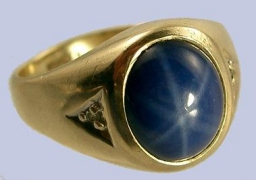
This was, at the time, a major Jewish cliché; every Jewish man had to have a star sapphire pinkie ring -- except one. Me.
First, I'm not "into" jewelry. I had my wedding band and I had a gold pinkie ring that Gael gave me as a wedding gift. A third ring? I don't think so.
I didn't want another ring. And (here's the bad part):
I said so:
"That's nice, honey, but I don't want it."
There'll be a pause while you reflect on the level of foolishness displayed by such a remark to one's new bride.
...Wait for it...
...Wait for it...
If you multiply that delay by about 1,000,000 you'll have an idea of how long the quiet period was between us -- not to mention the absence of any (pleasant) physical contact.
It became clear that I had erred. Thankfully, the freeze-out only lasted a few months but, as you can see, I've never forgotten it!
More on the Jaguar..
I promised you'd hear more about the Jaguar. It's just before Thanksgiving 1967 and we're driving from Atlanta to New Jersey to spend Thanksgiving with Gael's folks.
Just outside of Stafford, Virginia, Gael noticed:
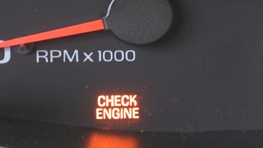
.. the red "Check engine" light pop on (she was driving, I was sleeping). She pulled off at the next exit and as she coasted onto the surface road, the engine quit.
I raised the hood and, yessiree, there was an engine under there. I know nothing about cars.
By coincidence there was a shade-tree mechanic shop across the road. I hiked over and the owner followed me back to check out the Jaguar. He spent a few minutes examining the car and said this to us:
"If it was mine, I'd take my luggage, leave the car here on the side of the road and walk away."
What!?! A minute ago I had a perfectly good $1,600 used car and now it was worthless?!? I don't think so.
The nearest Jaguar dealer was in Washington DC and they agreed to send a tow truck to bring the car in. Hours later, the tow truck arrived and we rode in the Jag hanging from the tow hook into DC.
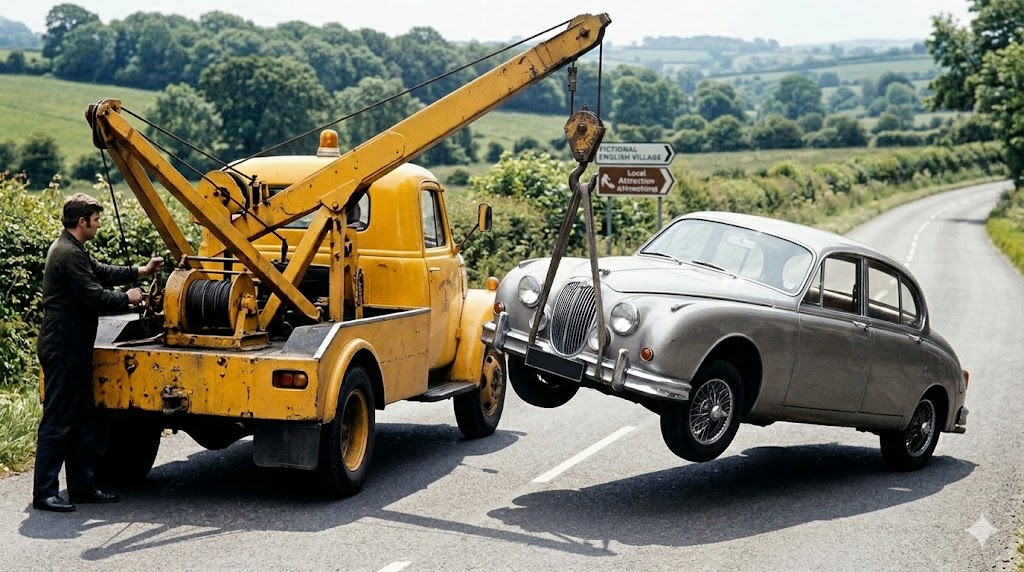
I turned the keys over to the dealer service writer and we hopped a train to Newark.
On Sunday we flew home to Atlanta, now again with only one car, the 1965 Corvette. Days passed without hearing from the DC Jag dealer. That was a blessing it turned out, because when we eventually heard from them the news wasn't good. The engine had seized because there was no oil in the crankcase. No one could explain why the gauges showed nothing and why the check engine light waited until the engine was ruined before coming on -- but that's what happened.
I couldn't believe that the car was suddenly worthless, so I agreed to a $1,200 repair job on a $1,600 car. I know, I know, it doesn't make sense.
In due course the engine was rebuilt and I was notified it was ready to be picked up.
Gael and I drove the Corvette to the airport and flew one-way (remember when you could do that without a hassle?) to DC to pick up the Jag. We drove home to Atlanta uneventfully.
Well, "uneventfully" until just after Gael dropped me off at the airport to pick up the Corvette.
When I got home in the 'Vette, no Gael. Another hour and no Gael. This cannot be good.
She finally called (upset? Oh, yeah...) to report that the car went into neutral as she was driving home on the expressway in the middle of downtown Atlanta. She pulled over and the transmission would only go into reverse. She flagged a policeman down and he called a tow truck for her. The car was towed to the Atlanta Jaguar dealer and I went to pick her up.
The next day I received a call from the local dealer. The transmission would have to be replaced; cost $1,600. Let's see. I bought the car for $1,600, I put $1,200 more into it to rebuild the engine and now I'd have to put $1,600 more in to fix the transmission. I'm afraid I screamed at the service guy. He had the owner of the dealership call me back and he offered to buy the car for $1,200 as-is. We cut the deal.
The moral? The shade-tree mechanic was right. After the smoke cleared, I essentially walked away from the car. Sigh...
We'd become used to having two cars but we were cash-poor. After considering options, we decided that we'd trade the Corvette in on a sedan of some kind. Neither the Corvette nor the Jaguar were air-conditioned so...
What to buy? I had an IBM buddy who told me that the best automobile investment around was a used Cadillac. Many buyers trade new ones often so you can usually get a great, low mileage car after the bulk of the depreciation was gone. Made sense to me.
What follows is one of my better decisions, car-wise. I took the 'Vette to Hennessey Cadillac and met a man with whom I then established a 25-year relationship. Lester Pazol was the sales guy and one of the best salesmen I've ever known. One of the secrets to selling at retail is to be whatever your prospect needs you to be to make the sale. When talking with little old grandmas, Lester was the loving grandson. When talking with a NBA basketball player, Lester was a jive-talker. When talking with me, Lester was funny and likeable. We struck a deal.
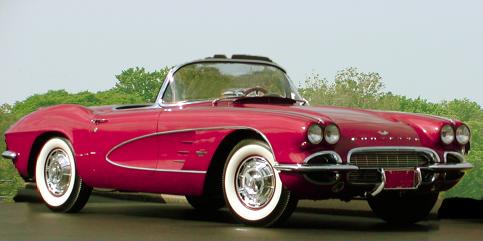
We traded my beloved yellow 1965 Corvette Roadster...
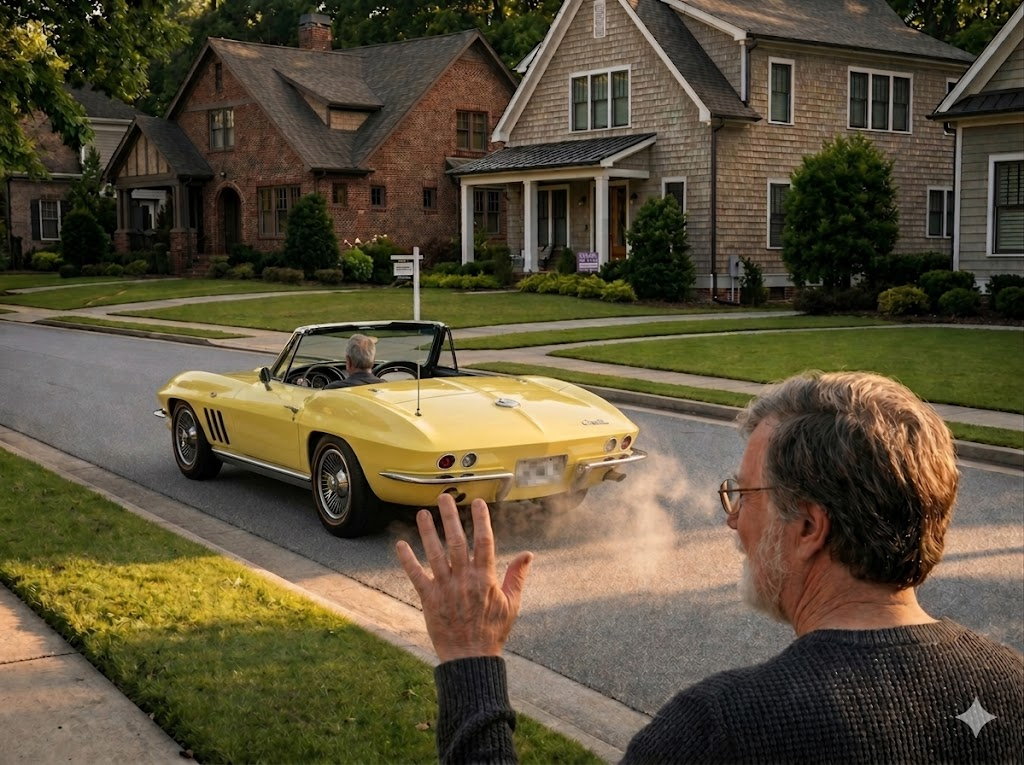
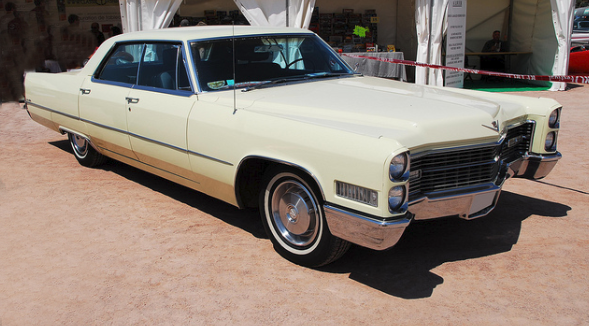
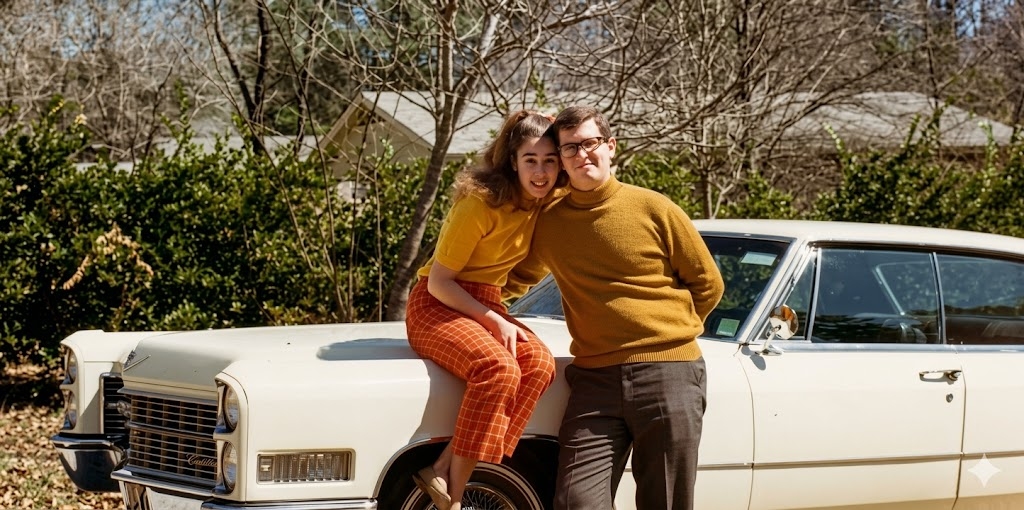
... in on a used yellow 1966 Cadillac Sedan de Ville:
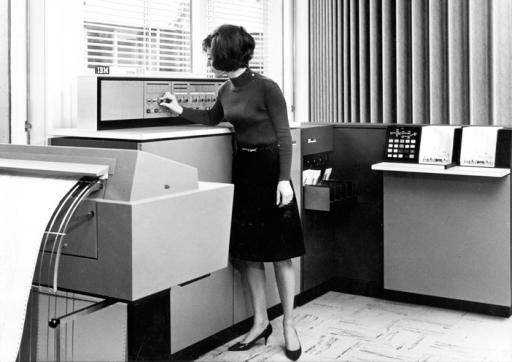
It was attractively priced (I think it leased for only about $2,000/month!) but wasn't selling that well. So IBM decided to put a special program in place. They picked someone from each district (I was picked for District 7, the Southeast) and given an overlay quota and marketing $$$ to help push this machine. "Overlay quota" meant that I got paid if anyone in the District sold a Model 20.
After studying the problem a while, I decided that the reason the Model 20 wasn't selling is that the companies of a size where it would fit -- didn't have the resources to travel to Atlanta to look at the system. If the mountain won't come to Mohammed...
We leased a Travco motor home:
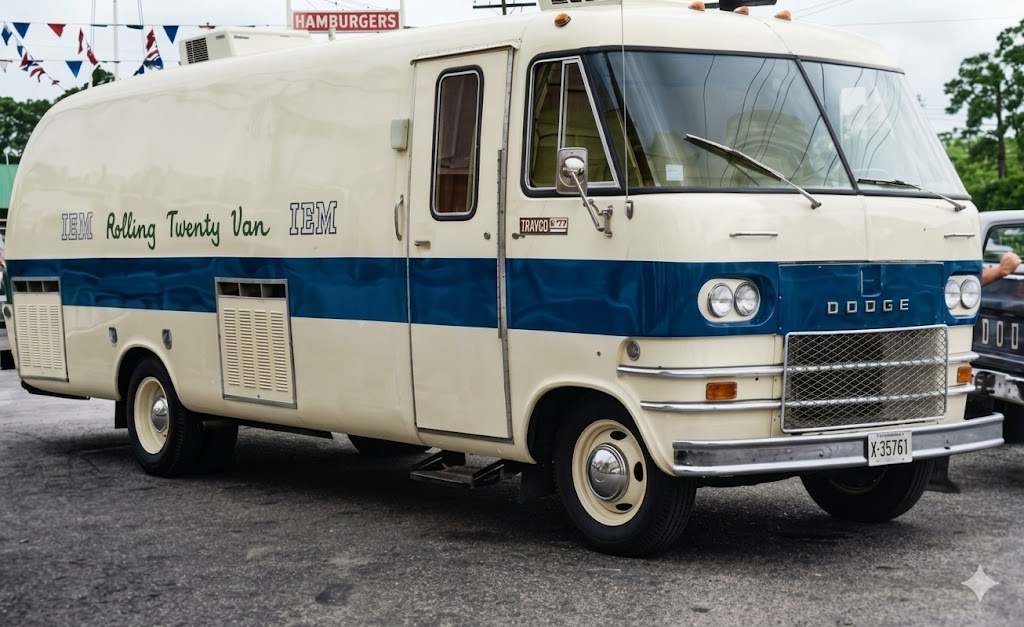
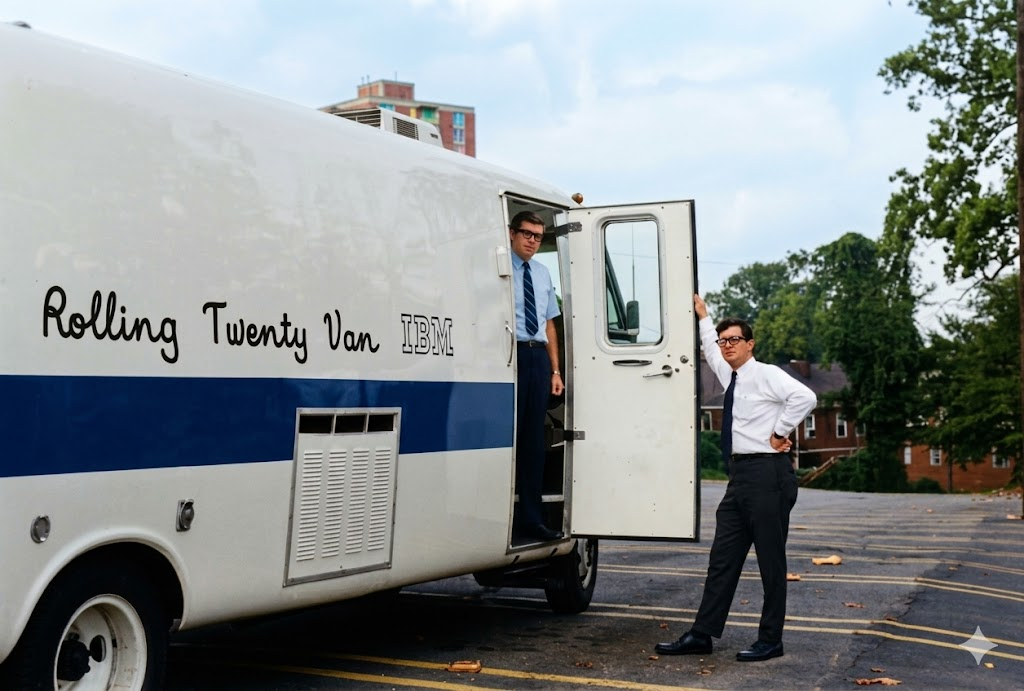
.. and installed a complete Model 20 system in it. You could drive up to the door of a prospect and drag him out into the van for a demo. So I spent the first half of 1968 driving that damned thing all over the southeast. And it worked; sales picked up -- some.
Two good stories: Since I was on the road in this thing for days at a time, Gael (who had "retired" from IBM by now) would often accompany me. We had just made a presentation in Asheville, NC and, having been on the road for a week, were heading home to Atlanta. I'm driving this monster and Gael is sitting in the buddy seat, knitting.
The Travco looked like a loaf of bread on wheels. It was designed to be a motor home; it wasn't meant to haul a (literal) ton of computer equipment and generator around. The brakes were sufficient for its primary role, but not so good for the overweight situation. We're heading down the mountain from Asheville to Greenville SC and, because of the switchbacks, I'm forced to use a lower gear and use the brakes more often than usual as we hurtled down the mountain.
Just as we're getting near the bottom and saw a long straight stretch in front, the brakes finally gave up the ghost. Push on them all you want: nuttin'. And, just ahead, there were two guys on bicycles in the road -- and we're gaining on them -- rapidly.
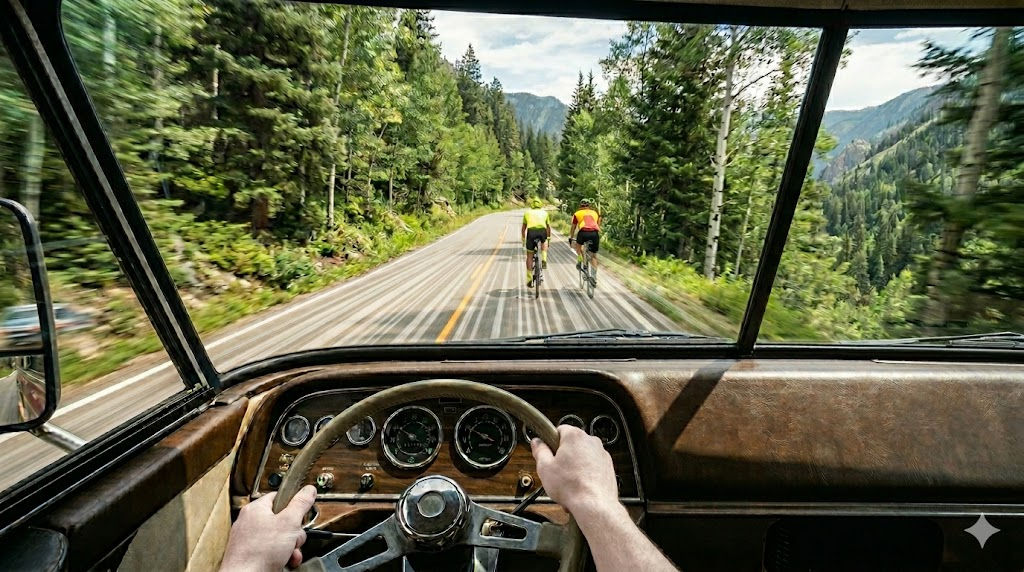 We're shooting off the mountain at about 50MPH with no way to stop, leaning on the horn. The two guys looked over their shoulders; one went left and one went right and we went through the space they were occupying only a moment before!
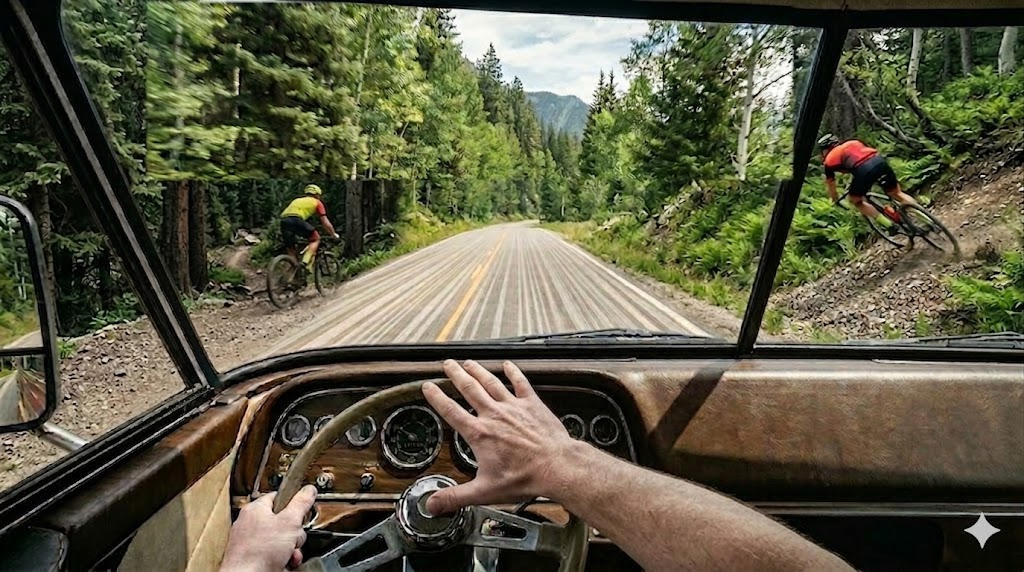 That's as scared as I've been at the wheel of anything (Little Rock Radio Club bus notwithstanding!).
Oh, and Gael knitted about 40 rows on the last mile down the mountain..
The other interesting story: Near the end of the year, we're on a trip through South Florida giving three or four demos a day. We finished up at suppertime on Thursday in Miami and had to be in Key West the next morning, our last stop for the week.
There's a 113-mile highway with 42 bridges connecting the Florida Keys to the mainland:
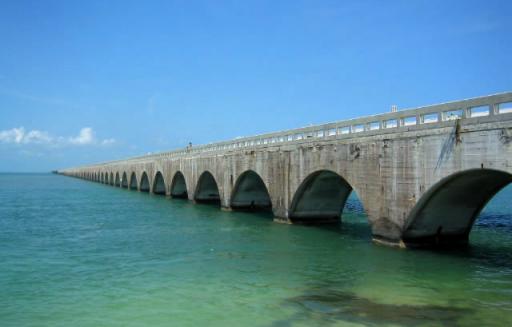
Heading South, you have the Atlantic Ocean on the left and the Gulf of Mexico on the right. It's dark and we're tired. And a tire blew.
The Travco had a lot of tires, ten in all. The one that blew was the inner tire on one of the right side pairs. There's no way to pull off the road (water to the left and right) so we limped at 10MPH all the rest of the way to Key West. We had to go so slowly because of the vibration the ruined tire set up at higher speeds. We got there well after midnight and collapsed in the local Holiday Inn.
At dawn I arranged for the tire to be changed by a local tire store. I parked Gael at the motel, a local IBMer picked me up, and we headed off for the demo.
The prospect was the local power and light company serving Key West. It, as well as a number of other local businesses, was owned by State Senator Spottswood:
He, along with a dozen or so of his minions came out to see the demo in the parking lot. The Travco could comfortably hold me and four others; since there were more, I did back-to-back demos. They went well, I thought, but they took most of the day.
Gael had been trapped in the lobby of the Holiday Inn all day since checkout at 11am. She was not happy. Not happy at all. At the end of the day, as things were winding down with Senator Spottswood and his entourage, I sent the local IBM Sales Rep back to the hotel to pick Gael up. I'm afraid she was less than pleasant to him on the ride out to Key West Power and Light. When I saw her, I knew I was in for it.
I introduced her all around and we made small talk with the Senator. He asked where we were going next. I told him that we were scheduled in Orlando on Monday morning, so we were going to leave (now), drive back to Atlanta, and then drive down to Orlando on Sunday. We'd be driving until late tonight (Friday), get to Atlanta on Saturday afternoon and then I'd be leaving again for Orlando on Sunday mid-day.
The Senator was appalled: "How can IBM expect you to do that? It's ridiculous!"
He called out: "Charlie!!"
Charlie ran over with a "Yessir, Senator?"
"Charlie, drive this thing to Orlando for these nice kids."
He plucked the keys out of my hand and hopped in the Travco while I yelled, "Wait!!!"
We arranged that Charlie would leave the van and the keys at the Howard Johnson's Motel at McCoy Field (the Orlando airport). Gael and I would fly home from Key West and I would fly to Orlando Sunday evening to reunite with the van.
I don't know how much thought I gave to handing over the $50K Travco with the $100K computer inside it to some guy named Charlie that materialized out of a crowd at the sound of his name -- but that's what I did.
The local IBM rep took Gael and me to the airport where there was a close-in flight to Atlanta. But, believe it or not, the airport didn't take credit cards! Only cash or personal check. Gael wrote them a (bad) check and we were home late Friday night.
On Sunday, with some trepidation, I flew to Orlando. I took the hotel shuttle to the HoJo's -- and there was the van in the parking lot, keys waiting at the desk.
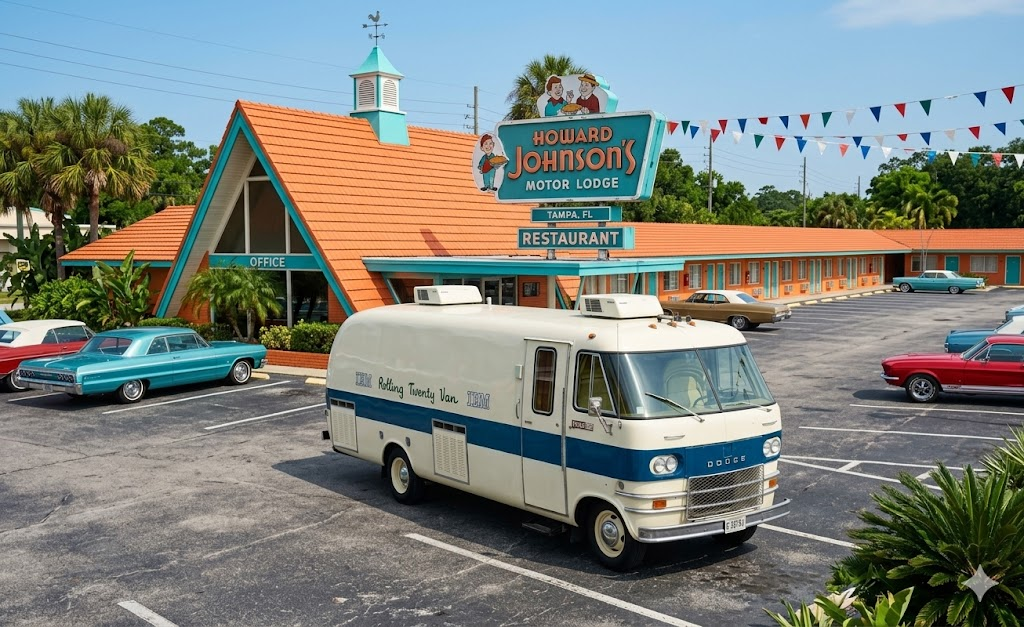
Think about the Senator's power for a minute. With no notice, he told a minion to drive this big truck to Orlando and (I guess) fly home. And he (Charlie) did it.
The "Take the Model 20 to the prospect" program was successful -- but the thing that made the biggest difference in my income in 1968 was that IBM announced the "Submodels 3 and 4" of the System/360 Model 20. This was simply a price and performance reduction for the Model 20 and it solved its biggest sales obstacle: price.
How IBM controls salesman income
Sales took off in the back half of the year exceeding everyone's expectations. A brief aside at how IBM salesmen were paid back then:
| |
IBM Sales Reps were paid based on two elements. IBM management set a sales quota plus a "commission per monthly lease amount" points formula to control the Sales Rep's income.
Management could either alter the points formula (which they did once a year) or alter the quota (which they did whenever they liked).
|
|
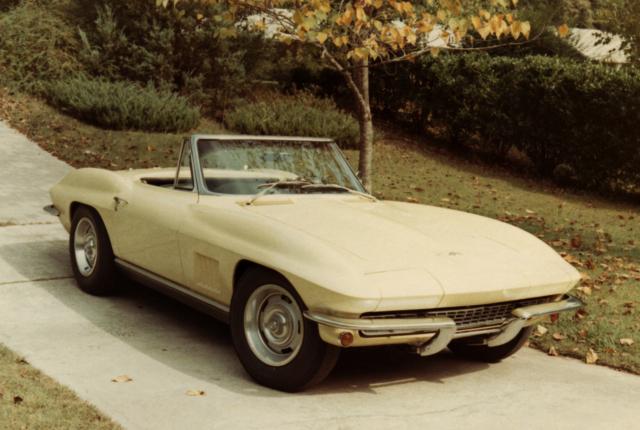 In 1968, nearly the entire New Business Sales Force had quit on the same day.
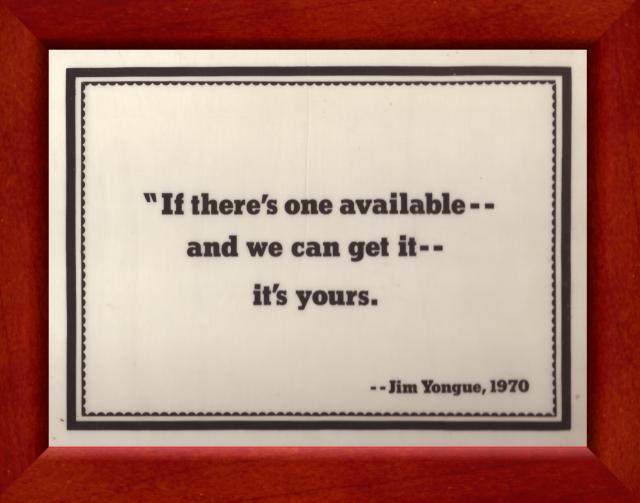
When you're the New Business Sales Manager, this reflects badly on you (y'think?). That fellow's name was Jim Yongue (pronounced "Young") and it speaks well for his sales ability that he kept his job after that debacle. He was rebuilding the new business sales team and I decided I wanted to work for him; I figured he had a lot to teach me!
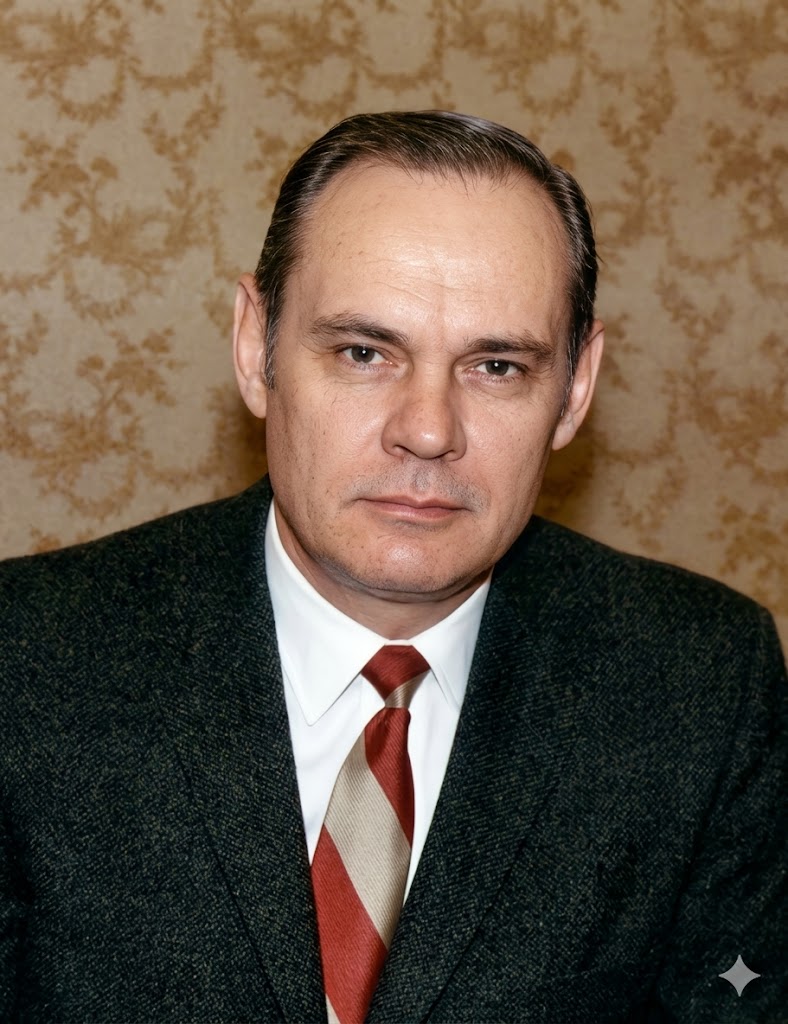
Jim Yongue
Now I'm an IBM New Account Sales Rep with my own Atlanta territory and quota. The quota at that time was to sell twenty new accounts for the year. The commission plan was simple. You got the equivalent of the first month's lease on equipment (it was rare that anyone actually purchased IBM equipment then; it was all leased). If a system leased for $2,500/month, the sales rep got $2,500 commission, half when sold and half when installed. There were some other incentives tossed out during the year, too.
The territory I was assigned was downtown/midtown Atlanta. It ran from Buckhead to Five Points and from Piedmont Avenue to Northside Drive. Pretty nice. In addition to my geographic territory, I was assigned all the wholesale liquor dealers in Atlanta, wherever they were located. Jim Yongue reasoned that with my family history in the business, I'd have some level of entré with them.
There was more to my territory; I inherited all the New Business accounts already sold in my geographic territory.
The IBM Commission Plan
It's time for another digression. You need to understand how sales commissions really worked in IBM in 1969. Trust me, you're not going to believe this:
When IBM paid a commission, it was always just a loan, never earned. Say you sold something and received a commission of $1,000. That was yours to keep -- unless that lease was ever cancelled. If it was, you paid back the $1,000 commission to IBM; all of it.
If you upgraded someone who was paying $500/month for a machine to a new machine that leased for $1,000/month, you didn't get $1,000 commission. You only got the $500 difference between the new equipment and the displaced gear.
Sounds bad, doesn't it? The rationale is that you were, therefore, heavily incentivized to protect your installations. If a competitor came along and displaced your stuff, you paid the commission back to IBM.
But it was even worse than that. When you are initially assigned a territory, you get liability for the accounts already installed there. If anything in the territory comes out on your watch, you pay back the commission on that sale -- a commission you never received!
That's right. You have instant liability for all the gear installed in your new territory. You are paid nothing for it, but have to repay commission on anything that is discontinued.
Only IBM and Xerox had such a sales plan back in the '60s.
|
|
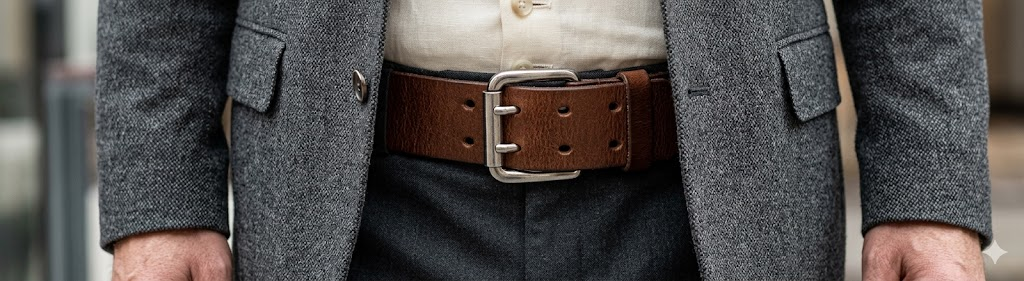
Click the image to see the belt larger...
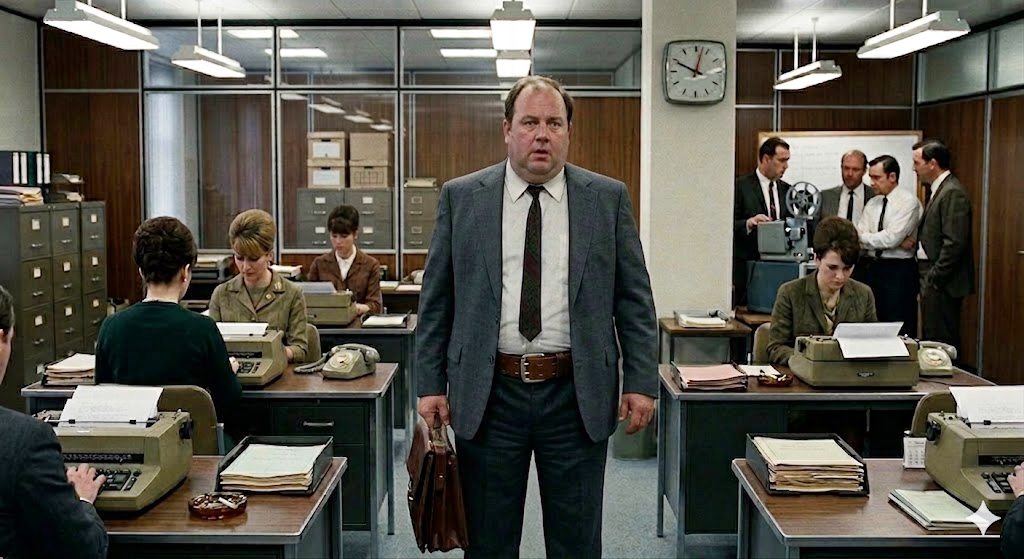
Morgan Payne was one of my teammates and his sales territory was south of Atlanta in an industrial area. One of the ways we searched for new business prospects was to drive through the territory and count the cars in an industrial building's parking lot. That would give us some idea of the size of the company and whether they might be a real prospect.
In Morgan's territory was a company called Southern Saw. They were a foundry operation manufacturing saw blades for manual and electric saw markets. They'd been an IBM prospect for years. Morgan had finally gotten a meeting with the plant manager who agreed to hear how the IBM System/360 Model 20 could be of use to his company.
Because Morgan was a little green, our manager Jim Yongue sent Brue Chandler along on the sales call.
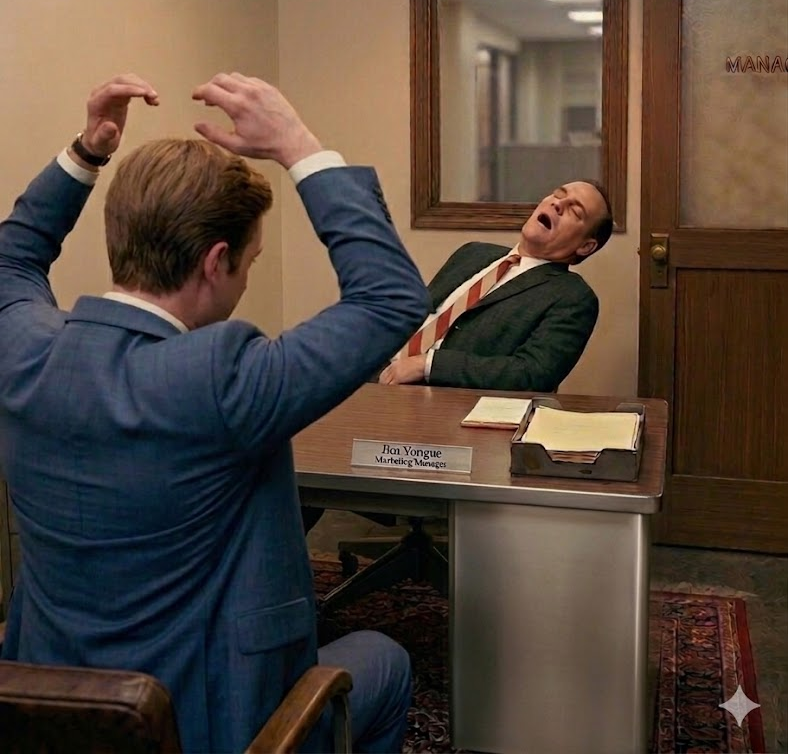
The meeting was in August just after lunch. In Atlanta, August was hot. And the meeting at Southern Saw was in the foundry. Hotter. Brue sat down; Morgan and his flipcharts were set up to pitch the System/360:
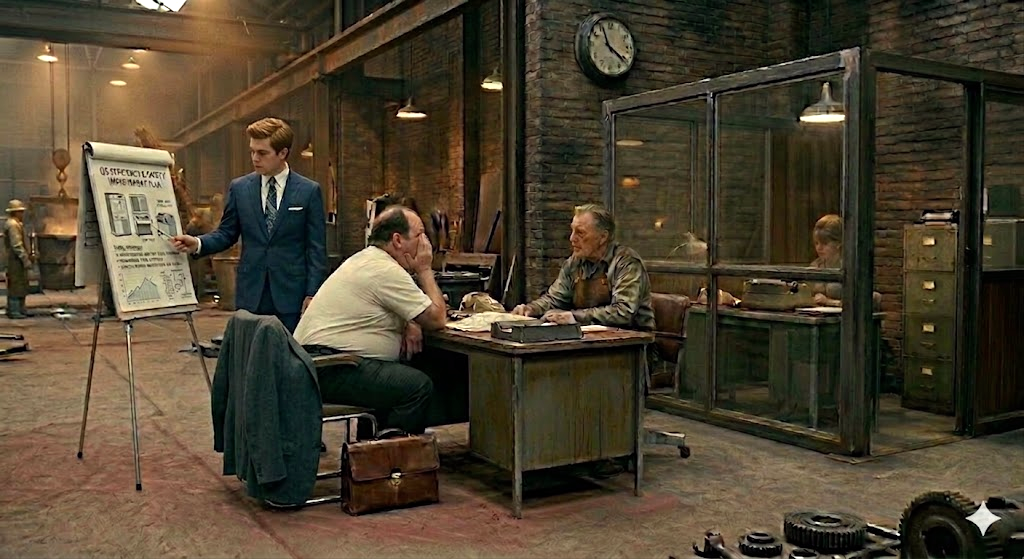
Brue was really warm so he took off his jacket, pushed his chair up close to the desk and rested his chin on his hand while Morgan did his pitch. Morgan noticed that the prospect would look away and shuffle papers while he was pitching. This went on for a while until Morgan noticed that Brue had fallen asleep -- and was drooling heavily.
The drool dripped down his arm and pooled on the desktop. As the pool grew, the prospect was moving papers out of the way.
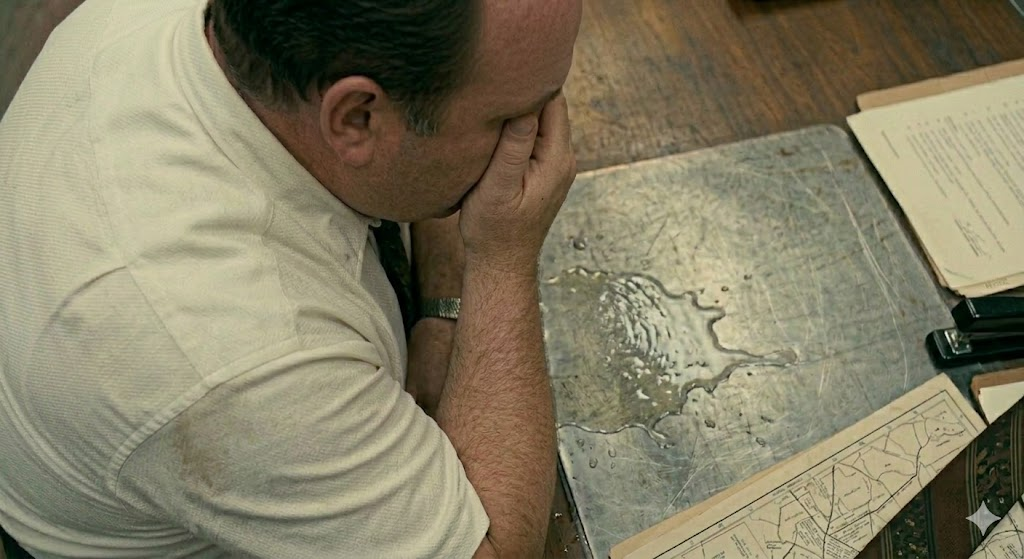
The call eventually ended and Brue and Morgan headed back to the office. Their manager was expecting a call report...
Morgan didn't know what to do. Did he tell Jim about Brue? How to do that? He agonized for much of the afternoon talking with the rest of us for advice. The consensus was that he had to tell Jim what happened. During the afternoon he headed toward Jim's office, chickened out, tried again. Several times.
Finally at about 5pm he knocked on Jim's door and was waved in. He sat down and started telling Jim what happened.
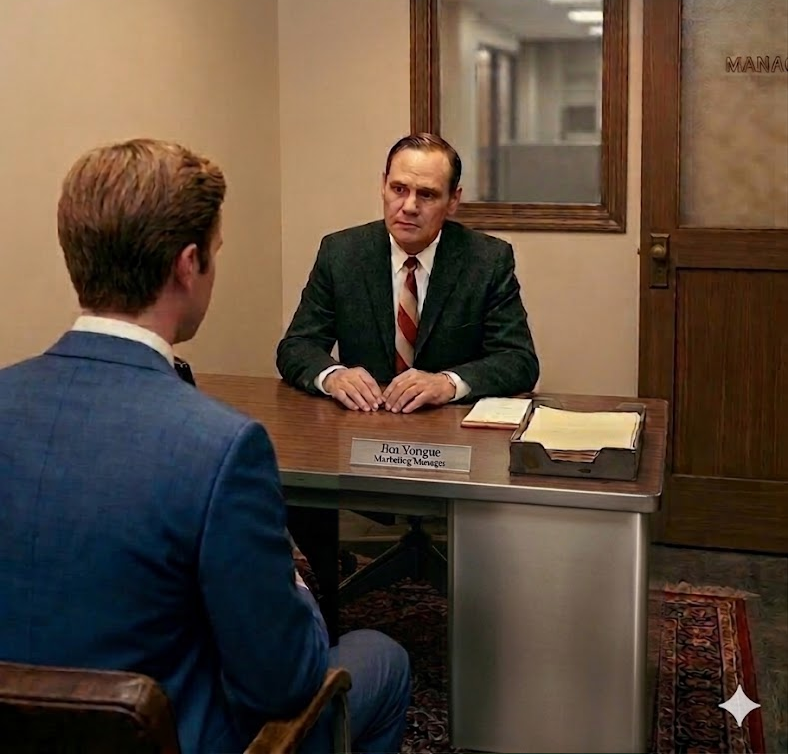
What he didn't know is that someone had already spilled the beans -- so as Morgan was talking, Jim started closing his eyes, then jerking awake, rinse and repeat.
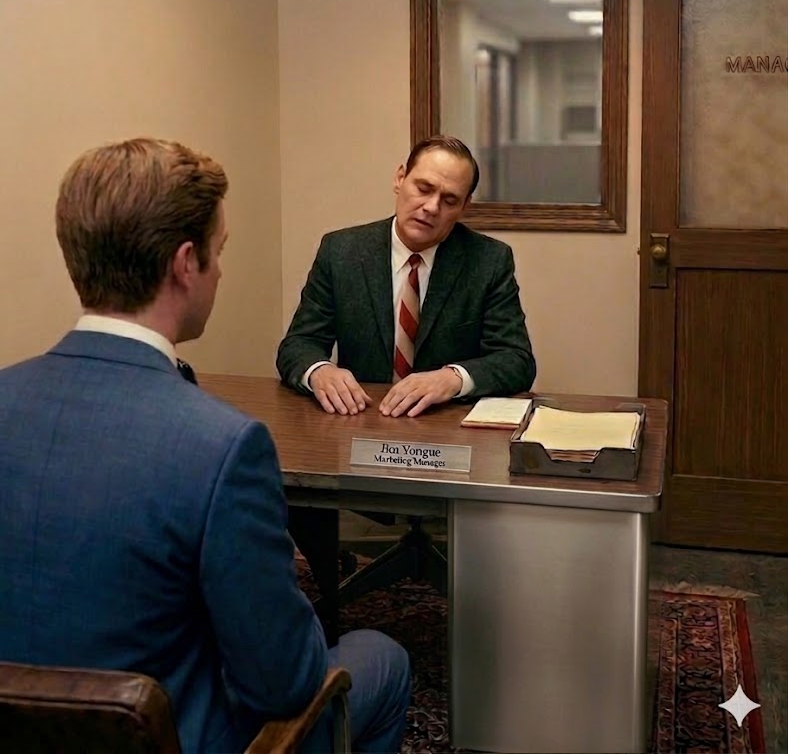
We heard Morgan shout, "My voice DOES NOT PUT PEOPLE TO SLEEP!!!!"
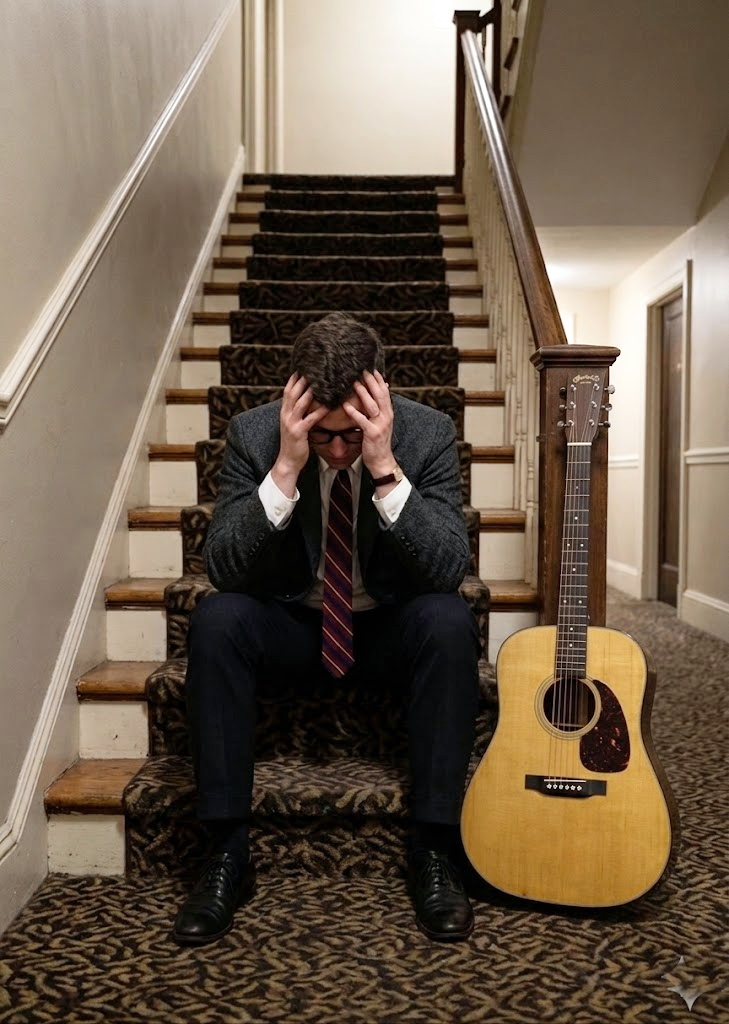
We had wanted to do what was asked and we'd ruined the evening. We had no idea.
We made our way back to the hotel, talking over the mess we'd made and went to bed.
At 1:30am, the phone rang in our room. It's was Bob. He said that family had been meeting for FOUR hours since the dinner and they had decided it would be best if we and the other groomsmen did not come to the wedding. He called the other guys with the same message. His brother would be allowed at the wedding but the rest of us, no.
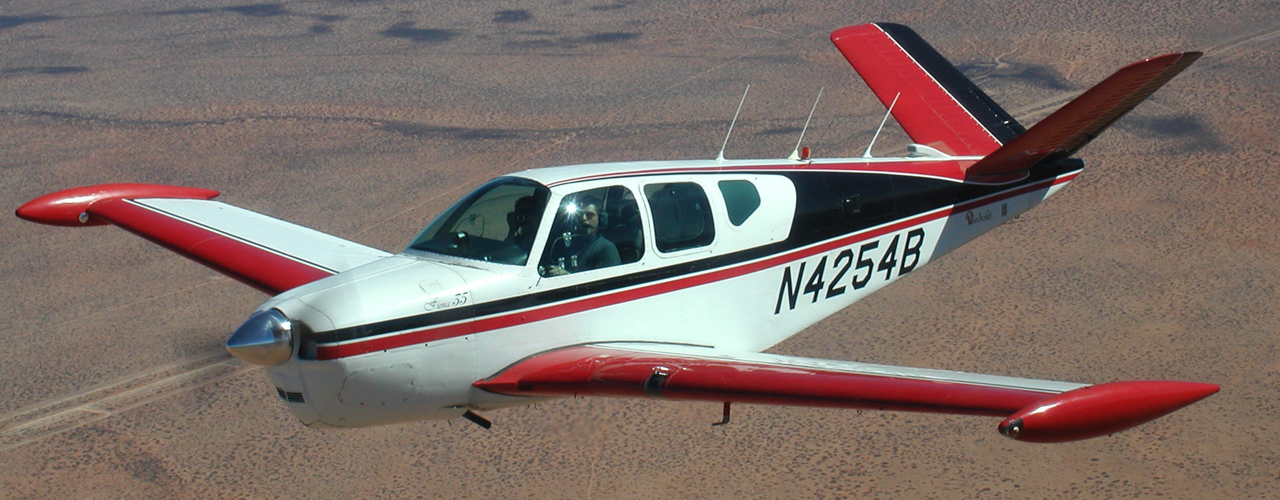
Everyone gathered in our room and we decided there was no reason to remain in Louisville so we packed up, headed out to the FBO and at 3:00a flew home to Charlie Brown Airport in Atlanta. We were feeling low, embarrassed and so contrite.
Somewhere over Nashville our attitude turned from sorrow to anger.

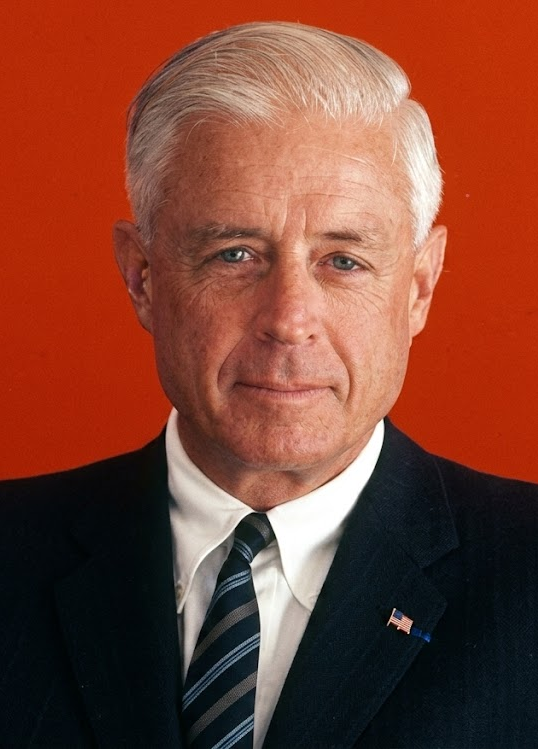
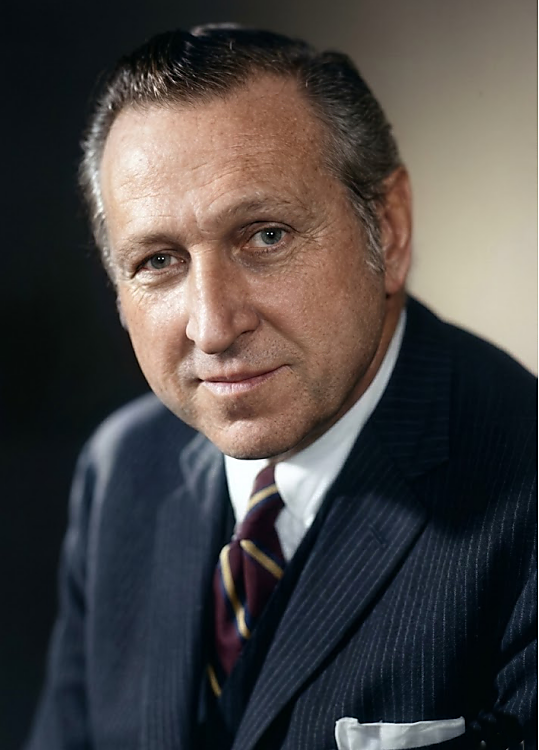
Tom Watson (Chairman) Vin Learson (President)
... and all the others top execs and board members. I asked them to please follow me and we walked down a big flight of stairs to the main meeting level.
At the bottom of the stairs I spotted Gael standing there. When Tom Watson stepped down the last step he said, "Hi, Gael!" and she said, "Hi, Tom!" and everyone kept moving. I'm sure I looked thunderstruck (because I was!)
Later I got the story. Gael arrived at the hotel early at about 8:30a and went into the coffee shop to get a Coke. She saw Tom Watson and his wife Olive sitting in a booth; they were both well-recognized (by IBMers for sure) back then. Being Gael, she approached and introduced herself and me (in absentia). They invited her to join them and they had a nice chat. I'm sure she let them know how glad we were to be part of the IBM family.
And that's how Gael and Tom Watson became first-name acquaintances.
The Esmeralda Rally
When I lived in Greenville, SC and, because there wasn't much to do there, I joined the local chapter of the Sports Car Club of America (SCCA). This introduced me and my 1960 Corvette to sports car rallying and I had a terrific time once a month enjoying this new (to me) sport.
Briefly, the idea of a rally is to follow a set of fairly cryptic instructions from Point A to Point B -- in exactly the right amount of time. To win, you need to follow instructions precisely and drive at precisely the prescribed rate of speed. No problem... (If you want to know more about rallying, click HERE.)
Gael and I decided to organize an overnight rally so we conducted a search for a suitable facility to host the rally -- and we found the perfect spot. Near Chimney Rock, NC in a town called Bat Cave (really) we found The Esmeralda Inn.
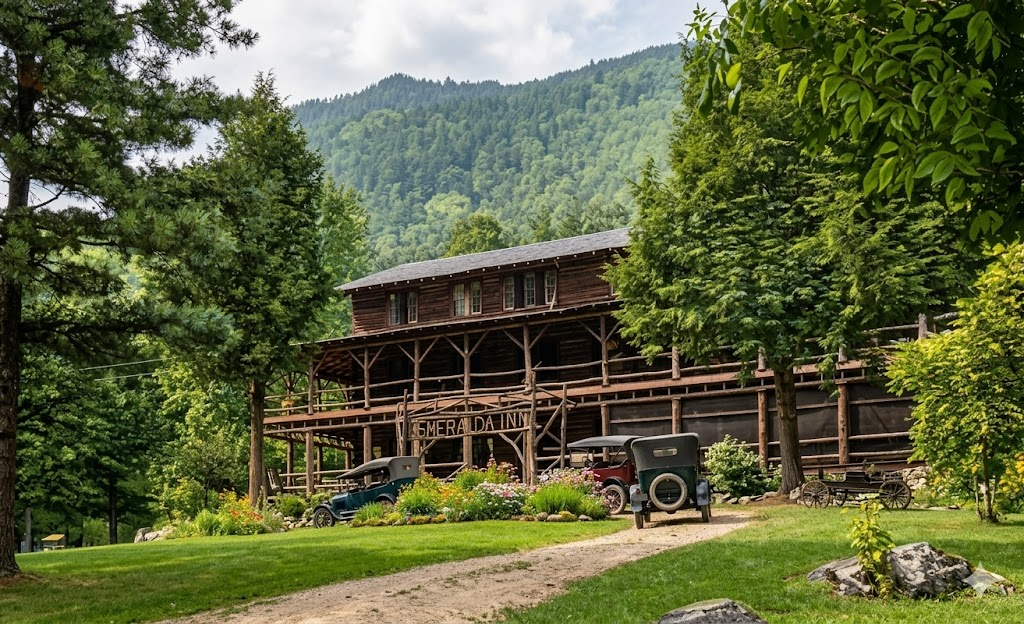
The Esmeralda Inn was built in 1892 and had a long history of hospitality. To say that the Esmeralda was rustic would paint an incomplete picture. It had thirteen guest rooms and a private bathroom was a luxury only one or two rooms could boast.
The first Esmeralda Rally was held June 7-8, 1969 and we were twelve couples; this started a tradition. Over the years we brought movies to watch (16mm!) and later music took over where we picked and grinned all night long.
After repeating the fun four times, we had a twenty year lapse (while our contemporaries moved from sports cars to mini-vans) before starting them up again in 1991.
To read about all FIFTEEN Esmeralda Rallies, click HERE.
1970
My biggest customer was National Distributors. They were the largest liquor wholesaler in Georgia. They had a System/360 Model 20 installed (for about a year) and they weren't happy. The system had been sold by Brue Chandler, a very experienced IBMer in his 50s. If you've been following along you know about Brue from last year,
Before the Model 20, they had an IBM punch card system using what was called a "tub file":
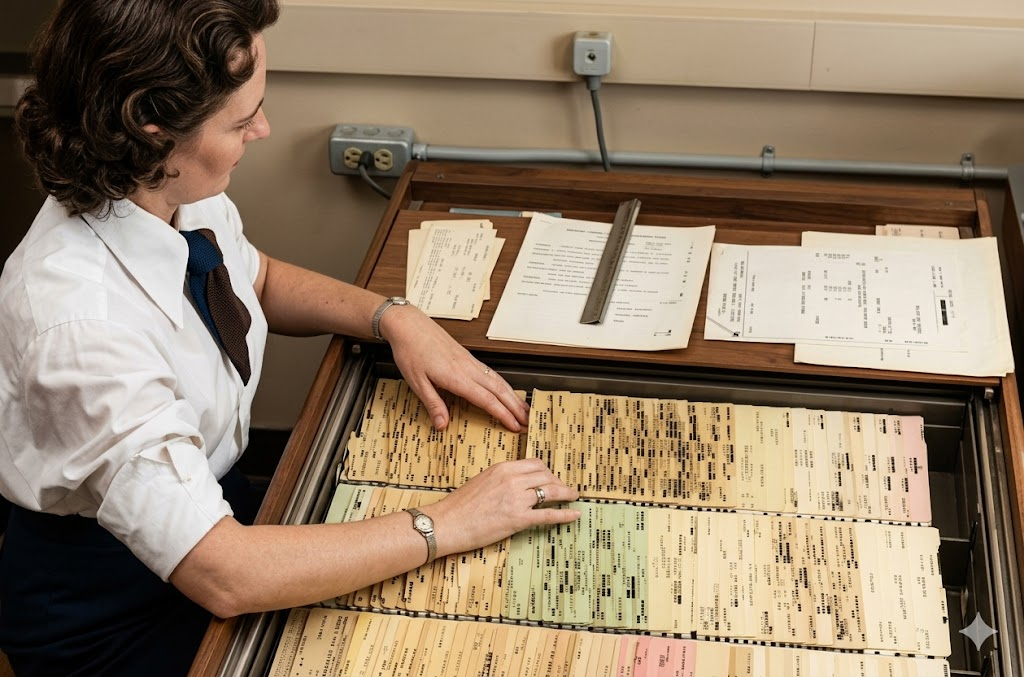
This is a methodology that Brue understood thoroughly -- computers, not so much.
So Brue had the Model 20 installed to emulate a tub file card system; dead wrong for a computer inventory application -- it's no wonder the client was unhappy.
I did a systems analysis and recommended that they switch from punched cards and add a hard disk drive to their system:
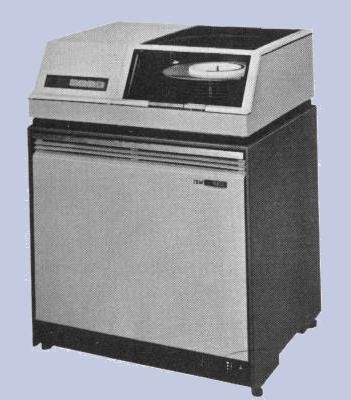
(For computer historians, the drive used a removable
hard disk pak with the capacity of a whopping 2 Mb..)
Since the Model 20 Submodel 4 was recently announced, the configuration actually would cost less than what they were paying now. In other words, they'd have the proper configuration at a lower cost. Because of IBM's Sales Plan, making this "sale" would actually mean I had to pay back to IBM nearly $1,000 in commission -- commission that I'd never received in the first place (Brue did).
This should be an easy presentation; selling a $$ downgrade usually results in a happy client.
I scheduled my presentation with Mike Carlos, President of National Distributors:
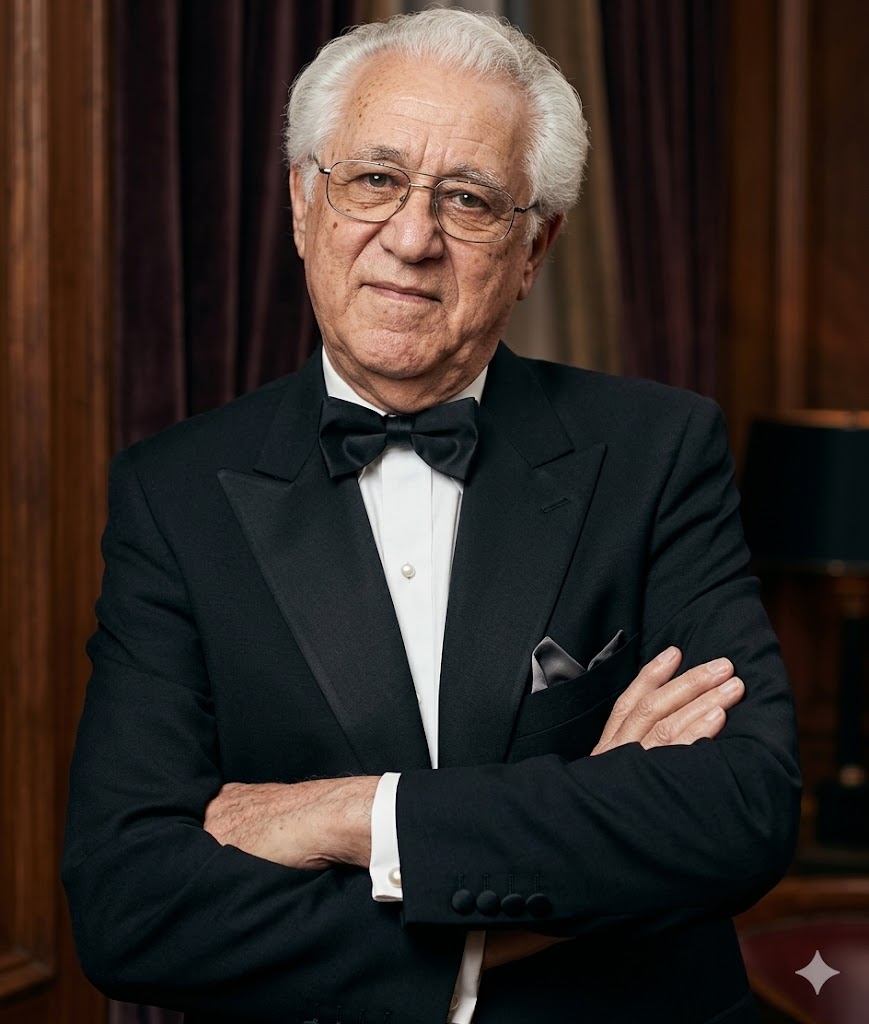
Mike had an imposing office with his desk on a dais, putting him a head above any seated visitors. I took my flipchart easel in there and made the pitch. Net result if he accepted my proposal: Saving them about $1,000/month -- while costing me $1,000 out-of-pocket on commission to be paid back to IBM.
Not surprisingly, Mike bought the concept at once. I said that all I needed from him was a letter authorizing the change; once we put the order in, the new system would be installed in about eighteen to twenty-four months.
You'd have thought I suggested dismemberment of his first-born.
Mike had a terrible temper and he began to yell at me, saying that he wanted that new system (and the attendant savings) next week. I explained that the lead time for the order was eighteen to twenty-four months and, as soon as I was able to enter the order, we'd begin to press for a schedule improvement. Logical, reasonable.
Not to Mike. He exploded, cursing and calling me all manner of a dog and finally demanded that I go get Jim Yongue (my boss) and bring him back to solve this problem (me). He pronounced Jim's name as "yon-gue" (like it's spelled) instead of "young".
I slunk back to the office. Nice job, Chaz. Selling a downgrade and it didn't go well. I explained to Jim what had happened (he knew what I was proposing and was on board with the plan). He said, "We can't get the new system for at least eighteen months." I told him that's what I told Mike and that he had exploded at that news. Jim sighed, put out his cigarette, and we drove back out to National Distributors.
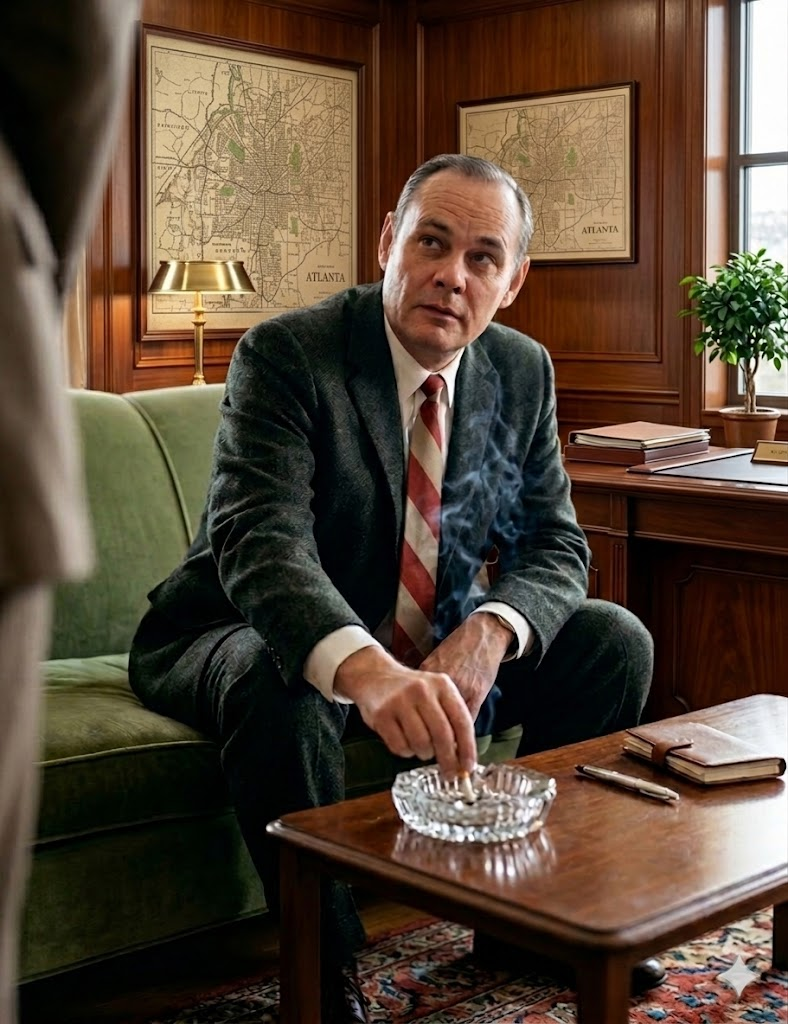
Mike made us wait a half-hour before allowing us entry into his office. I sat in a side chair, Jim sat on the sofa opposite Mike's desk, lit up a cigarette and said:
"So, Mike, what seems to be the problem?"
Mike went back to the 1950s and dredged up every event where he thought IBM had taken advantage of him. Every late service call, every failure to meet his expectations, every billing error and on, and on, and on. As he ranted, he got angrier and angrier and his face got redder and redder. Finally, he said, "And today, this #*&@% little punk comes in here and tells me I can't have the #^%*&$ computer I need for eighteen #%@&* months!!!!!!!! What are you going to $%^& do about it?!!!!!
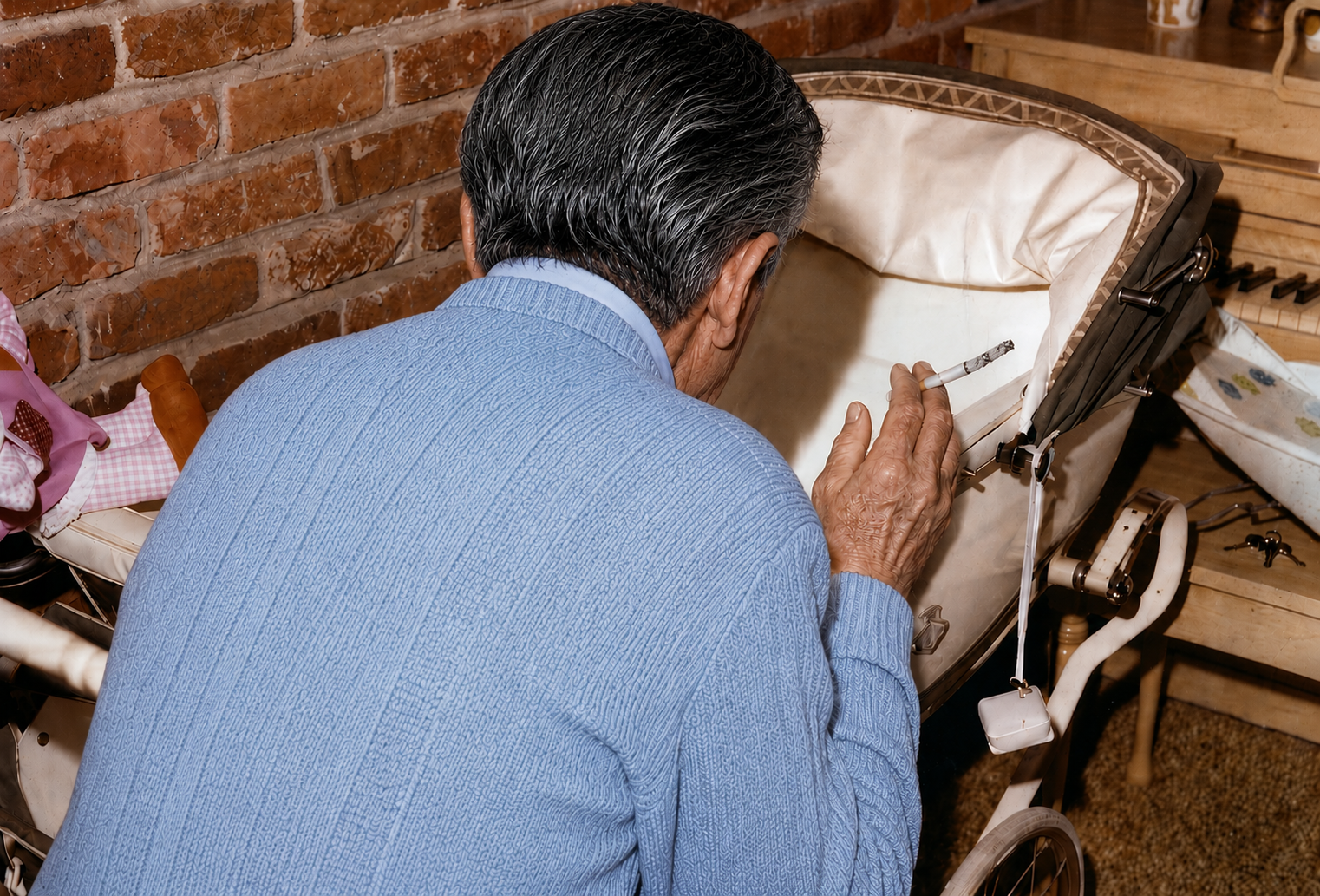
"JESUS CHRIST, CHARLES, GET THAT GODDAMN CIGARETTE AWAY FROM THE GODDAMN BABY!!!!!!"
To which he yelled,
"HONEST TO GOD, ALMA! I ONLY WANTED TO KISS HER GOODBYE!
And now the (goddamn) baby burst into tears from the racket...
Apparently her unintentional curse didn't have any lasting effect since Kristyn's life has been pretty much blessed!
Kristyn in 2025

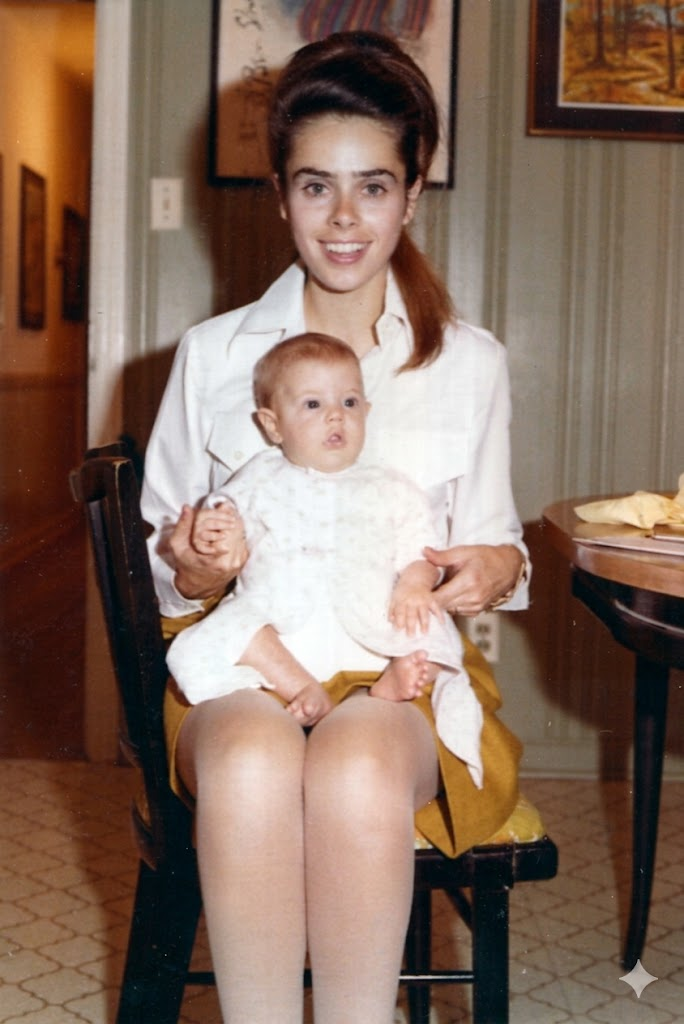
Here are my two best girls, mid-July 1971:
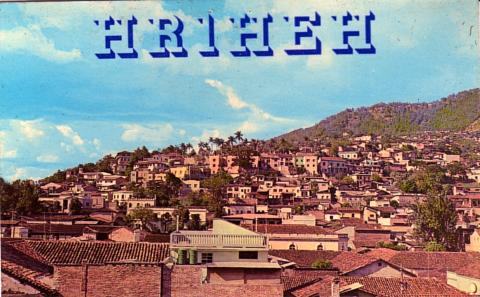
His mission was to tend to a remote Indian tribe fifty miles out in the bush. These people were in sore need of medical and dental attention.
I had "phone patched" Harold in to a physician in Atlanta several times as he was trying to arrange a medical mission to help his tribe.
The Northside Drive Baptist Church here in Atlanta:
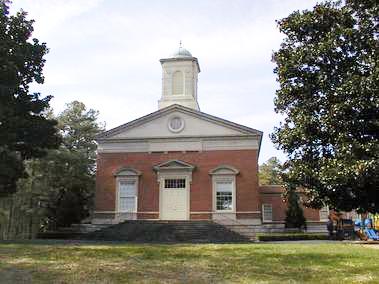
.. accepted this project called "Operation Touch" as a church mission and were helping mount an expedition to Honduras. They had recruited doctors, dentists and nurses and were sending a dozen young people from the church to go and assist. They were going to be in the bush (no electricity, no services) for six weeks.
Another Atlanta ham, Dale Schwartz K4ROZ and I were asked if we could provide phone patches from Honduras the the young people's parents here in Atlanta. We readily agreed.
Since there was no electricity in the bush, Harold had a small bicycle-operated generator he took along with his ham gear to keep in radio contact.
Over the six week period, Dale and I handled the phone patches to the kids' folks here in Atlanta. Each youngster was able to talk home every three or four days and it really was great to give them that contact.
The mission ended and we didn't hear any more about it for a few months.
Then Gael and I received an invitation to a dinner and reception at the Governor's Mansion honoring the participants of the Honduras Medical Mission!
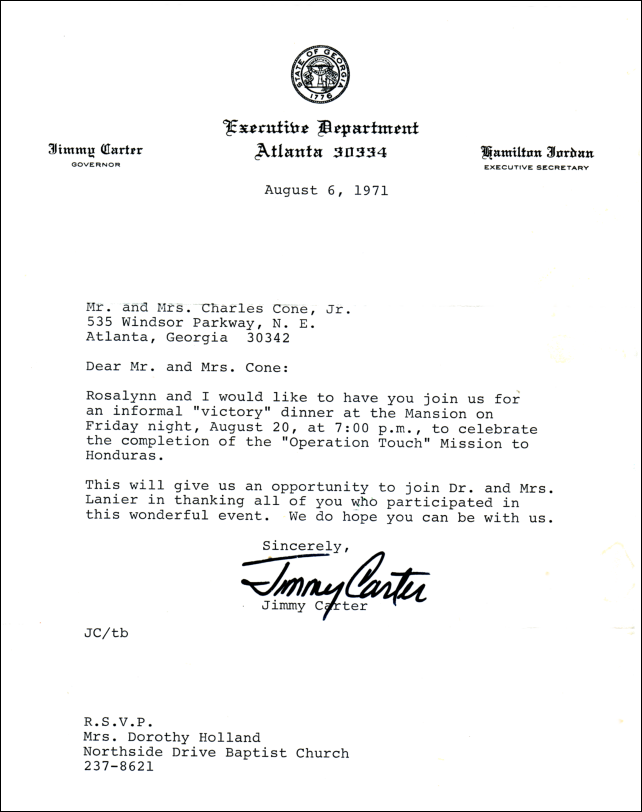
I checked with Dale and he and Susan had received one as well. Wow! A dinner and reception at the Governor's Mansion. I guess the mission had friends in high places.
It turns out that one of the young people on the mission was Chip Carter, son of Governor Jimmy Carter. Several of our phone patches were between Chip and Jimmy and Rosalynn Carter -- but we didn't recognize the phone number or voices. What a thing!
The evening came and, dolled up to the nines, we arrived at the Mansion. We were met at the door by the Governor, Mrs. Carter and the Governor's mother, Miss Lillian:
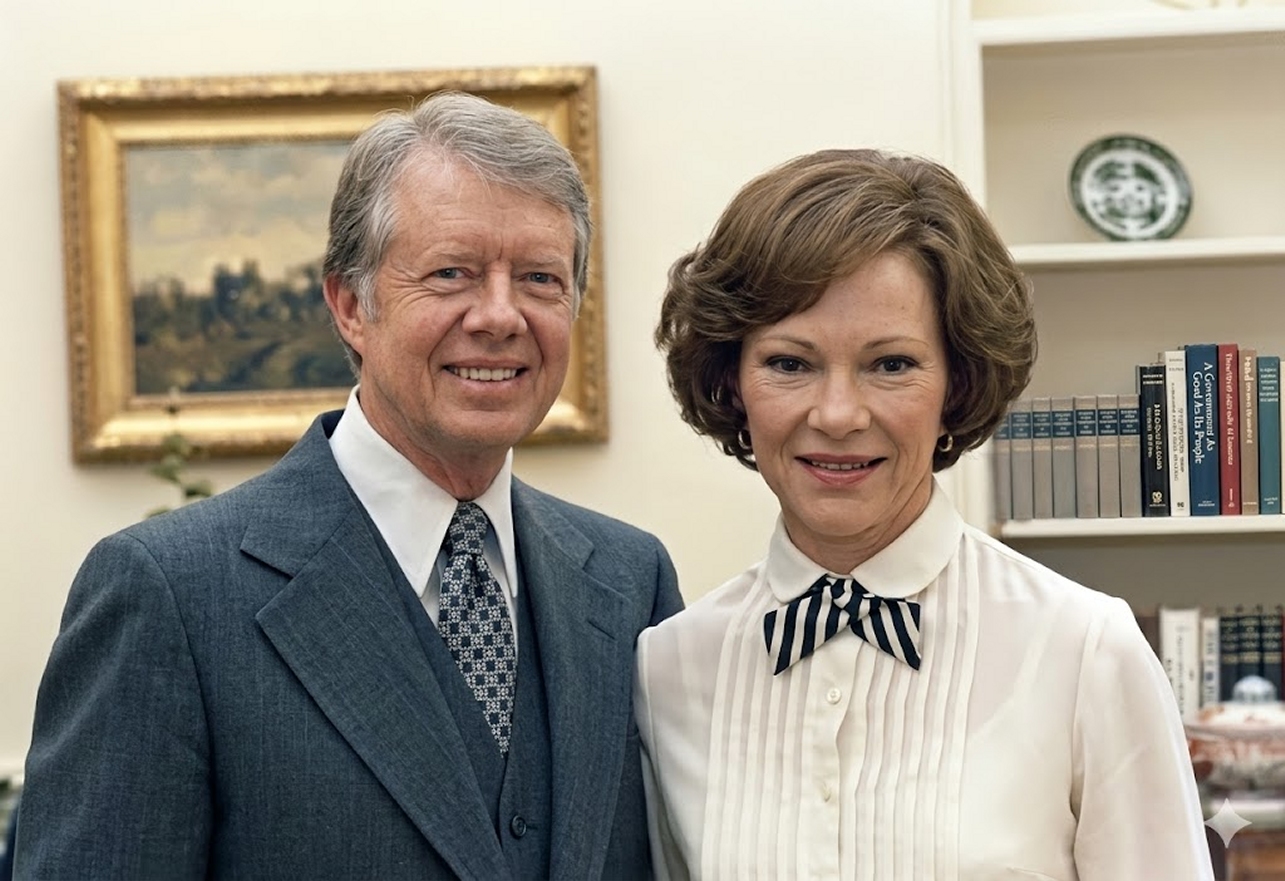
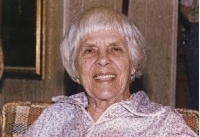
They called us by name and were most gracious in welcoming us to the event.
In due time we were ushered downstairs to the basement where there was a large meeting room. It was outfitted with a number of cafeteria tables with red and white checked paper tablecloths. The food service was another four or five tables laid out with potato salad, Cokes in bottles, potato chips -- and Spam. That's right; Spam sliced directly from the can (can't miss those oblong rectangles).

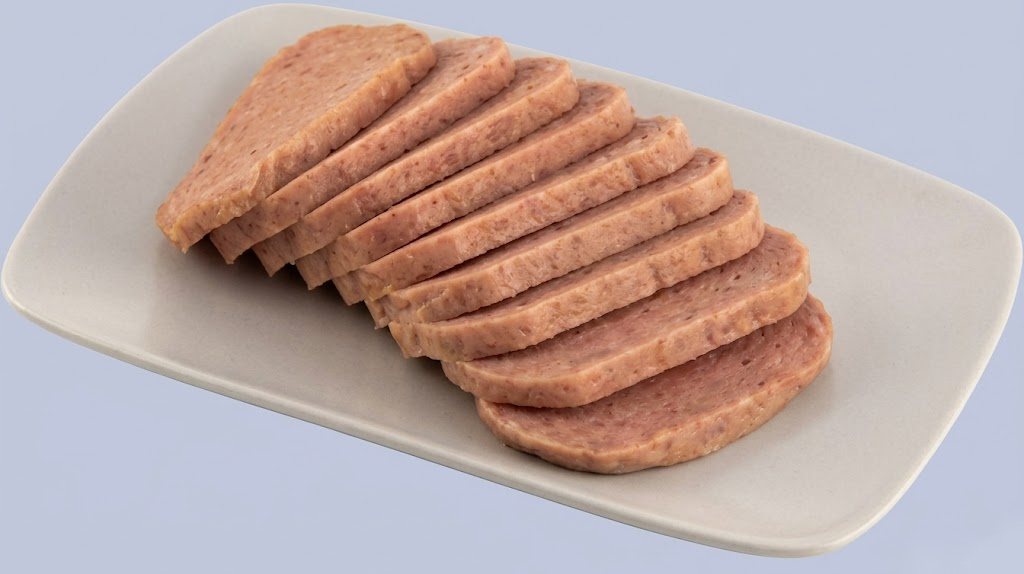
We're in line with our paper plate, paper napkin and forks. Gael and Susan (and many of the other folks) were in cocktail dresses and gowns (after all, we'd been invited to a "dinner (we read: "banquet") and reception" at the Governor's mansion).
I whispered (I thought) to Gael, "It's obvious that the Carters aren't wasting state money on this event!".
A voice from behind me said, "Yes, my Jimmy is very frugal." His mother, Miss Lillian. Gulp!
It was a pleasant evening for a worthwhile cause but when I drive by it, I never look at the Mansion the same way again.
1972
The most memorable event of 1972 was the Ham Radio DXpedition I led to Navassa Island. If you're (really, really) interested in this event, you can check out the website dedicated to it: Click HERE; here's the short version:
Hams like to talk to foreign countries. There are awards for talking with (called "working") as many as you can. Unfortunately, some of the places that count as "countries" are uninhabited. Makes it tough to talk to someone there if no one lives there. For that reason, hams around the world often mount expeditions (called "DXpeditions") to such places in order to provide contacts to the rest of the world.
In 1971, I took a world map and drew an arbitrary 2,000 mile circle centered on Atlanta figuring that was as far as I could afford to go. I determined that the rarest "country" in that circle was Navassa Island. Navassa is located between Jamaica and Haiti and due South of Cuba.
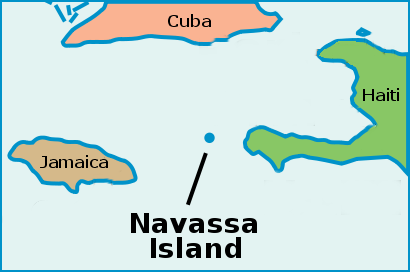
Navassa had a history as a guano mining operation starting just after the American Civil War. A lighthouse was erected there in 1917 and was converted to an unmanned light in 1929. It was later deactivated in 1996. Why did Navassa qualify as a "country" (or an "entity" in the Ham Radio awards lingo)?
The rules for entity status include possessions more than 250 miles from the entity that owns it. The US owns Navassa island so it qualifies as an entity.
Because it was uninhabited and difficult to access, it had been a long time since any DXpedition had been there. Its rarity was assured.
My first task was to secure a vessel to make the 12 hour trip from Kingston, Jamaica to Navassa, to stand by while we were there, and to bring us the 12 hours back. A local ham in Jamaica Lloyd Alberga 6Y5LA helped me make those arrangements. The total fee for the motor vessel Tycoon was $5,000 with a three-day stay on Navassa.
The Tycoon could carry ten people plus its crew of three so my next task was to recruit nine others to come along. I gave no thought to the total headcount being thirteen (not a lucky number). In these days of monster DXpeditions costing hundreds of thousands of dollars, it may seem odd that raising $5,000 to pay for the boat was a problem. It was. I had strict criteria when recruiting members of the team:
- Do you have $500 (your share of the $5,000)?
Operating skills were not even mentioned!
At that time, permission to visit Navassa was under the control of the US Coast Guard. The Coast Guard was responsible for maintaining the light in the lighthouse so it fell to them to grant or deny access. I researched the rules and submitted an application which was approved. To get that approval, each DXpedition member had to sign a ten-page application which said that we were on our own; that the Coast Guard was released from any obligation to rescue us. Gulp!
Here are the ten of us:
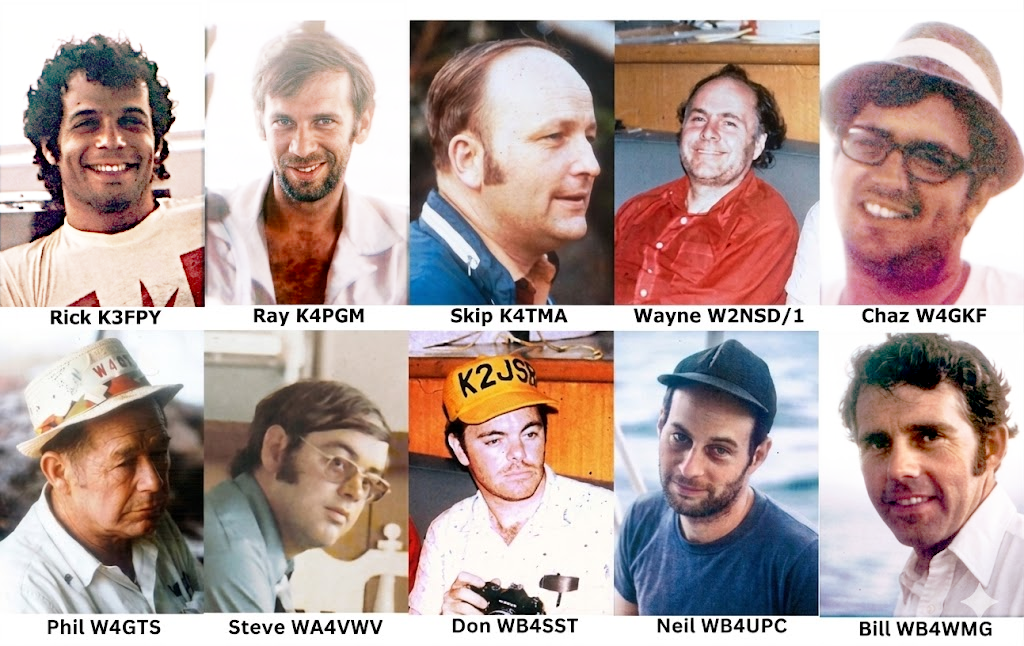
Getting to and onto the island was a challenge; read all about it HERE.
We made 5,700 contacts in three days and everyone got home alive. Great trip!
Hamilton Cottage
While on the island I was able to talk to Gael frequently. I described the "phone patch" earlier: It allowed me to talk to another state-side ham and for him to "patch" Gael into the conversation by telephone. She had flown with the baby to NJ to visit her folks while I was away -- it was easy to get someone to do the phone patch.
In one of those conversations I suggested that she and the baby fly down to Jamaica to meet us and we'd spend a week in a rented cottage with Ray Cobb (one of our DXpedition members) and his wife B.A. And so it was done. When Tycoon docked in Kingston, there were Gael and B.A. ready to meet us.
The next day we drove to Ocho Rios (on the northern coast of Jamaica) and took possession of the rented cottage called "Hamilton Cottage". It sat on a cliff overlooking the sea and had a salt-water pool. There were two bedrooms and came with a staff of three. The agent told us it was customary to tip the staff a week's wages upon departure. We gulped -- until we found that the three of them made $90/week combined!
Kristyn's first taste of international travel went down well.
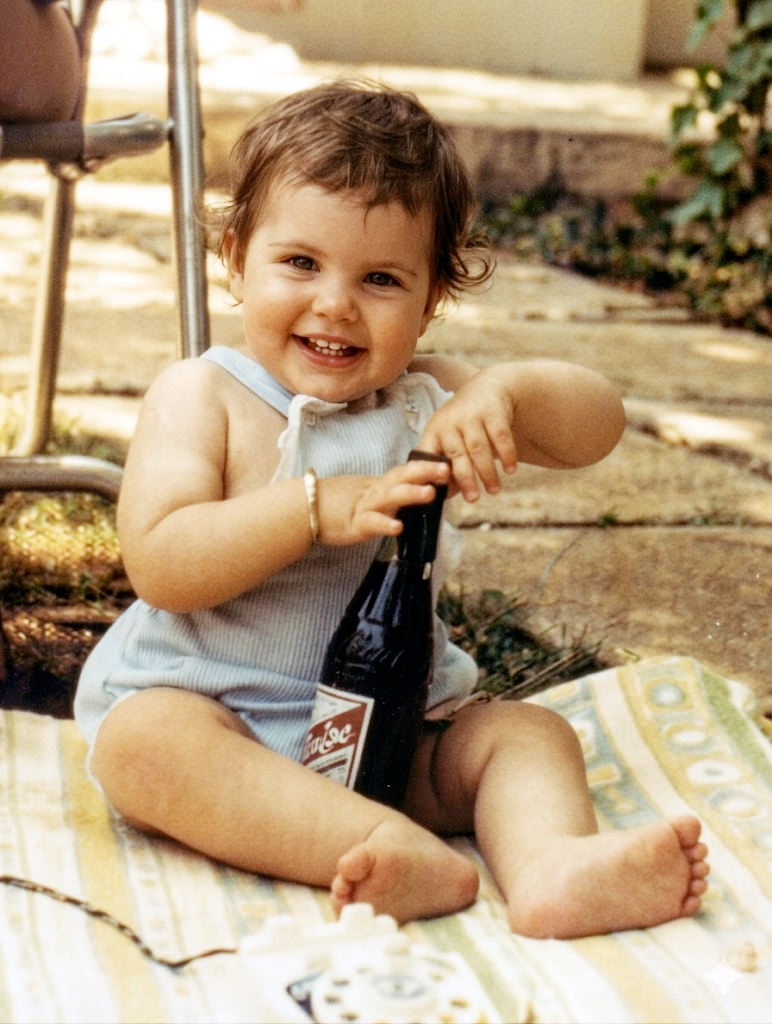
She STILL loves Red Stripe Beer!
One night Ray disappeared into town and returned with two reggae and steel bands. He set up a "battle of the bands" out by the pool and we had the best time!
We had such a good time that Gael and I decided to return to Hamilton Cottage next year with another couple -- and no baby.
Somehow Ray had met and befriended a Jamaican ham operator, John Manley. He was a physician and was the brother of the Prime Minister. He came by the house once and said that he had trouble importing a decent antenna. I said that Gael and I would be returning next year and I would bring one along and "lose" it in Jamaica.
1973
Back to Jamaica, Mon!
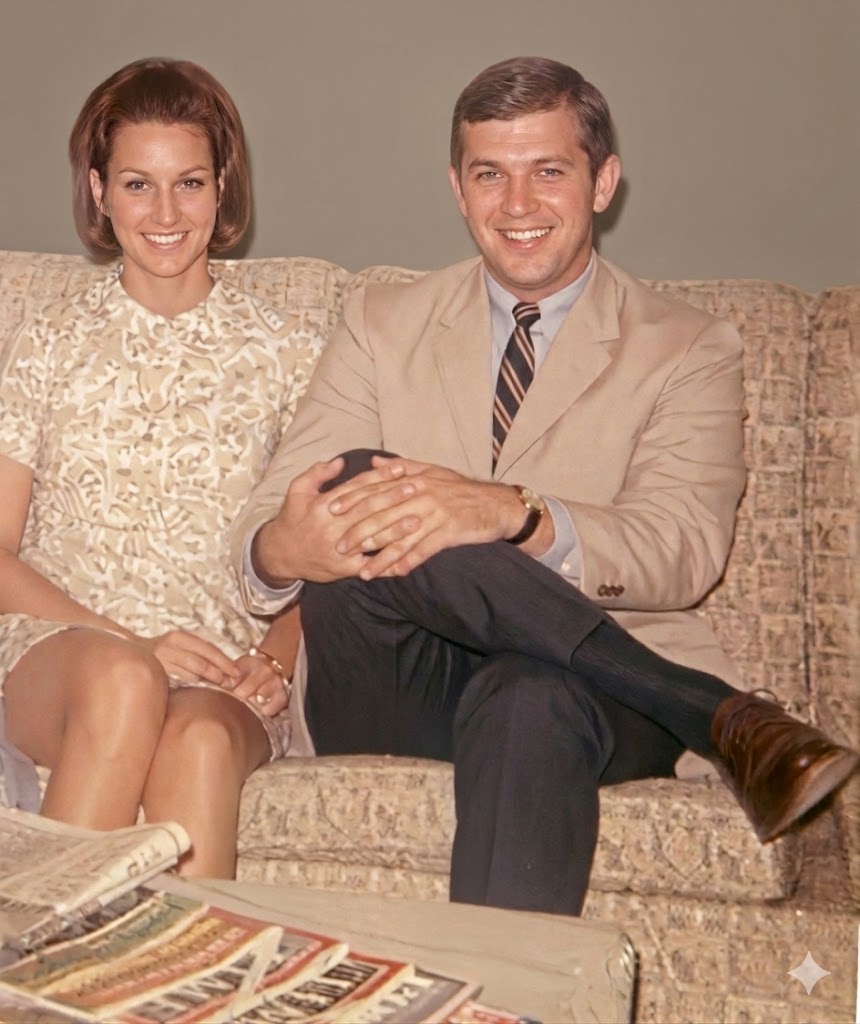
We returned to Jamaica in May of 1973 with good friends Pete and Marianne Butler:
 Gael's Mom (now called GrandMommy) stepped up to care for Kristyn. I wanted to "ham" in Jamaica (of course) so I brought along a transceiver and an antenna:
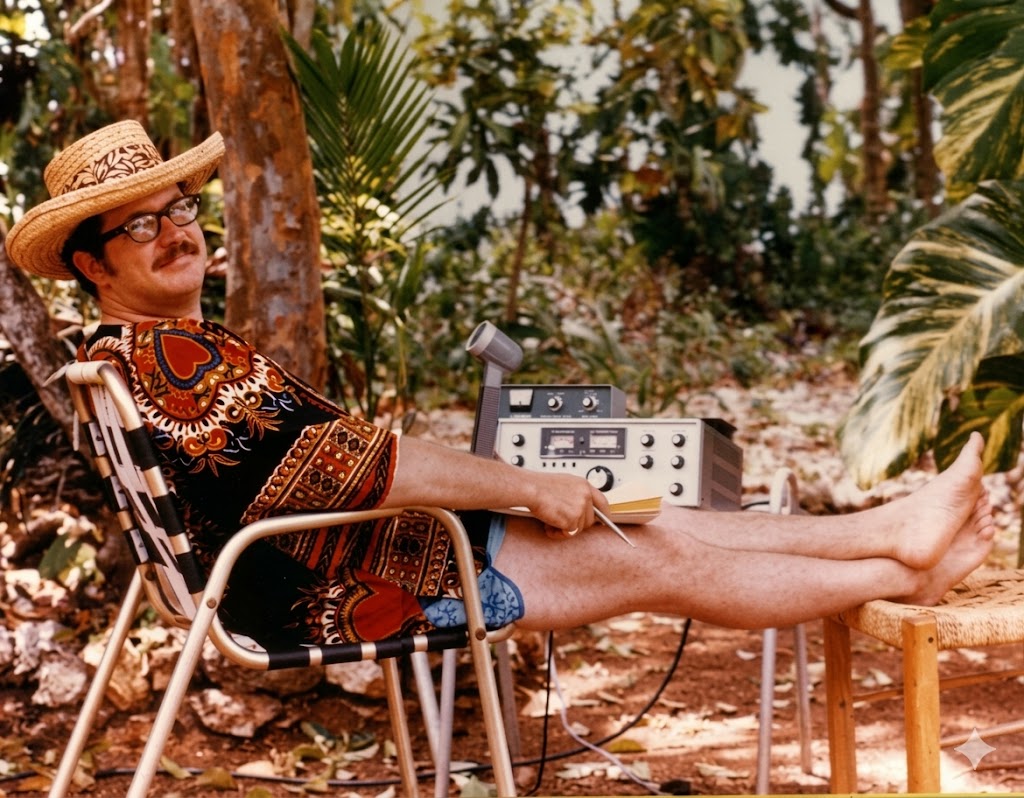
Photo credit to Pete Butler (he insisted..)
.. so I could be on-the-air from paradise.
When we left, I planned to leave the antenna for Dr. Manley.
He was so appreciative that he invited the four of us "up" to his home for dinner. He and his lovely wife lived at the top of a mountain; "up" didn't describe it well. It was a winding, narrow road. But we made it and had a lovely dinner. We invited them to join us at a local restaurant for dinner in a day or so and they accepted.
At the time, Ocho Rios was really "country". Kingston was like Calcutta and Montego Bay was like Miami Beach but Ocho Rios was much more laid-back. They did have a five-star restaurant in a resort called San Souci. Odd to find an Italian restaurant in Jamaica? Not so much. We made reservations and met the Manleys there.
We were halfway through the salad course when I looked over at Pete and he was frozen in place with his fork halfway to his lips. I asked what was wrong and he said, "Ali MacGraw just walked into the room!" If you're too young to know, Ali MacGraw was the #1 female movie star at that time.

And, right behind her were Steve McQueen (the #1 male movie star at that time):
.. and Dustin Hoffman who was a big-time box office star himself.
They were with a half-dozen or so others and they sat across the room from us.
Of course, the Manleys had no idea who they were so we explained. Ali and Steve ate with the film execs and Dustin Hoffman ate with the crew who were seated right next to us. Since their chairs were near touching, Gael felt bold enough to say, "I really enjoy your work." He responded graciously and they even had a dance later.
They were in Jamaica filming Papillon which became one of the great prison escape classics.
And I "lost" the antenna in Jamaica; Dr. Manley "found" it.
Betsy and the Record Biz
My best friend Pete and his friend Tom Gable (he had more than one friend, it seems) discovered a girl folksinger in a restaurant/bar called Dante's Down The Hatch. Pete is a teetotaler and yet was hanging out a couple of times a week in a bar. There had to be a good reason. Tom and Pete came often to see the singer whose name is Betsy Legg. She had a lovely voice and song choices much like Joan Baez. It didn't hurt that she made herself look like Joan.
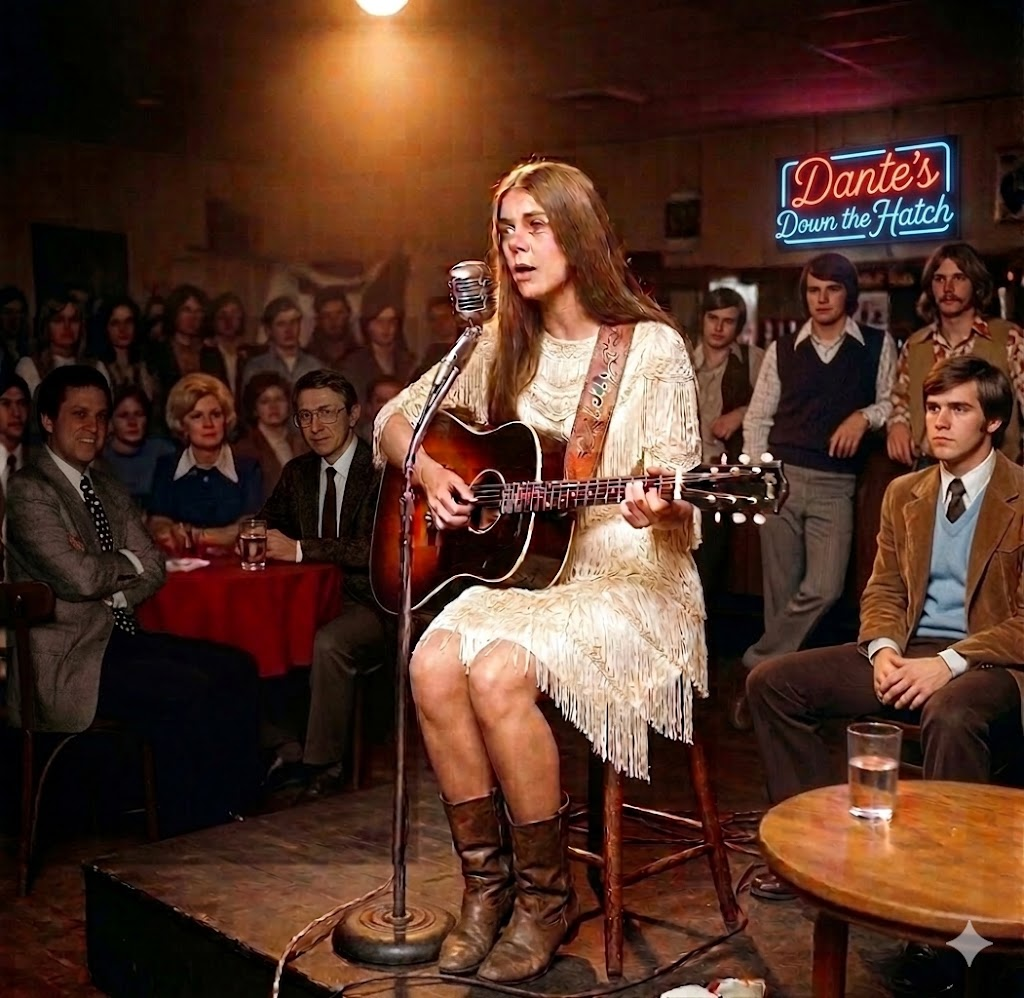
That's Pete and Tom at the left side.
Pete and Tom were fans and soon were chatting Betsy up between sets. They asked why she didn't have a record. She explained that she'd love to make a record, but didn't have the money or financial backing to produce one.
I don't know why, but Pete thought that I could make that happen for her. I went to hear her and agreed her voice was great. I knew nothing about producing an LP but, hey, how hard could it be? I did some research and learned the steps and costs of doing that. The four of us met and decided to go forward with the project as four equal partners. We called the company BCG Record Company (ButlerConeGable). Betsy would put up her talent, I would handle the production/logisticd and Pete and Tom would put up the money.
We booked studio time at a local studio called Kin-Tel Recording. Betsy brought in two friends to play lead guitar and bass while she played rhythm guitar. She was quite the perfectionist so the studio time quickly exceeded budget. She had a friend take the photos that became the record jacket.
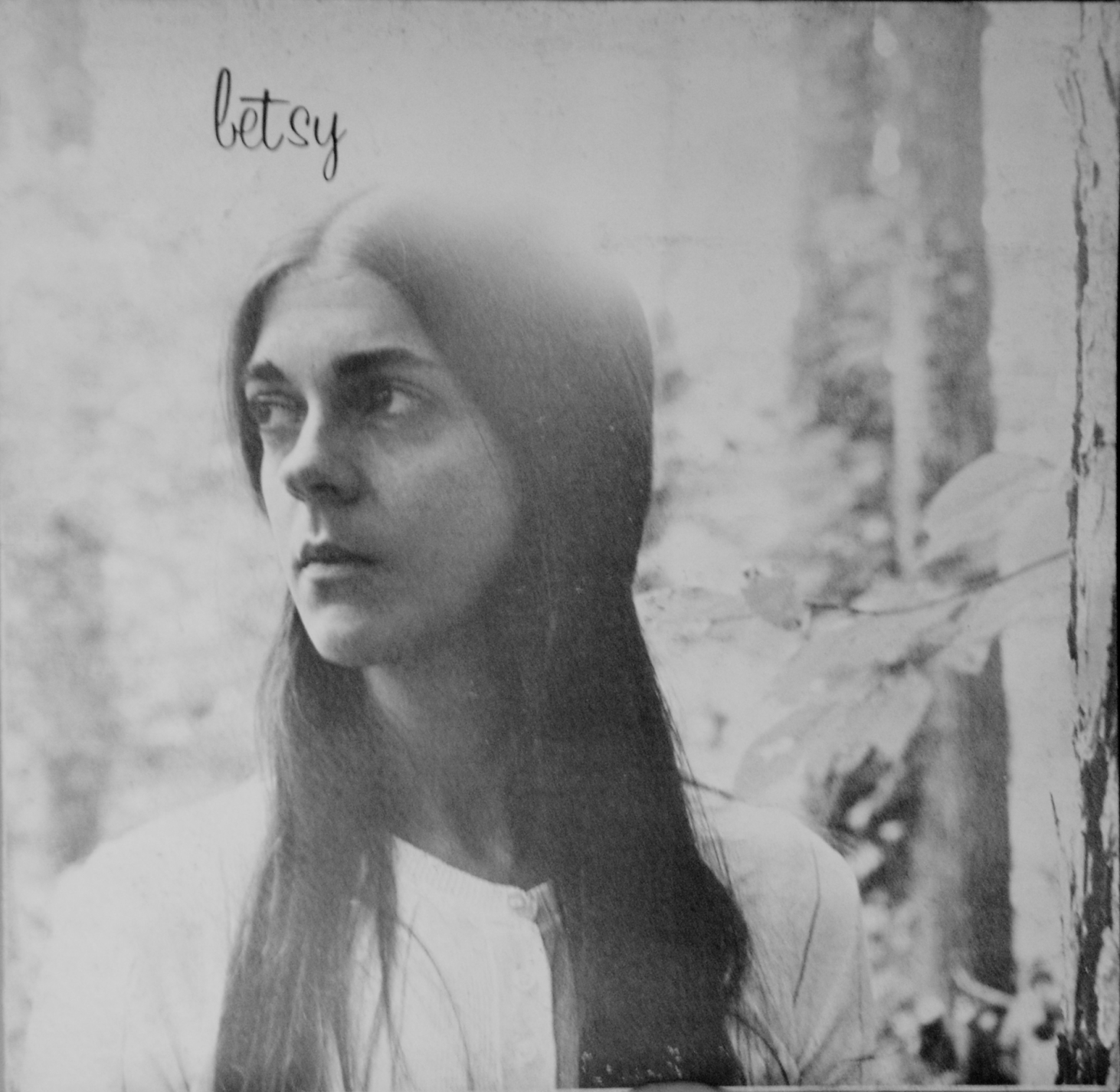
Once the tracks were frozen, I sent the recording to be mastered in Nashville (where else?). I found the company to do the vinyl pressings. I found a printer in Nashville who specialized in creating LP album covers. You may not know it, but the album cover is the most expensive component of creating a record. Once the studio time and mastering were done, pressing albums was a matter of pennies -- but the jackets...
We had decided to press 500 LPs but I decided to print 1,000 album covers in case the record was more successful than we expected. The marginal printing cost between 500 covers and 1,000 was quite small. Because this part of the project was so costly, we elected to go with black and white rather than full color (as you can see above).
We eagerly awaited the delivery of our 500 albums. Record albums are HEAVY so we had them shipped by Greyhound bus. Pete and I went to the terminal at 2am to pick them up, then to my home to open a box and play "our" records. It looked and sounded great!
The next day I took 50 albums to Jim Sallee's Record Shop in Buckhead...
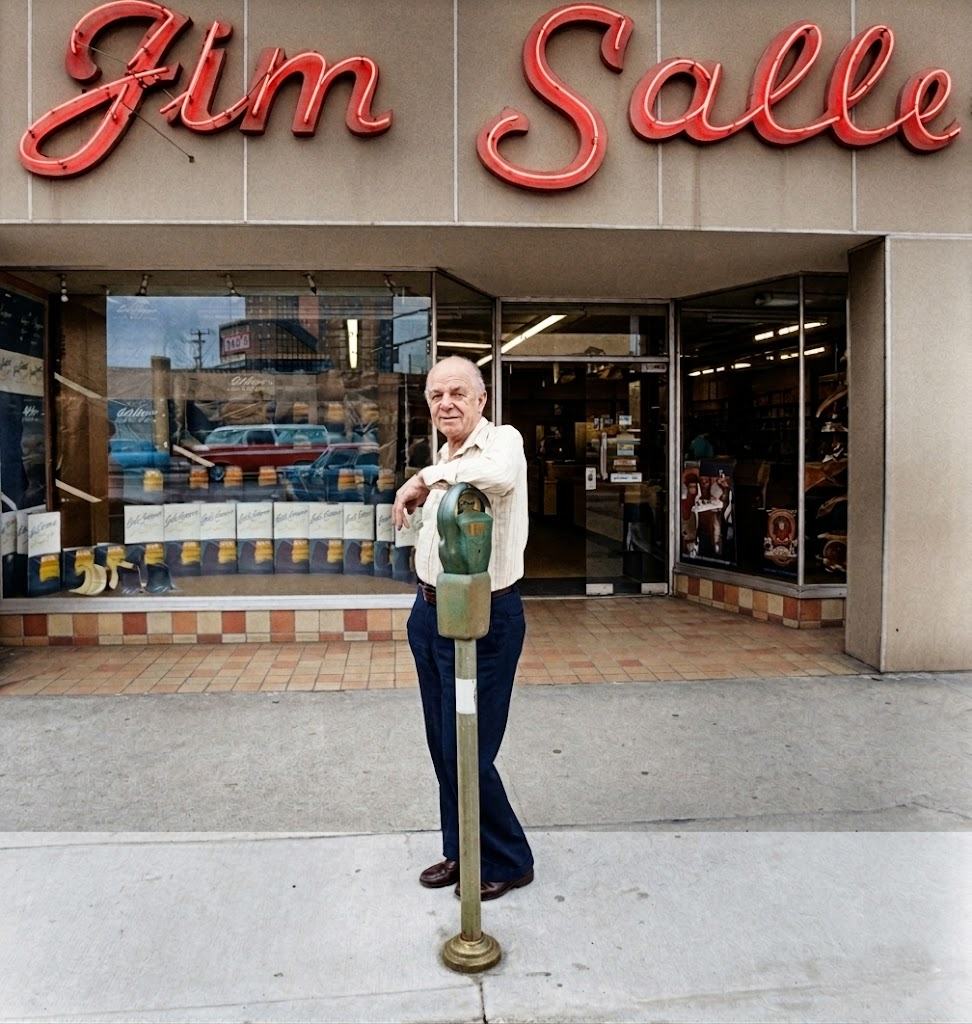
...where Jim agreed to take the albums on consignment. We're ON OUR WAY!
But then...
At 11:30p that night, the doorbell rang. When I opened it there were two gentlemen in black silk suits with white-on-white shirts standing there. One had my box of records under his arm. He asked if they were mine. When I agreed that they were they handed them to me and said, "You don't sell records in Atlanta. WE sell records in Atlanta." It seems I had stumbled onto a "business" run by the Atlanta mob. Oops.
They offered to distribute them for me at a price well below our cost. I said no thanks and they went away.
It seems that there was a gaping hole in my reseach into our business plan. Now we had 500 albums with no idea how to sell them. I called a meeting of the four partners to discuss next steps. The only choice was for Betsy to sell the albums from the bandstand. Betsy is an artist. Selling records was beneath her. She didn't want to do it. Round and round went the discussion. At the end it was the only option we could come up with. Betsy would sell the albums, Tom/Pete would come to Dante's at closing, pickup the proceeds and drop off replenishment albums. No one was in love with that plan but it was all we had.
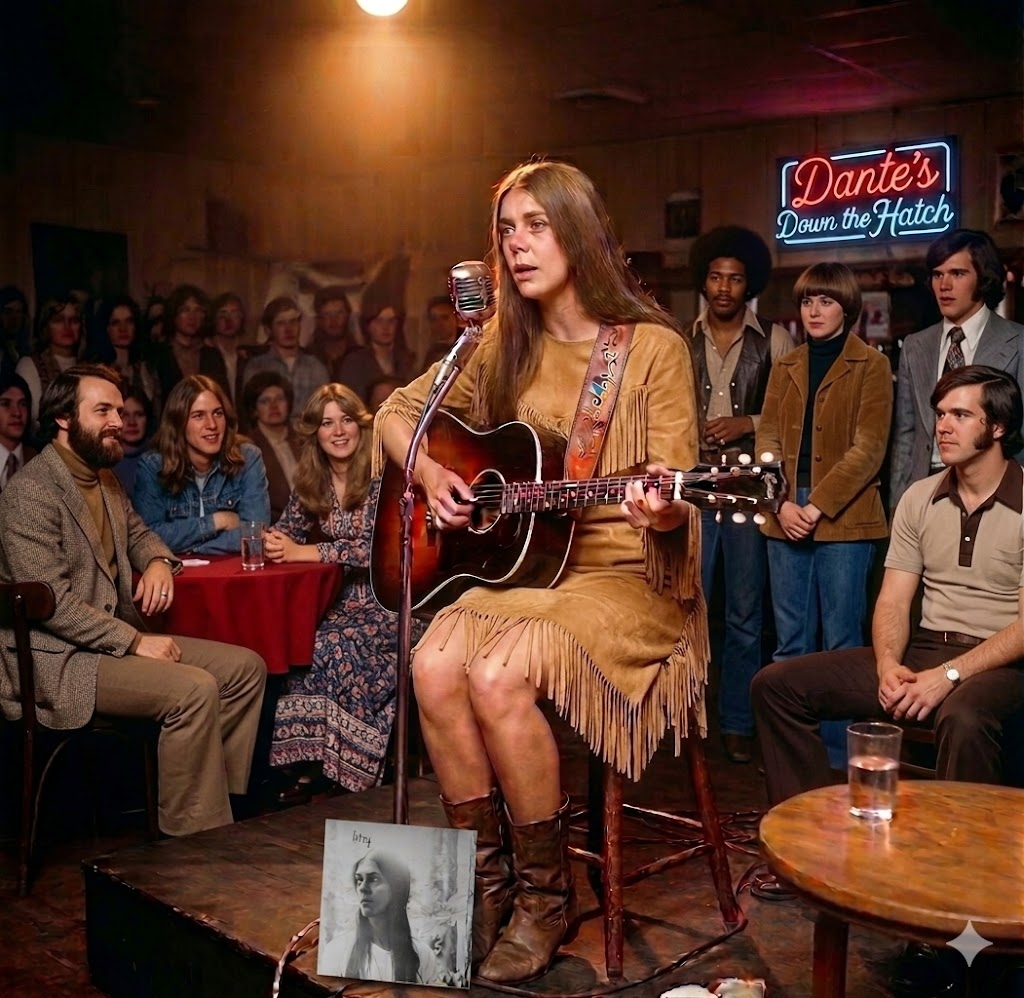
For several months we worked that plan until all 500 albums were sold. Betsy had grown more and more upset with ths process. She called a company meeting and we agreed to dissolve the company and distribute the net cash equally among the four of us.
Done. Project closed; but then...
I forgot to contact the printer and have the extra 500 album covers distroyed. And then we discovered that Betsy had ordered 500 more albums (using the left-over cover prints) and continued selling them from the bandstand keeping 100% of the sales instead of 25%.
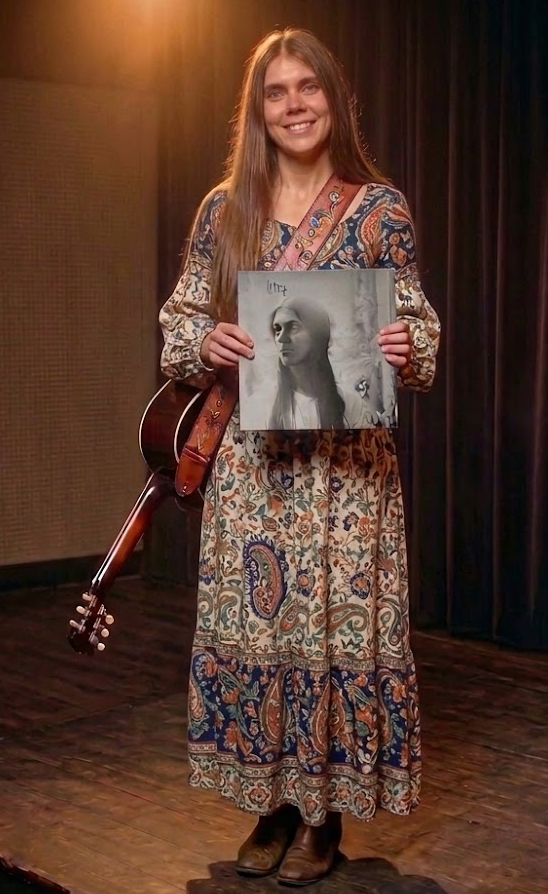
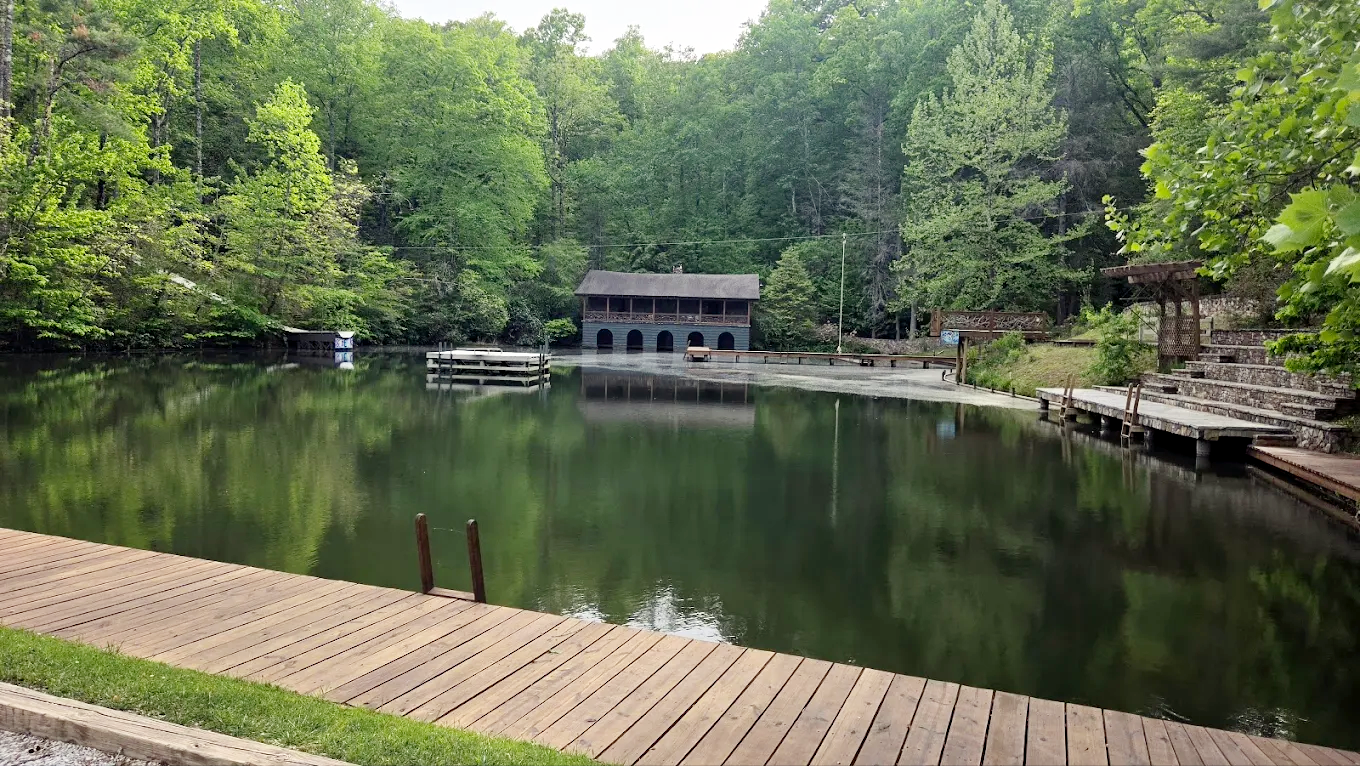
A letter from my daughter whom I hadn't seen since she was a baby? I cried and then wrote her back to say I'd be coming.
There was a family-visit weekend on the camp schedule and I called the camp to discuss my coming up. I explained to the Camp Director that I hadn't seen my daughter since she was two and I worried I wouldn't recognize her. This would be extremely distressing for both of us, I felt. She assured me that they've had this situation many times over the years and knew exactly how to handle it. She said the girls nap for an hour after lunch and for me to arrive during naptime would be best so we could work out the details.
Whew! I was really worried about this and the Camp Director's assurance was welcome.
I drove up and arrived as planned during naptime. I met the Director and she said that when the bell rang and all the girls ran down the hill from the cabins, she would surrepticiously point out Debbie to me so we could meet.
The bell rang and the cabins emptied fast. And that's when I learned that all the little girls were in uniform. White T-shirts and blue shorts. And there were scores of them. Scores...
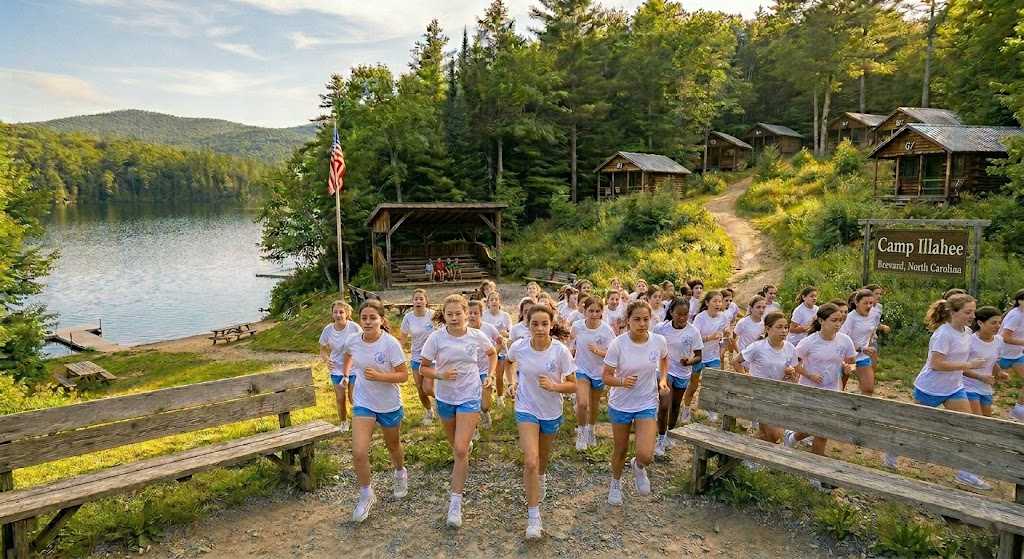
The Camp Director pointed her out and I went up to her and said, "Hi, Debbie! I'm your Daddy!"

She said, "No, my Daddy is in New York."
That's right. After all that worrying and planning, the Director pointed out
THE WRONG DEBBIE!!!
It quickly got straightened out, the (right) Debbie and I met and spent a lovely day together -- and a relationship was established.
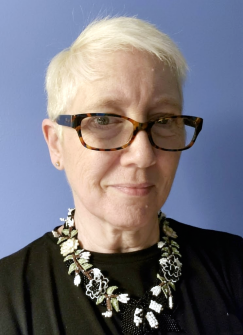
 Debbie in 2024
Getting screwed by IBM
You may recall my explanation of how the IBM Sales Plan worked. Briefly, if any account in your territory should decide to leave IBM for any reason, the commission paid (when the account was originally sold) was charged back to the current salesman -- even if the salesman currently in the territory wasn't the salesman who originally received the commission. Yes, that's right.
After nearly five successful years in sales I had amassed 20-30 accounts for which I was responsible. I was haunted by the chance that some competitor would sneak in and steal away an account and I'd be charged back the commission originally paid even if I never received it. It was impossible to cover properly all those accounts so I became eager to escape the territory and to move on to another job within IBM.
What I didn't expect is that I would be improperly charged back for an account who was still an IBM customer. Here's that story:
My largest account was Matsushita Electronics known in the US as Panasonic. I had sold and installed a system a few years ago and had a great relationship with the local DP Manager there. Matsushita was an IBM National Account based out of New York and they had several warehouses across the country.
In Atlanta there were several branch offices with specific industry responsibility. I was in the New Business Office which operated independently of the Distribution office, the Manufacturing office and the Banking/Financial office.
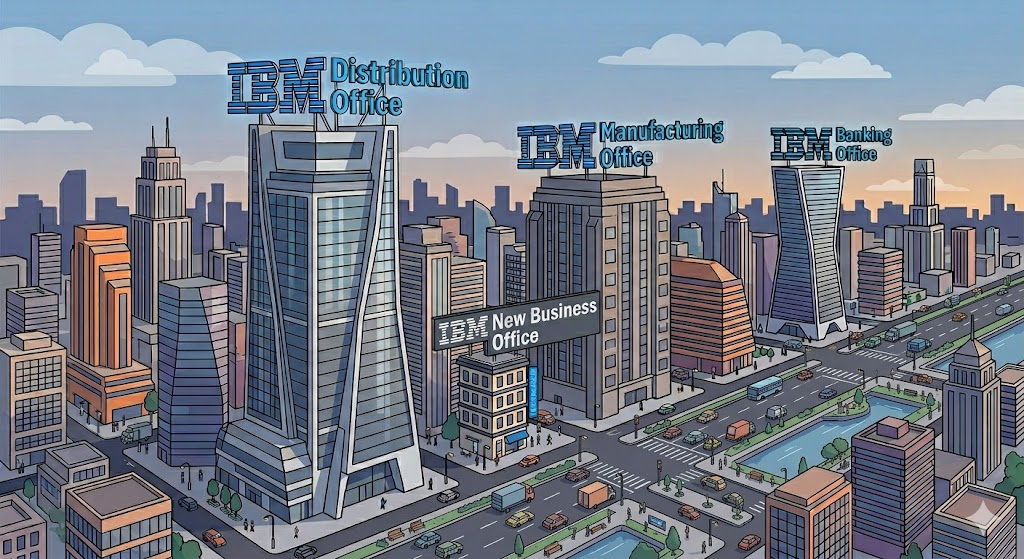
After a couple of years, any account in the New Business office was to be transferred to the appropriate industry office to cover and grow. Management decided it was now time to move Matsushita from New Business to Distribution; an entirely appropriate decision.
But someone in the Atlanta IBM Distribution office heard a rumor that Matsushita was going to leave IBM nationally and install Honeywell computer systems throughout. I checked with my guy and he said that wasn't true at all. Nevertheless, because of that rumor, the Atlanta Distribution office wouldn't accept the transfer from New Business without charging back the commission. There was no precedent for this; when an account is transferred, liability for it transfers as well. It's always been that way. The commision was about $3,500 (quite a sum in 1973 dollars) which I'd received several years ago.
I was called into the Branch Manager's office and told that Matsushita would be transferred to the Distribution office -- but they would not accept the liability and so the commission would be charged back to New Business (me) with the tranfer. In other words this inter-office transfer would cost me $3,500
WHAT!!!??!!?
I argued that I'd be glad to transfer the account with the liability OR keep the account and the liablity -- but one without the other made no sense. I said that if they did this that the Distribution office would immediately credit the commision to their salesman effectively transferring my money to someone there for no reason.
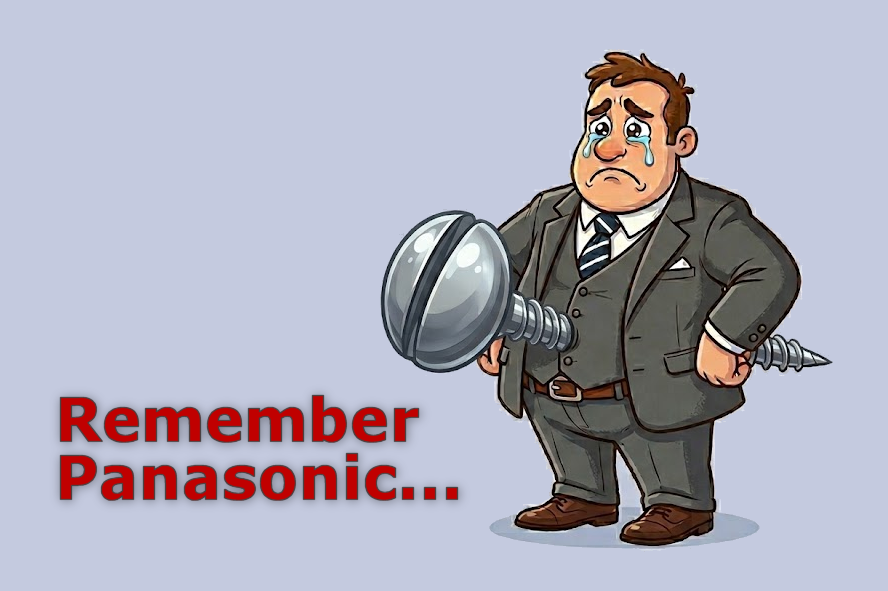
My Branch Manager Hugh Larkey who, curiously enough was the godfather to Kristyn, said to suck it up and take it. I did (there was really no choice) And, surprise, surprise, the minute the account was transferred the Distribution office credited the commision back to their guy.
I had this plaque made to remind me of this injustice forever...
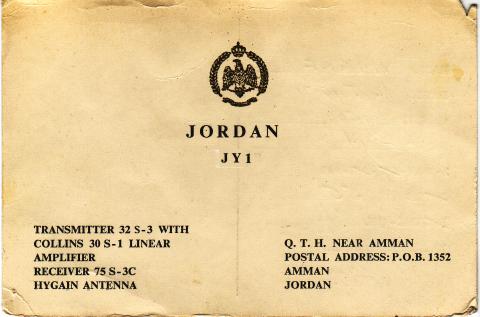
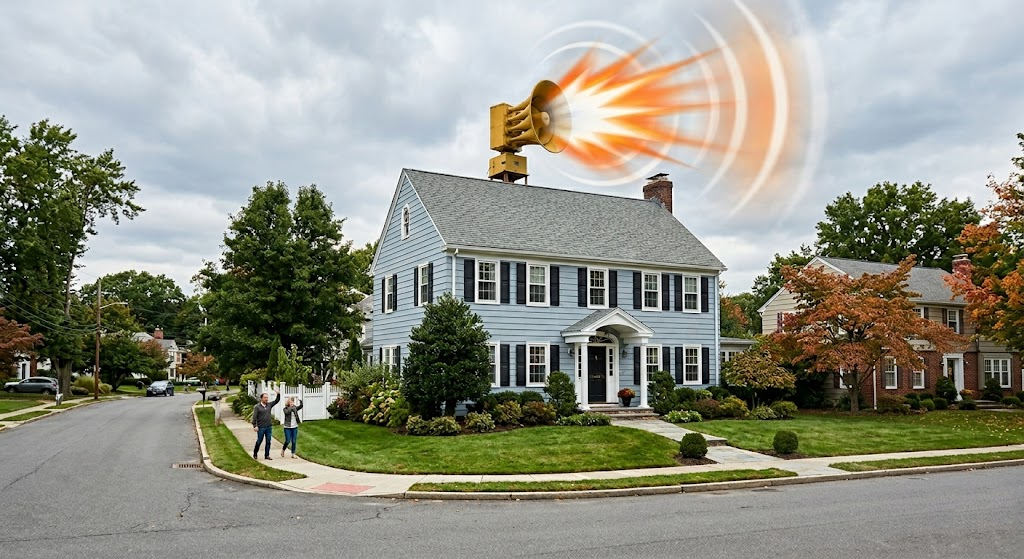
(well, maybe, a mild exaggeration...)
I had no interest in a system that would phone a call center or the police. And I wanted the alarm to sound (VERY loudly) as soon as it was tripped -- no delay. I wanted the burglar to be outside and start running. Also, for low maintenance, I wanted the sensors to be hardwired to the panel>
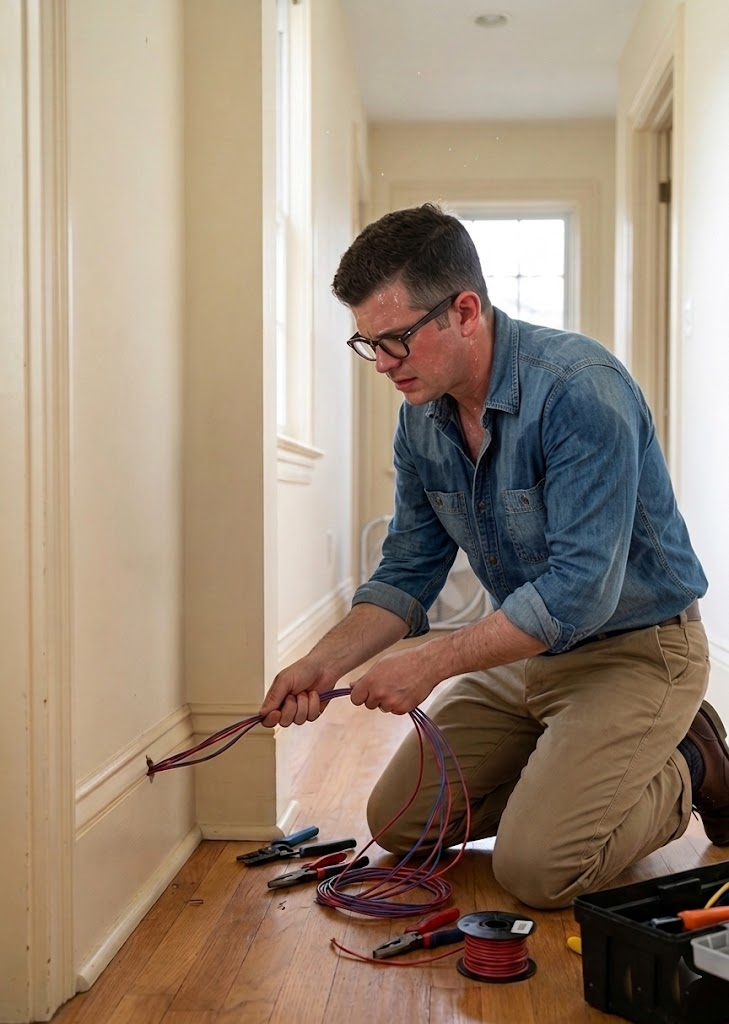
When the inside walls were going up and just after the electricians had done their job, Vince gave me a day to run the wires for the alarm system; it was a big help using the holes in the studs that the electricians had drilled.
That experience led me to think about selling and installing residential burglar alarms as a side hustle. Another IBMer Dan Snyder and I decided to do just that. We tossed a coin and named it Daniel Security System and used word-of-mouth to get customers.

All there really is to installing an alarm system is pulling and hiding wires. When you're done, there should be little or no visible evidence that the alarm existed. The hard part is working in attics and crawl-spaces in the summer. After a few months of spending weekends pulling wire and sweating profusely, Dan quit leaving me to do it all.
In late August I sold a new client, a little old lady, who lived in a townhome in Buckhead. I worked fourteen hours in pretty hot conditions. When I was done and having explained how to use the system to her, I asked if I could use her vacuum cleaner to clean up the wood shavings on the window sills and floor adjacent to the sensors.
She said. "No, you've done enough and you need to get home to your family to enjoy what little of Saturday was left."
I said, "No, I want to leave the property looking as I found it."
She said, "Don't worry about it; I'll do the little vacuuming that was left."
I was hot and exhausted so I let her have her way.
I used her later as a reference and she told my prospect, "He did a wonderful job but left an awful mess!"
Sigh...
Lesson learned. That was the last alarm I installed until I did our new house in 1980.
1975
In the world of ham radio, things were happening. A few years ago, I stumbled upon a radio activity created to increase the use of the 10 Meter ham band. It was called the Ten-Ten organization; why was this interesting?
Citizens Band Radio (CB) had become a big deal in America. It was a no-license radio service meant for local communications. The FCC took away one of our ham bands (11 Meters) and gave it to the CB radio service. The reason given was that hams weren't using it, so why not give it to others? There was good logic to that; it was really not used much by hams. The Ten-Ten organization was formed to prevent that excuse from being used if the 10 Meter band was under-used.
The organization created a membership system assigning a Ten-Ten number to qualifying hams. You would qualify by working ten hams on 10 Meters who had Ten-Ten numbers. You'd submit that info and you'd get your own Ten-Ten number and a slightly goofy certificate:
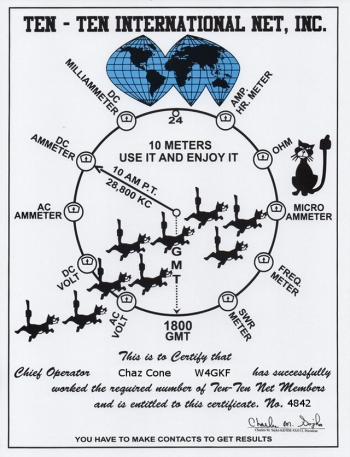
Side note: At this writing there are more than 78,000 Ten-Ten numbers assigned. Mine is #4842 which was assigned in 1973 as I recall.
It didn't take long before local chapters of Ten-Ten cropped up each with its own number system requirement and its own certificate.
On August 1, I registered the North Georgia chapter along with Jim W4YHF. Our certificate was called the New South Award. We actually have two certificates. The entry certificate by working ten members of the North Georgia chapter and an endorsement certificate for working more of us:
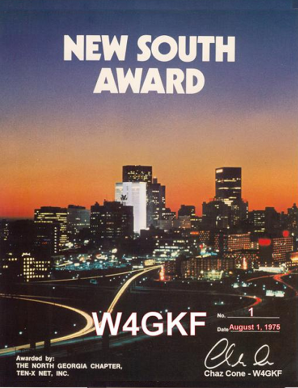
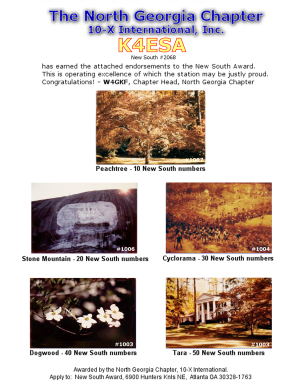 Our local net meets weekly, continuously, until today; and we've given out more than 2,200 New South numbers.
After 50 years, interest waned and I shut down the North Georgia Chapter on August 1, 2025.
1976
I'd just arrived home from work and Gael and I were talking in the kitchen. We both heard this:
"BDL-OMP, BDL-OMP, BDL-OMP, KA-BOOM!"
Gael said, "What in the world was that!?!"
I said, "Sounds like a large insulator banging its way across the roof.."
And, it was.
I ran out to the driveway and there was my 90' tower and my three monoband antennas crumpled like a dead spider in the vacant (thank goodness!) lot next door. The tower had broken over at the 30' level...
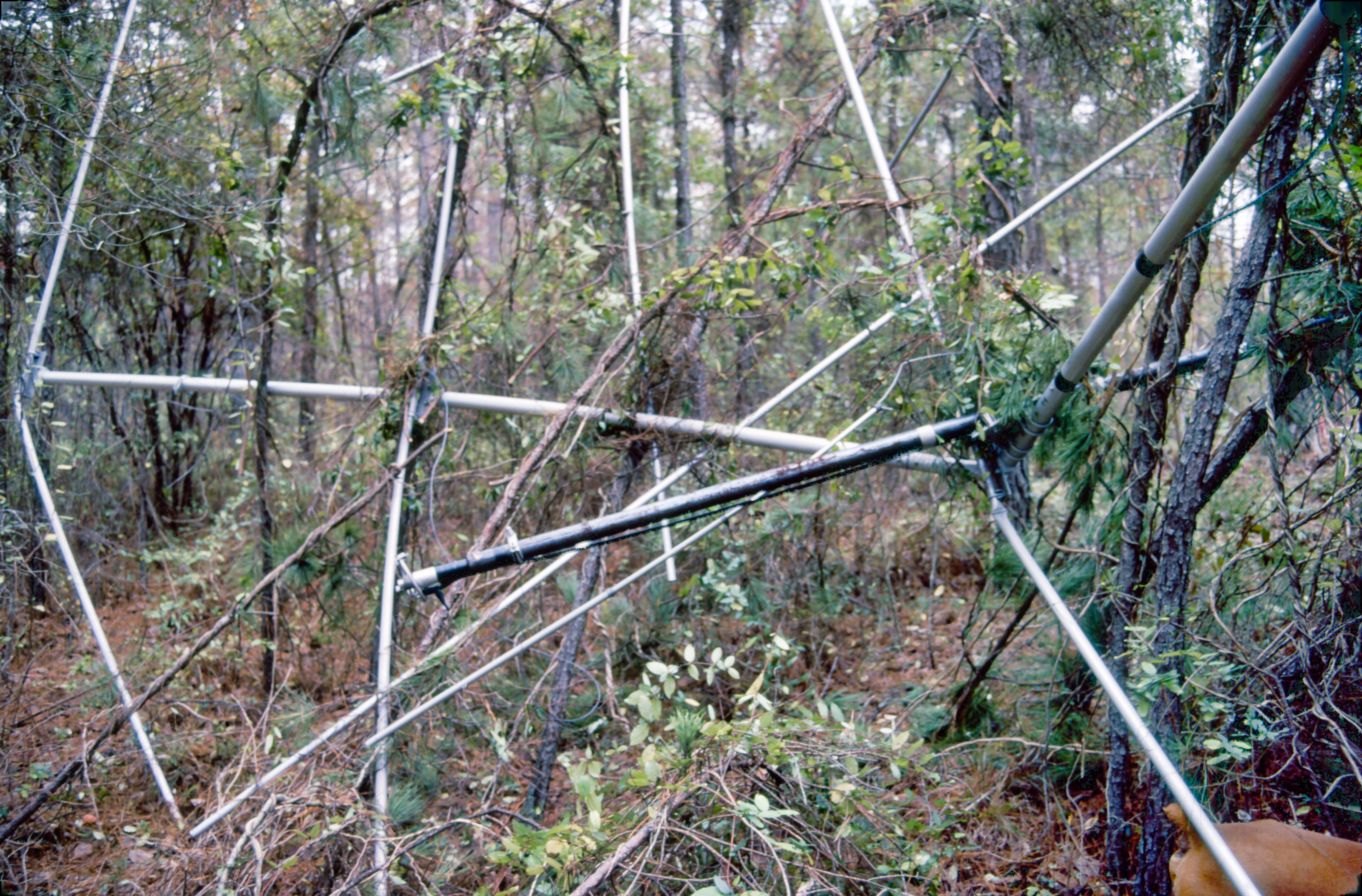
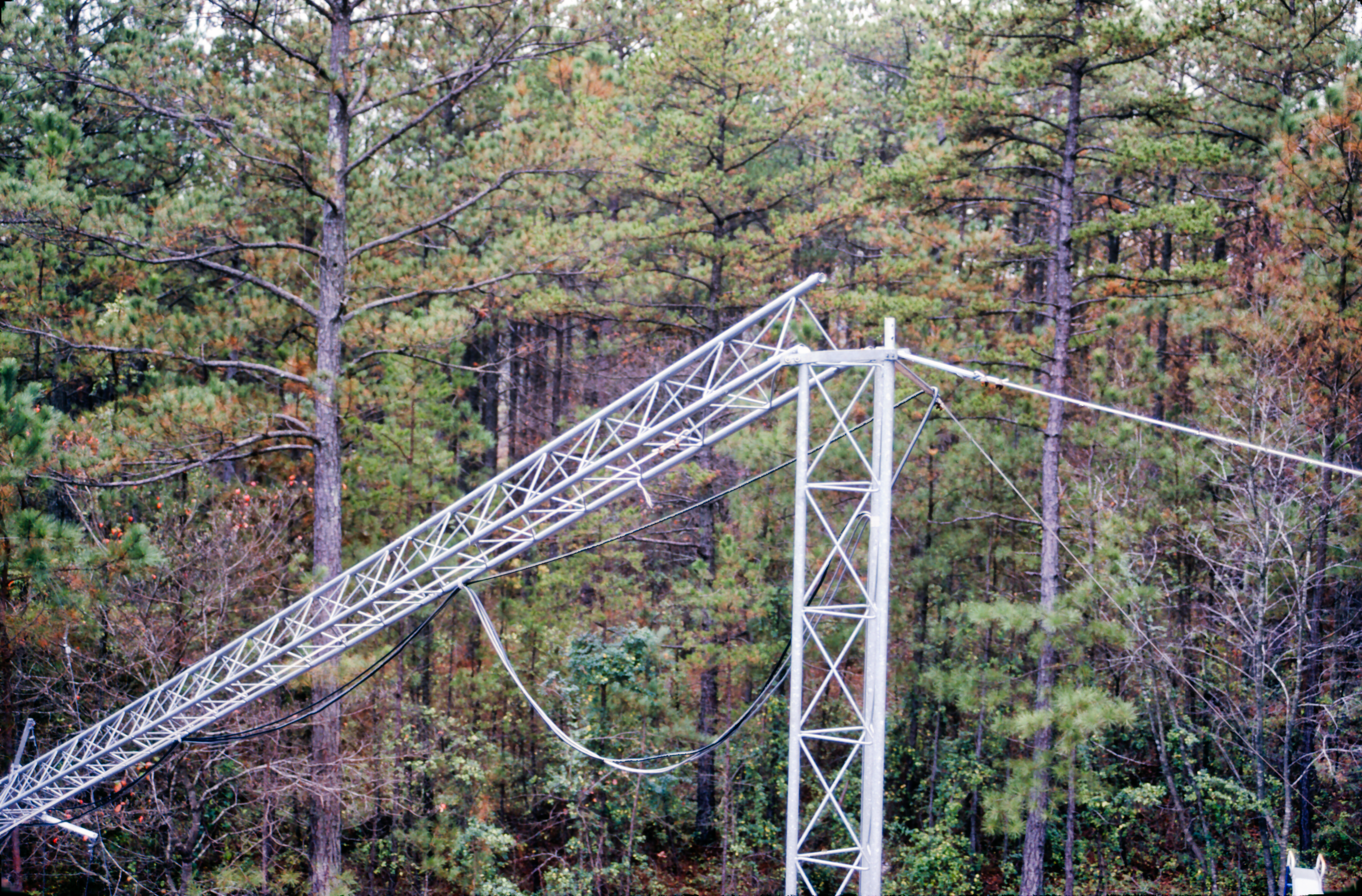
... and made a nice bridge over the top of a...

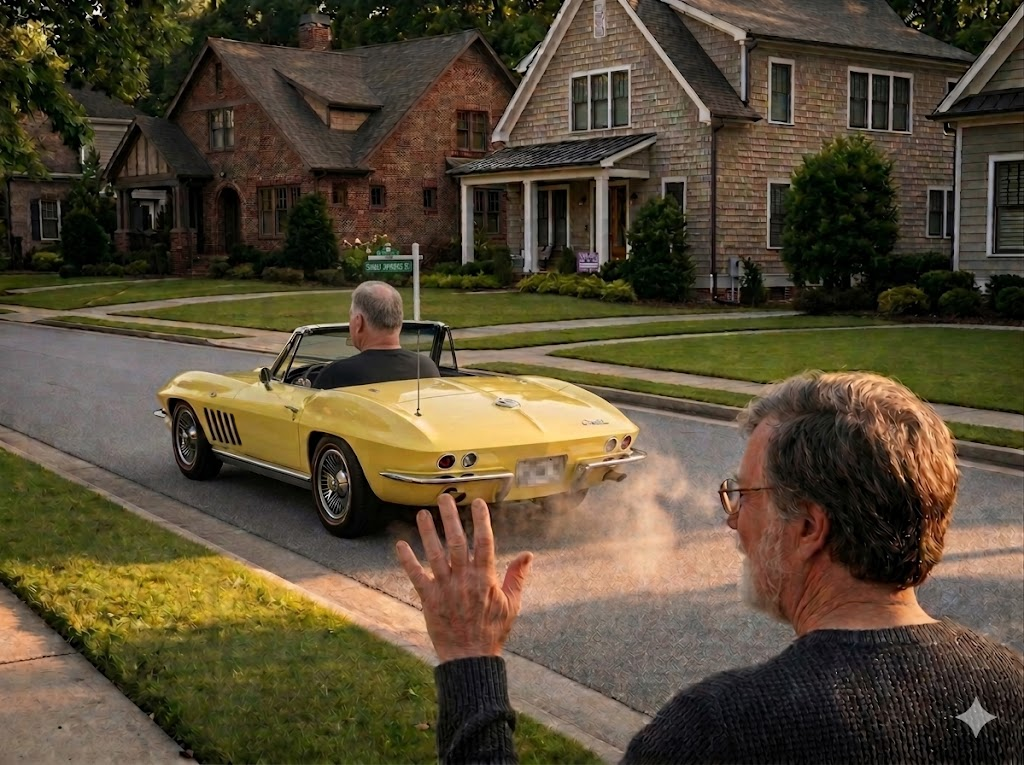
So six little 10yr old girls were loaded up and taken to the Steak & Ale in Tucker on a Tuesday evening to hear the band for the first show. The band let her write the set! An hour or so later we took 'em home for a slumber party.
We can only imagine what happened when the little girls were picked up the next morning and asked if they had a good time. "Oh, yes, Mommy! Mr. and Mrs. Cone took us to a BAR!"
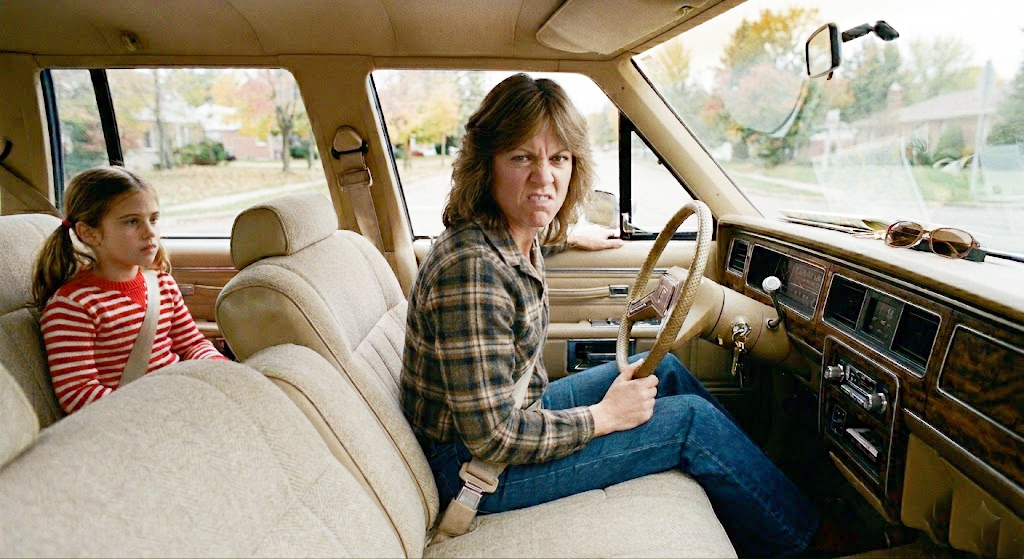
No biggie; she was able to find new friends...
And now, the IBM PC
And then, in August, came the event that would forever change my life and take me off the air as a Ham Radio operator (for all practical purposes) for twenty years. IBM announced the IBM PC. That same day, Ron Lorber called me and said:
"Chaz, no orthodontist is going to want a program for his office that runs
on a Radio Shack TRS-80 when the IBM PC exists."
That day, Jim and I stopped development on the TRS-80. I ordered my first PC on the employee purchase plan ($2,500!) and we started learning the PC. The original machine came with a single 360KB diskette drive. Just something as simple as copying a diskette involved a dozen diskette changes to accomplish. And there was no hard disk (yet). I have a clear memory of driving across Atlanta to buy a second 360KB floppy drive -- for $500! For perspective, today a single iPhone picture is about eight MB in size. It would take 24 360K diskettes to hold a single iPhone photo today.
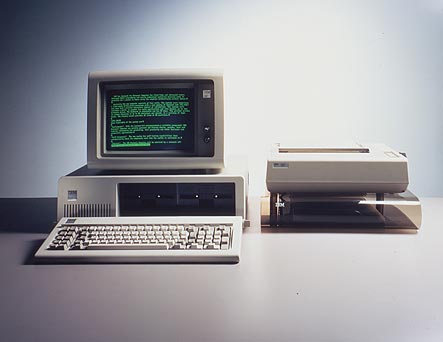
As we experimented with the PC, it became clear that the included interpretive Basic language was just too slow to accomplish anything of value. Jim and I recruited another IBMer, Gerry Howe, to write some assembly language code to run under our Basic application code to get good speed. Gerry was/is brilliant.
The next step was to get a hard disk. Because of the PC's open architecture, companies sprang up by the score offering accessories and modifications. A small company from Silicon Valley, Davong Systems, announced at the West Coast Computer Faire a 5MB hard disk for (only) $2,000:
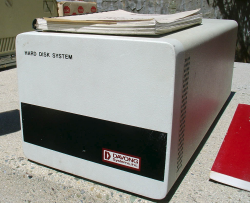
We couldn't imagine a device that robust: 5MB!!!! That's more disk space than anyone would EVER need! We ordered one; it was the size of a shoebox. And again, for perspective, that entire hard disk would hold about half of a single iPhone photo today.
We decided to call the "product" we were developing the Orthodontic Practice Management System (or "OPMS" for short). Development went pretty quickly (considering we all had full-time jobs) after Gerry got the assembly language work done. And it ran fast!
We continued development of OPMS and finally installed it in Ron's office in July 1983 without a real thought to what might come next. After all, it was just a no-charge lark to see if we could do it.
It wasn't long before a colleague came through Ron's office and said "What's that?!? How do I get one?" Ron called to tell me; I called Jim and Gerry and we made up a price on the spot.
Now that we had a "real" customer we had to form a company. We registered a Subchapter S Corporation, Software Manufacturing Group, Inc. The name came from re-using the initials of a little company I had created in the 1970s to print Ham Radio QSL cards. I called that venture "Stone Mill Graphics" after my address on Old Stone Mill Road in Marietta. Software Manufacturing Group had only one product: OPMS.
That orthodontist to be the second to use and first to buy OPMS was Dr. Burch Cameron from Columbus GA and he became OPMS user #2 -- and later, became a ham with the callsign W4WY and, even later, became a partner in OPMS.
1982
Meanwhile, in my "day job" at IBM, I was a second-line manager over a department of technical writers. We were charged with creating the user documentation to accompany the six applications we were building for the IBM Datamaster and, later, the IBM PC.
My mission was to create user documentation that our target audience could effectively use to help learn and use these applications ("applications" is where the shortened term "apps" came from - just so you know...)
Our department was 10-12 folks. We were writing the books in parallel with the developers who were writing the code. Kinda revolutionary at the time.
To complete our mission, we did several very different things (compared to prior IBM manual creation). First, we opted to use words consistent with an eighth-grade reading level. That was the reading level of most highschool graduates at the time (really). That meant limited technical terms, short sentences, active voice. We also opted for a 10% larger san-serif font for improved readability. We added images/diagrams and lots of white space.
It worked. Our books received international acclaim for computer application documentation.
But I had another idea that was also new to IBM development. I convinced my management to insert a test into the development cycle we called a "hands-on" test. We would bring in real people who mached the intended audience, sit them down at the computer with the books and a scenario -- and watch to see if they could "do it".
These applications were meant to be run by folks with a high-school education and some office experience. We interviewed and brought in a half-dozen or so such folks, mostly women, to be our "test subjects".
The fun part of the "watch to see" was the construction of a Human Factors Laboratory. This involved several video cameras and microphones which we set up in a simulated office environment and viewed through a one-way mirror.
From a control room, we videotaped our test subjects trying to perform scenarios installing and using the six applications. We'd debrief them at the end of the day and share the results with the writers and coders. Going in, we knew this would be a rubber stamp. Of course they'd be able to "do it".
WRONG!
When we debriefed the test subjects we found something interesting and unexpected. The test subjects thought they were being tested! It was hard to convince them that any problems using the applications were OUR fault, not theirs. And when we shared their feedback with the developers - and showed the developers the video - they had to agree that changes must be made. In a few iterations, problems were fixed, new problems discovered, and fixed.
A side-effect is that the "powers that be" were now convinced that Usability Labs needed to be included in ALL development projects in the future. Thank you. Thank you very much!
I made a mini-career of traveling and making the pitch about the Usability Lab throughout IBM. There's even a Youtube video on that pitch:
In this presentation, there are two short portions you should absolutely see; they're fun! One is at 24:28 and the other at 31:22. The second story has been around IBM for more than 40 years. It concerns a printed instruction to "remove the diskette from its protective envelope".
When I was promoted from this role to World-Wide Sales Manager for IBM PC Application Programs (quite a title, huh?) my writers gave me a plaque that said:

The train was scheduled to leave from the Paris Nord station at (you guessed it:) midnight. You recall that we have tons of baggage so, while I was managing all that on a cart with wobbly wheels, Gael boarded the train and found our compartment. By the time I was able to drag the luggage onto the train she was waiting in the corridor with her arms crossed and a matching look on her face. Uh Oh...
You see, trains offer a range of compartments and other accomodations at a range of prices. My agent had booked us, overnight, on The Orient Express in (wait for it) ..... Second Class.
I had no idea what that meant; I found out very soon.
Second Class on overnight trips indicates a sleeping compartment - for SIX people. Yes, six people...
We were first to arrive and I was sent on a quest to see if we could upgrade to a First Class compartment -- but, no, none were available. Sigh...
Our other four roommates were fine (for the most part). There was a lady schoolteacher, a girl backpacking across Europe and an elderly couple from Poland who brought with them a basket of sausages, bread and cheese.
The backpacker girl stripped down to her birthday suit before donning her nightgown -- but there was no disrobing (by us) in our two top berths across the compartment from each other. 
We also didnt know that the famous Orient Express had ceased operations in 1977. The current namesake was not "express" at all. The train stopped every twenty minutes. And then we were awakened just before the German border by immigration police who collected our passports. We'd been tought never, never to surrender your passport but these chaps made it quite clear that if we didn't, we'd be pushed off the train at a whistle-stop in France. We complied.
We arrived at about 6:30am in Stuttgart dog-tired. We loaded up a cart with our half-ton of gear and made our way from bowels of the station to the street. We were exhausted and I had my presentation to deliver in Sindelfingen at 10:30am. There were taxis parked at the curb and I asked one in my no-German if he could take us to the Hotel Graf Zeppelin.
He pointed across the street. If a tourist had that situation in New York, the taxi driver would have taken him for a half-hour tour of Queens before bringing him back across the street!
The hotel let us check in and I took an hour's nap before being picked up and driven to Sindelfingen. Gael went shopping.
That night we dined at the restaurant in the hotel and had the best French food of our trip. Yep; fantastic French food in a German hotel. The next day we flew home.
1983
The Kreplach Festival
I first told you about kreplach when Gael and I got engaged in Little Rock. Over the years whenever her Mom came to visit, she brought a half-gallon jar of kreplach soup for me. She got the soup from the Clairmont Diner in Clifton NJ. YES!
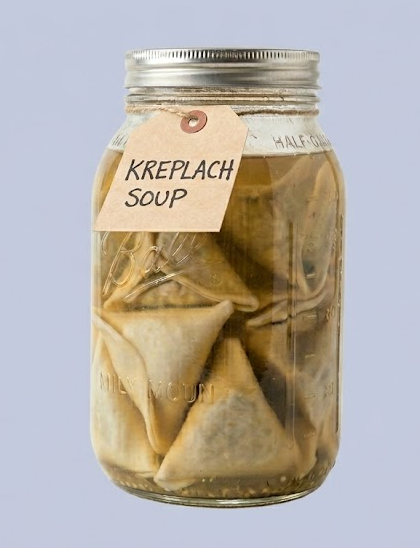
Kristyn is now eleven and taking piano lessons from one of my writers at IBM, Marianne Castranio. Marianne and her best friend Kathie LeBeau were at our home often for piano lessons, food and drink. At one such gathering somehow the word kreplach came up. The ladies had never heard the word and asked about it. We told them all about kreplach. Later we arranged for the five of us to go to the Snack 'n Shop Deli on Ponce de Leon Avenue for brunch so they could experience kreplach first hand. We went and it was good; these two Irish Catholic ladies were now addicted to kreplach.
On a whim, I told them that there was significant history and tradition surrounding kreplach. That for nearly 5,000 years there was a Jewish Holiday called חג הקרפלך (pronounced: Chag Ha-Kreplach) that was now rarely celebrated. I said I had a description somewhere and that we might celebrate Chag Ha-Kreplach with Kristyn, Marianne, Kathie and other friends. I was encouraged to check it out.
So Gael and I spent some fun time created the "The Kreplach Festival and Traditions Manual". The first annual Kreplach Festival (called "KF" for short) was held in our home on the first Sunday in February, 1983. Over the years many KF related items appeared from aprons, to napkins to glassware to caps and on and on. We invited a mix of friends to enjoy the KF with us.
One year early on, we invited a friend (we'll call him "Winston" for that's his name) who didn't get the joke. He thought the whole thing: rules, traditions etc. was a real Jewish Holiday. The day after the KF he was having lunch in the Snack 'n Shop Deli on Northside Parkway. He was friends with the owner Saul Feldman and asked him, "What did you and your family do for Kreplach Festival yesterday?"
Saul looked at him as if he was crazy. Winston went on to describe all the steps and rules and traditions. He was suprised that Saul didn't know what he was talking about.
Leaving IBM
Now it's Thanksgiving 1983. My pal and co-developer of OPMS, Jim Whitmire and his wife Norma came to the house and Jim (not usually prone to displays of joy) had a big smile on his face. Seems in his job as a high-level executive with ADP he was doing Mergers and Acquisition work. One of the projects ended with a "no deal" but he was impressed with the principal of the acquisition prospect, Restaurant Systems, Inc. That principal, Mike Bodnar, offered Jim a job, luring him away from a major position at ADP. Restaurant Systems owned 36 Wendy's and had developed a program for the IBM PC to help fast-food restaurants manage their food and labor costs. Food and labor are the key elements to profitability in fast-food. Mike and his long-time friend Jim Clutter had taken this program as far as they could without professional management. He thought Jim Whitmire was the guy to take it forward to other Wendy's franchisees and other fast-food chains and, eventually, take the company public.
On that Thanksgiving, Jim told me about what he was doing. I was surprised since his job at ADP was a big one and well-paying. His new job was president of the software division of Restaurant Systems; that division was separately incorporated as Restaurant Systems Technology, Inc. (RST)
A few days later he called me and urged me to quit my 22+ year career at IBM and join him as his VP of Sales and Marketing. I thought he was nuts. But, since he was a good friend and knew what I was earning, he made me an offer I couldn't refuse.
When I went to my boss and explained that I was resigning to do this, he told me that if I turned it down, to tell Jim about him!
So, 22½ years after joining IBM, I resigned to go work with Jim.

I called my Dad to tell him and (always supportive) he said: "First your mother dies and now you're throwing away your career!" Sigh...
1984
Debbie gets Married
On June 14th Debbie and Jay Craytor were married.
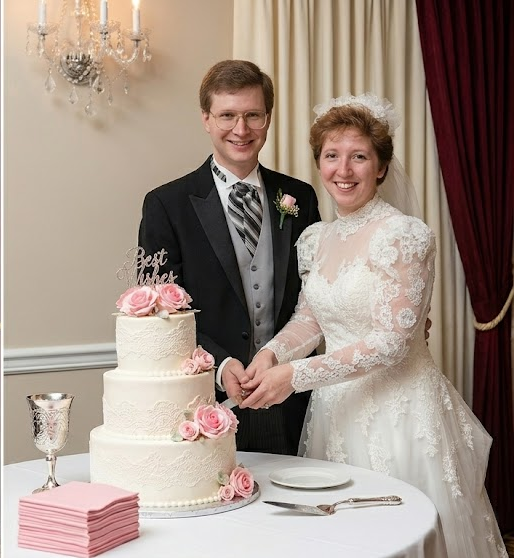

Daly hired a salesman who turned out to be totally inept. They asked me to try to find a replacement.
Meanwhile I was interviewing for sales reps for Restaurants Systems Technology. One of my applicants was not a great fit for the job I had, but I thought he'd be great selling OPMS so I sent him to the marketing company and he was hired. His name is Dick Clark:
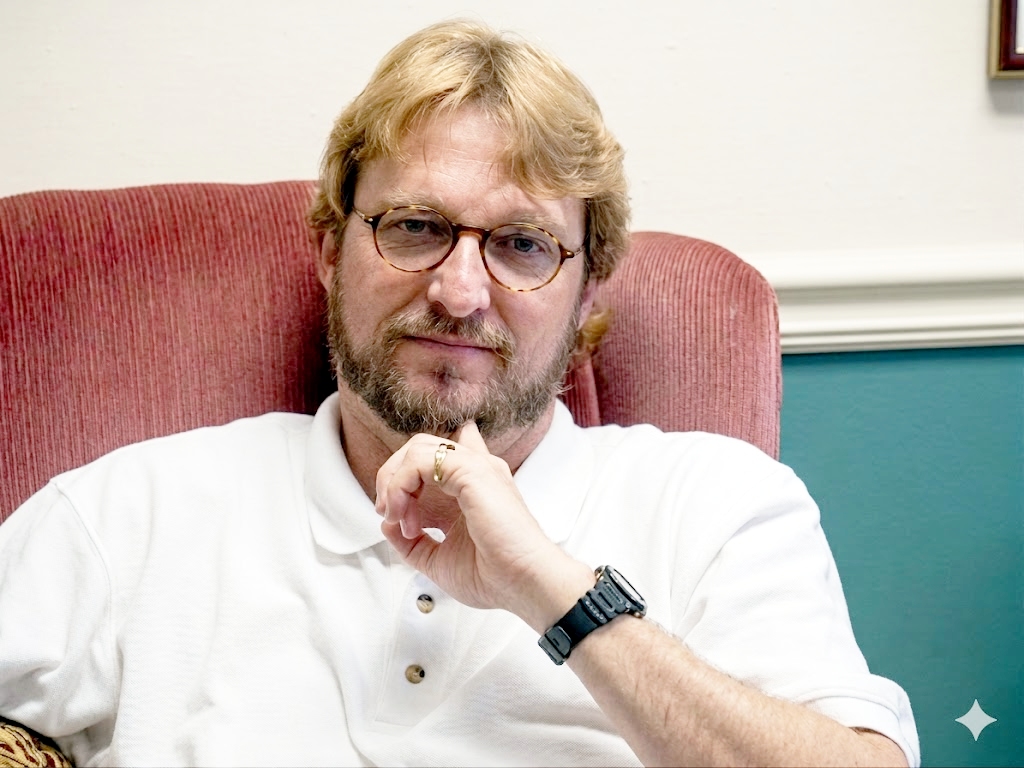
On his first day on the job he and I flew to Las Vegas to make our first appearance at the American Association of Orthodontists (AAO) trade show. We barely had a product and Dick didn't know ANYTHING -- but by the end of the show it was clear to both of us that he was the guy. Dick would support/sell the product during the day and I would back him up on support and do development at night. Working like that, we sold sixteen OPMS systems before the end of 1985. We called them "The Sweet Sixteen".
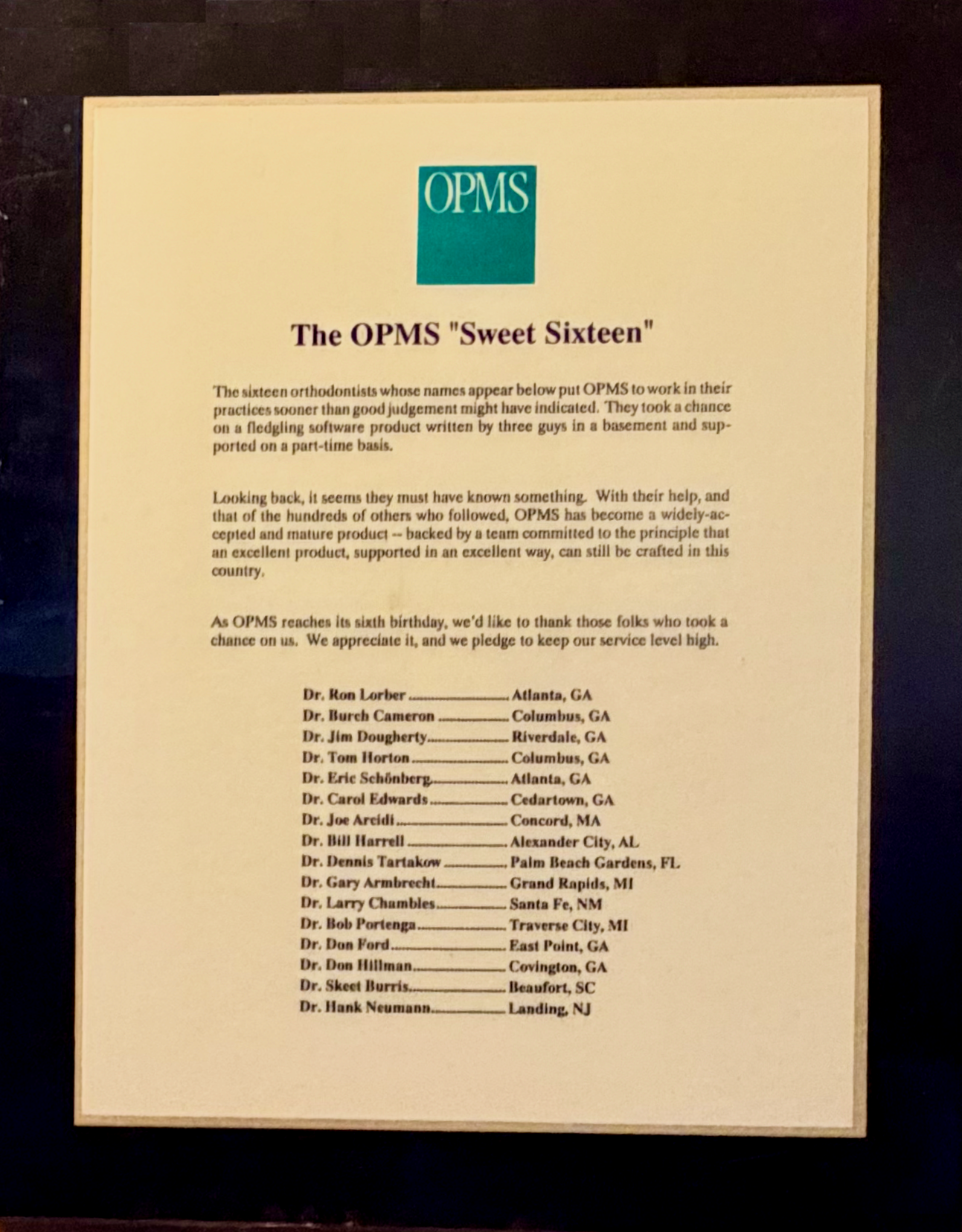
Click the image to see it larger
and again to see it larger still.
My job at RST was to hire and manage sales reps and lead the marketing effort. The core product was excellent and had been working well for Wendy's stores for some time. The challenge was to more deeply penetrate the Wendy's franchisee pool and to sell into other fastfood operations like Burger King and McDonalds. Lots of prospects, lots of work.
Jim and I were authorized to hire a shared secretary and I proposed Annie Edwards, wife of the Cullowhee leader Terry Edwards. Her desk was just outside Jim and my offices. Annie had little office experience but I knew her to be cheerful, loyal, a hard-worker and a quick study. So on Day One I gave her the manual to the IBM Writing Assistant and she began to learn word processing.
Several hours later I heard (and Jim heard) a continuous high-pitched beeping. It went on for some time. I went looking for it, found it and said:
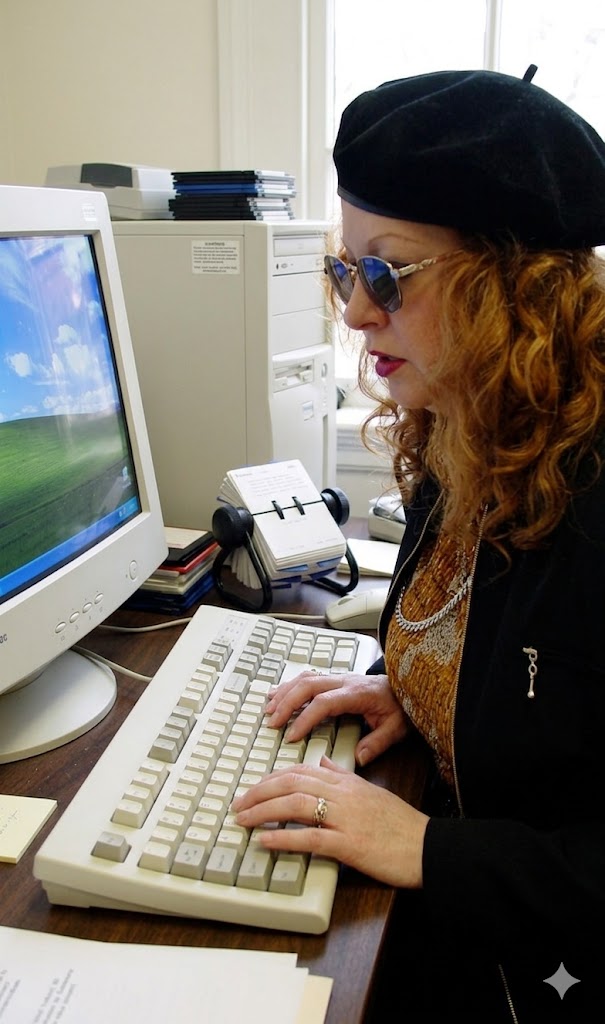 "Annie, back away from the keyboard!"
She was sitting too close to the keyboard and her "superstructure" was resting on the keyboard space bar.
"Annie, back away from the keyboard!"
She was sitting too close to the keyboard and her "superstructure" was resting on the keyboard space bar.
Mike Bodnar and the Soft-drink Disaster
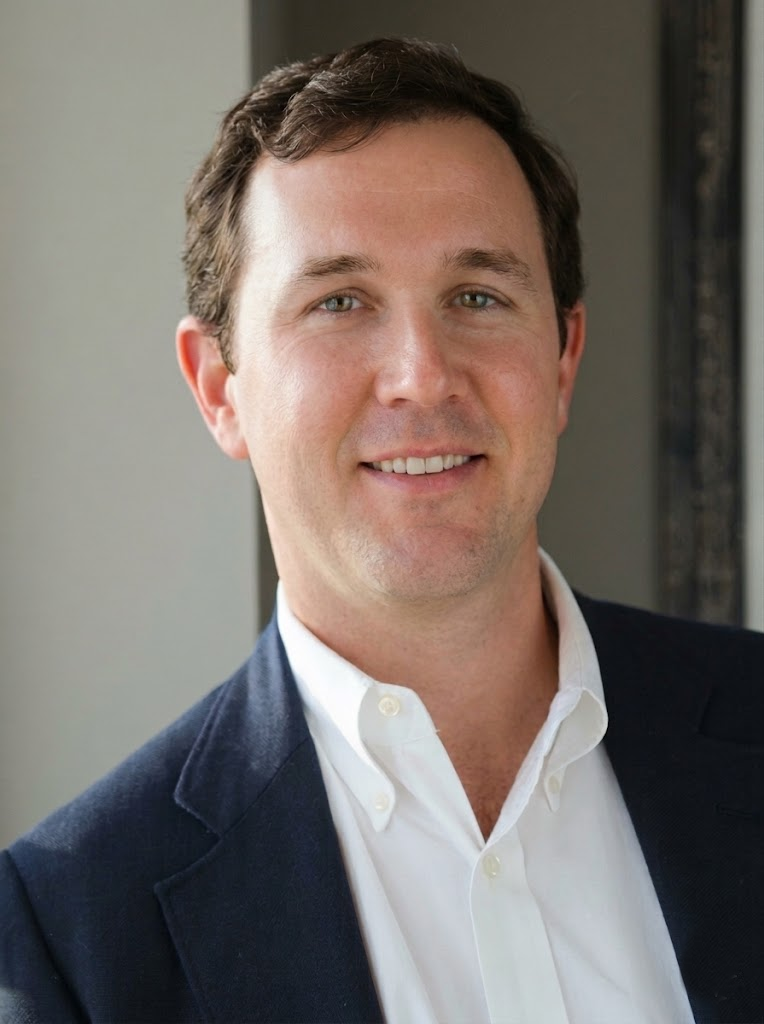
Mike Bodnar was the CEO of Restaurant Systems. He was one of the most effective Wendy's franchisees in the network. He was routinely called out at national meetings by Dave Thomas (CEO of Wendys) for his outstanding performance.
Mike had 36 Wendy's stores mostly in central Alabama and central Georgia. He was extremely "hands-on". His specialty was motivating his employees and managers to be the best possible. He was also a decisive businessman.
One Friday morning the manager of his flagship store in Birmingham discovered his Coca-Cola products drink system was down. He placed a service call (which wasn't answered) so the manager called the Coca-Cola distribution plant manager to try to get the soft-drink delivery system repaired pronto. For one thing, soft drinks are the highest profit products in any store -- and here comes the weekend where a typical store will do more than half the week's volume. Drink system down = very bad.
The Coca-Cola manager said that they would be unable to service the system until Monday at the earliest. Shouting/pleading didn't help.
So the store manager called Mike at HQ to relay the problem. Mike hung up and called his high-level contact at Coke to get the problem solved. That man got back and echoed that they couldn't get to the problem until Monday.
Mike called the Regional Director of Pepsi who had been trying to get Mike to switch to Pepsi products for years. The drink system in the Birmingham store was replaced by 5pm on Friday. And then Mike switched all 36 stores from Coke to Pepsi.
The loss in revenue to Coke was big enough to attract notice!
Somewhere there is a Coke Regional manager buried to his neck in a fire-ant colony...

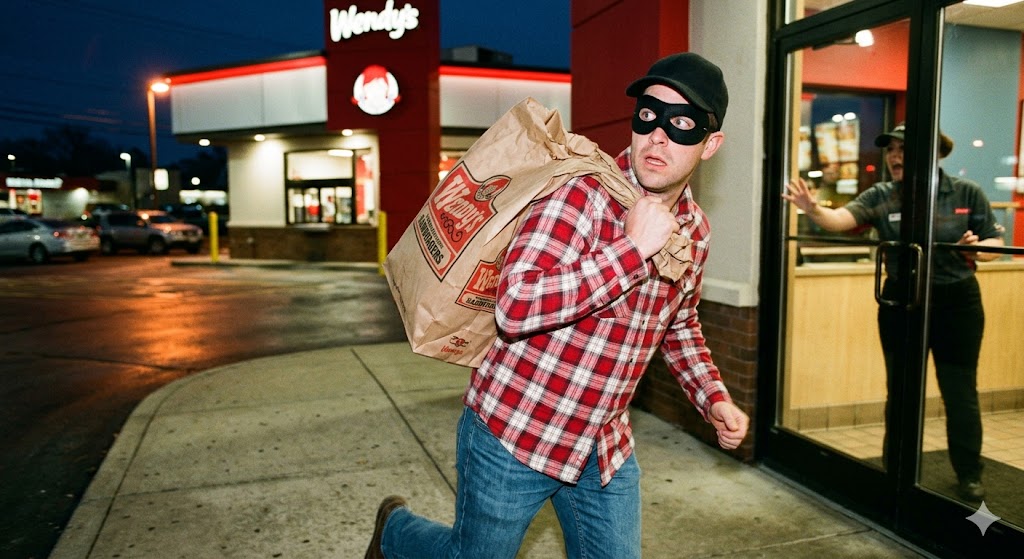
He explained that earlier in the quarter he was part of a Wendy's test. They were experimenting with a 1/3lb patty instead of the standard 1/4lb patty. In Wendy's, unlike other fastfood chains, they patty the meat in the store using a machine with a die in it to make perfect, square, 1/4lb patties:
For the test, he'd installed a 1/3lb die -- and forgot to switch it back when the test was concluded. He'd been selling 1/3lb hamburgers and reducing inventory by 1/4lb for each one. His volume was great but was losing money on every sandwich. True story.
The Restaurant Systems plan was to spin off RST in two years and we'd all be rich.
Yeah.
Chaz and Cullowhee - a TwoFer
My 55th birthday was quickly approaching and Gael wanted to do something special to celebrate. After wracking her brain (what do you do for someone who has everything?) until she hit on a plan.
She got in touch with Annie Edwards, the spouse of Terry Edwards of Cullowhee. The band had, well, dis-banded in August and Gael asked if there was any chance they could get together one more time to play for my birthday. They'd only been broken up for 90 days so they hadn't forgotten any of their music (yet). Together, Gael and Annie pulled it off.
I knew nothing about it; all I knew is that I was blindfolded and taken "somewhere". Out of the corner of my eye through a small space in the blindfold I saw that we were pulling up to a VFW post. And through a window I saw a drum kit.
"Gosh, I thought; she hired a band!"
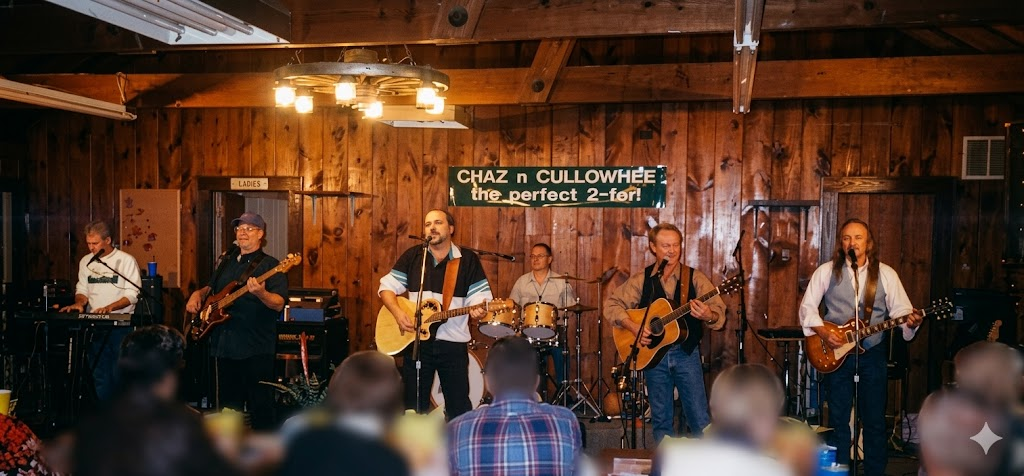
No, no; she'd hired THE BAND!
I was really surprised and further surprised that daughter Kristyn had flown in from Dallas. The room was filled with friends and band fans; we had a great night! I'll never forget it.
And, happily, this has encouraged the band to hold an annual reunion each year since. Keep up with Cullowhee here at cullowheeband.com.
Click BACK for Book 1, NEXT for Book 3 or Top to go to the top of Memoirs...