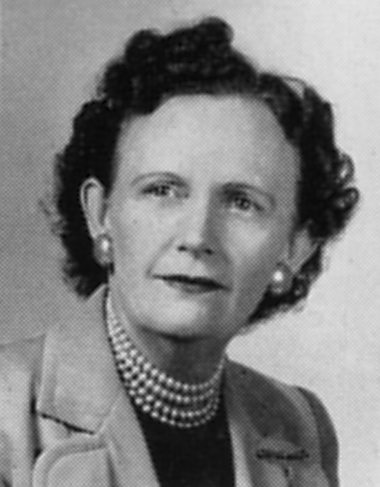
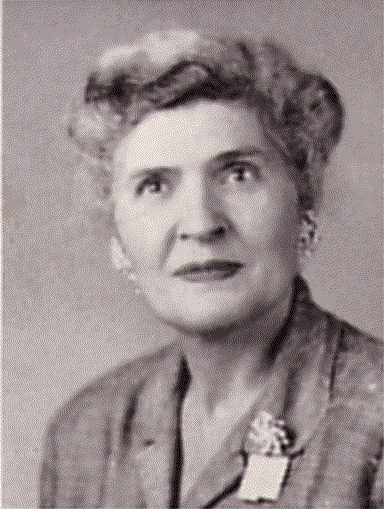
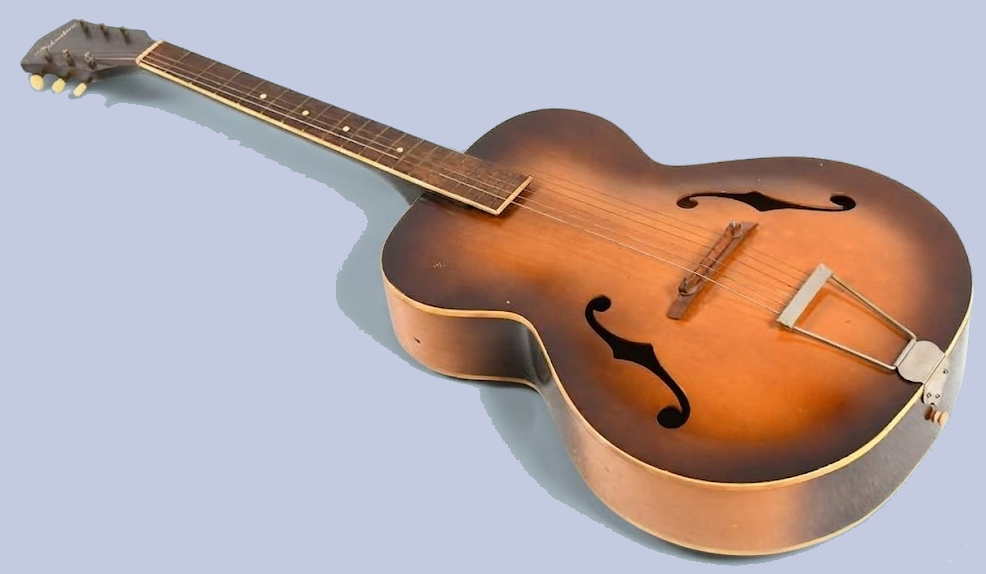
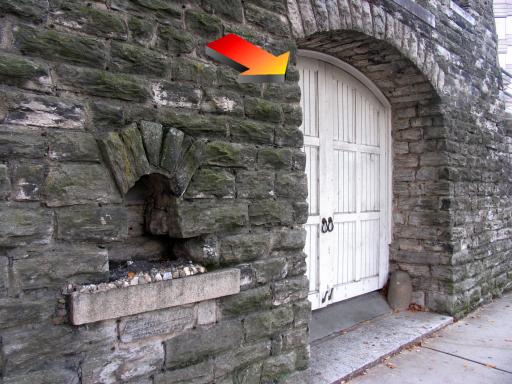
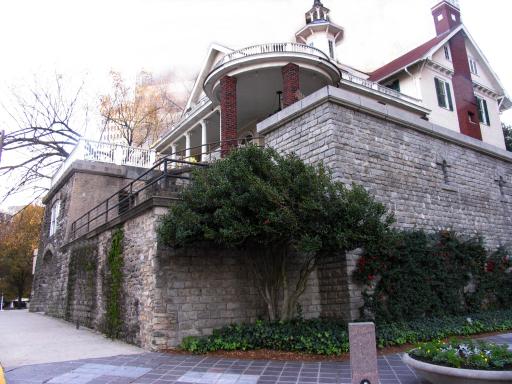
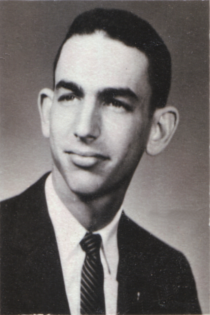
One of Dad’s sisters, Dorothy, was married to Dave Sherman, the first entrepreneur I knew. I came to think of him as “rich Uncle Dave” since he was clearly the wealthiest person with whom I had contact. Uncle Dave dragged my father (sometimes kicking and screaming) into just about every financially successful decision he made.
Dad’s other sister, Cecil lived in Alabama and I don’t think we saw her five times in my life. She’d married a chap named Eddie and they lived in poorer conditions than the rest of us.
I've read of people whose earliest memories are from age two or so. I don't believe it. I believe they "remember" stories others have told them but, hey, what do I know? I think I remember living in a yellow brick house (rented I was told later):
.. where I hit my head on the dining room table as I tried to walk under it. I'd been able to do this uneventfully the day before, so...
I remember a small white house on "U" Street:
and a friend my age across the street. He was called "Skeeter" for reasons I can't remember.
1941
While living on "U" street I remember a tremendous fuss one Sunday; we had some family over and everyone was angry and crying all at the same time. I was only two but I remember the day that the Japanese Empire bombed Pearl Harbor.
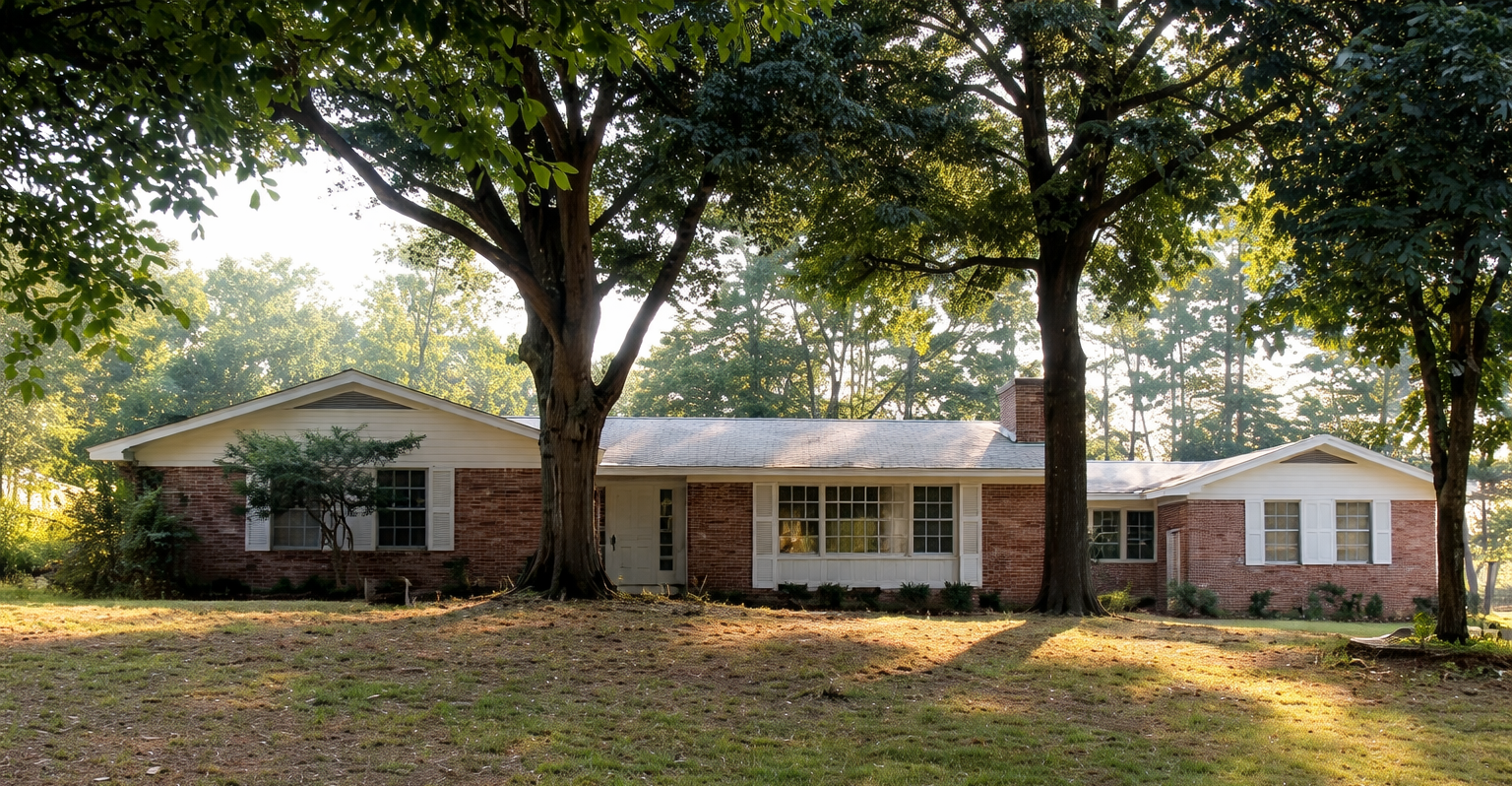
1923 Shadowlane. If that isn’t an address straight from “Father Knows Best” I don’t know what would be.
Shadowlane was in Pulaski Heights. It really was an idyllic neighborhood of large two-story homes with old growth trees; I guess we were the rich folks though I never thought of it one way or the other. The intersecting street was Club Road (a dirt road) and so named because it led directly to the Little Rock Country Club. LRCC was a restricted club so I never went there as a child even as a guest. The Jewish community had its own country club, Westridge, which was really a swimming club located several miles west of town. When I was eight, I had my first negative swimming experience. But I digress…
My mother was a classical housewife. She was home every day and filled her time with taking care of the house and shopping. Before she and dad married, she’d worked as a legal secretary but left the “working world” behind when I was born.
Dad was the General Manager of F. Strauss & Sons, one of Little Rock’s four wholesale liquor distributors. Liquor wholesalers buy product from distilleries and wineries and sell to retail stores who sell to the public. This was (and still is in most places) a heavily regulated industry. Federal and State governments interfere with any attempt to make this a supply and demand business. Dad ran Strauss in Little Rock for more than forty years.
In the photo above, that was my bedroom on the top front left corner. The house had a backyard fenced by a low flagstone wall. The house was on the corner of Shadowlane and Club Road (which wasn't paved when I first remember it). Club Road was the avenue to adventure for me; I'll tell you why shortly.
My mother said that I was a loving child and that I would go about the neighborhood picking flowers and bringing them to her (at age four or so). She said that I brought her "heads of flowers" actually, plucking just the blossoms. She chided me for stealing flowers and told me it was wrong and to "stop doing that"! But, she added, if I did continue this nefarious activity, would I please steal them with longer stems:
..which was a block from Uncle Dave and Aunt Dorothy's elegant home. I'd often go there after school where their maid would make white bread, butter and sugar sandwiches for me and my cousins Ann and Dave Jr. Hard to believe. But, boy, did I have energy!
It was at Forest Park that I suffered an embarrassing event that I remember in stark detail today. I guess it was traumatic, huh? It was the third grade and we were reading a Dick and Jane book:
The ten of us sat on little stools in a semicircle with the teacher, Miss Farmer, seated at the focus of the semicircle. We would each read a paragraph and then the next person would pick up the story at the next paragraph. The page before mine showed Dick sitting on the front steps of his home as Jane came down the street. The little girl to my left read, “Jane ran down the street.” – and then it was my turn. I was relieved to see that my page had only a picture of Dick, waving, and a four-word sentence. I was an excellent reader. My line was, "Dick said, Hi, Jane!”
Sadly, I’d never seen the word “Hi” in print. So I pronounced it with a soft “i” instead of the proper, hard “i”. I crowed, “Dick said, Hi, Jane!” with the “Hi” pronounced as if it were the first two letters of the word “his”. It's impossible to write this phonetically but if you say it out loud with a short "i" you'll see how ridiculous it sounds. Everyone laughed. A lot. Mrs. Farmer did more.
She dropped her book – and fell from her stool (the short distance) onto the floor. Laughing her ass off.
Embarrassed? Me? Can you imagine? And can you imagine why that picture is so clear more than eighty years later?
Sigh. And, remember, this is my first childhood memory. No wonder I’m screwed up.
Tommy's Dad had shown him the rudiments and given him a bunch of those practice golf balls -- you know, they were hollow and had big holes in them:
They are of proper size but wouldn't go far (and wouldn't hurt anything they hit). Tommy was showing me his swing as I stood behind him. Not the best place to stand, I learned, as on his backswing the blade of the club hit my left ear -- and pretty much ripped it off.
Head wounds bleed profusely. I was holding my ear more or less in place (it was hanging by a bit of cartilage)
... as I staggered home. Blood coursed down my arm and dripped off my elbow into the dust of the unpaved road. I was barefoot as all eight-year olds were in the summer. I’m dripping blood in big red splotches on my shorts, my legs and the road. Must have been pretty. When I got home, Mother called her friend Noonie Rephan who lived up the street and the three of us drove like mad (I had a towel and ice on the ear by then) to the hospital where an intern sewed the ear back on. I'm left with a tiny scar and a pretty scary story.
I don’t remember if Tommy was punished but it was an accident and he didn’t deserve punishment. Another life lesson: Don’t stand behind someone swinging a stick. Riiiight.
A few weeks later they paved Club Road, blood and all. I think it may have been the last dirt road in Little Rock. We were a sho’ ‘nuff city, now!
Being Jewish (just me, my buddies weren't), my family wasn't welcome there even if we could afford it.
The four of us used to go down Club Road to the country club golf course and find "lost" golf balls. We'd wash them and then sell them to golfers outside the pro shop. We did pretty well with this business, too, until the club pro called our parents and yelled at them. Our parents informed us that a ball wasn't really lost if it was STILL ROLLING when we "found" it.
About halfway to the country club, Club Road crossed what we always called "The Creek":
It was really a tiny thing, maybe four feet across and six inches deep. We'd catch crawfish (we called them "crawdads" or "mudbugs" as did everyone else in the South):
..using a piece of bread tied to some string. We didn't really want them, just had fun catching them. They'd grab at the bread with their tiny lobster-like claws and we'd lift them out of the water. At the end of the fun, we put them back so I'm sure we caught the same ones dozens of times. They got to keep the bread.
Down by the Creek was where I first (and last) smoked. At this age (ten or so) we took dried iris reeds (they were hollow) and stuffed them full of pine needles. We'd light the end and suck in the smoke and blow it out. Very grownup-like. All the adults smoked; my folks had a four-pack a day habit between them. There was always a thin layer of smoke near the ceiling of most rooms of the house. Truly. When we graduated to "real" cigarettes (they were Viceroys and I don't remember how we got them),
..we felt very grown up. Still no inhaling, we didn't know about that.
And that first real cigarette experience was my only smoking experience to this very day. My parents smoked heavily as did my first wife but I never found it appealing.
It had a large lodge building and cabins. One end of the lake was roped off for swimming. Pretty nice. We took a couple of cabins.
My Aunt Dorothy, Uncle Dave and cousins Dave Jr. and Ann went along with their own cabin. I remember Aunt Dorothy opening the oven door and a mouse ran out. Everyone bolted. You’d have thought it was a dinosaur. I thought it was cool. I was alone in my appreciation.
I didn't swim yet so I was allowed only in the fenced-off shallow part of the lake that was about three feet deep. There was a rock wall built there with a sunbathing patio behind it. They had dumped some sand in the water to simulate a “real” beach.
My Mother and Dad were there on the patio watching me as I splashed about. Mother was on a chaise lounge and Dad was standing with a bourbon in one hand and a cigarette in the other (this was not an unusual pose for him).
I ventured to the edge of the fenced area and got over my head. Took in a lungful of water and down I went. Mother said that Dad just stood there, frozen into a drinking/smoking tableau. She ran to the edge, made a racing dive, swam out and rescued me. No one even knew that Mother knew how to swim. When we returned to the wall, Dad was still frozen in the same position. He wasn't much good in emergencies.
It's now Pulaski Heights Middle School; "junior high" has fallen from favor..
Our school colors were green and gold (funny the things you remember) and I couldn’t wait to get one of those shiny nylon jackets with the knit collar, cuffs and hem. They were just like the letter jackets the jocks wore but without the letters.
Junior high is where I learned that I was not athletic. Being picked last for teams was no accident; everyone knew that I was more brain than jock. I tried for a while but I was just no good; hand-eye coordination was only an expression to me.
I started a business (the first of many, many, many businesses) I made little football players out of acorns and sold them for $0.50 each. I took one acorn, cut it in half to make a base (the shoulders of the football player), stuck a toothpick through the base and through the acorn forming the head. Then a slightly larger acorn was cut to make the helmet. Painted the helmet and shoulders in green and gold (of course) and used a toothpick to poke eye, nose and mouth holes. Creative, yes, and a good product as they would eventually rot and another would have to be acquired! Maybe I invented "planned obsolescence"...
Our next-door neighbors had a typewriter store (you remember typewriters; right?) and I wanted one. I got a Smith-Corona portable with a carrying case:
Friend Lloyd Schuh and I started a typing service business. We'd take in projects, type them up and charge so much per page. Lloyd's Dad, who was in the advertising business, and mine gave us work (to humor us, I guess). It was kinda like the mechanical equivalent of a lemonade stand...
It was in junior high that I got the idea that girls were nice. There was a girl in my class who was in every school show. She could sing and she could tap dance. She wore these tiny little costumes and smiled all the time. It’s hard to sing and smile at the same time but she did. Her name was Beverly Jones. I thought she was wonderful. I don’t think she even knew I was around – and that was hard for her to miss because I made it my business to be around her whenever I could. She was just the cutest thing; her eyes scrinched shut when she laughed (like Renee Zellweger's):
And she never knew that she owned my heart. I loved her from afar. Sigh.
My folks decided that I needed some musical training and I was given the choice of “taking tap” or “taking piano”. Based on my lack of success at sports and my lack of success with Beverly, I took up the piano. This was an extremely lucky choice. I know, I know. Piano lessons! Ugh. But wait…
Little Rock was blessed with a man named Jimmy Hagan. Jimmy played cocktail bar piano and was very much sought after as a teacher. The reason he was so popular as a teacher is that Jimmy taught you to play SONGS! Not scales, not theory, but songs. Popular songs. Songs you’d actually HEARD of and heard played on the radio! Cool! And you got a song to play on your third lesson. Whoever heard of such a thing?
Jimmy taught “chord-style” or "stride" piano. You played chords with the left hand and the melody line with the right. He’d patented his teaching method. And if you heard something you thought you’d like, you just told Jimmy and he’d buy the sheet music and “re”-arrange it to match your chording skills.
My first song (third lesson as promised) was "Whispering" by Vincent Rose!
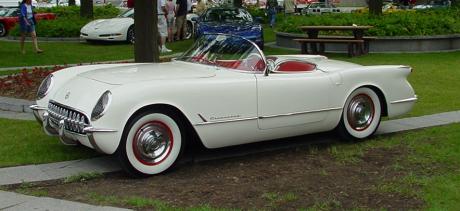
There was the picture of the '53 Corvette, right in the middle of Life magazine:
The picture was black and white in the advertisement -- but the car crouched there, in sight of the Golden Gate bridge with this elegant looking lady standing next to it:
I fell immediately in love (but not with the lady; hey! I'm only 14! Priorities, people!)
Just off the front hall in the living room was one of those gigantic floor-standing radios with a walnut case. I think it was a Crosley all-bander:
I don't remember how I discovered that you could click a switch and listen to shortwave radio -- higher in frequency and a world away from the AM sounds of Elvis and Jerry Lee Lewis. I remember sitting on the floor in front of it, reaching up and tuning back and forth listening to Radio Free Europe, Voice of America and other broadcasts in mysterious foreign languages. It was SO cool! (in the words of (paraphrased) Barbara Mandrell: "I was geek-ish when geek-ish wasn't cool.."
Shortly, though, the radio was rocked back on its cabinet by a very loud signal. So loud that you could hear it squawking away far up and down the dial. As I carefully tuned it in, it was some guy talking to someone else in some kind of jargon. At least I thought he was talking to someone else -- I could only hear one side of the conversation. It was fascinating and, I reasoned, the guy must be close by as he had a southern accent and was louder than any other shortwave signal I'd heard. He said his callsign was W5TIZ, his name was Dick and his "QTH" (whatever that meant) was Little Rock.
When my Dad came home from work, I told him about my new listening adventure. He said, "Oh, that's probably Dick Freeling up the street."
Who?
Dick Freeling lived six houses up the street at 1822 Shadowlane:
He had two kids (one older (Richie) and one younger (Susan) than I) and I was only vaguely aware of him. He was, after all, an adult (turns out, only sixteen years older than me) and I was a 14 year-old kid. Dad said that Dick was a WWII veteran who had lost his sight in combat and was a "ham" radio operator. Dad wasn't too sure what that meant, but offered to call Dick, tell him I'd heard him and asked if he'd tell me about this nifty radio-thing. Dick was a great guy (who, sadly, passed away in 2007). I didn't know then that one of the responsibilities of being a ham radio operator was advancing the hobby by encouraging young folks to get involved.
BTW, the proper name is "Amateur Radio"; there are dozens of stories of how it got to be nicknamed "Ham Radio" -- I don't think anyone knows for sure which one is true.
I don't know if you remember your first friendship with an adult other than a family member, but Dick Freeling was mine. In ham lingo, he was my "Elmer", the one who introduced me to this great hobby, Amateur Radio.
Dick invited me up the street to see his station (he called it his "rig" and it was in his "ham shack").
An aside: The now largely defunct national consumer electronics chain "Radio Shack" had its origin selling electronic parts back in the '50s. Radio Shack came from "ham radio shack".
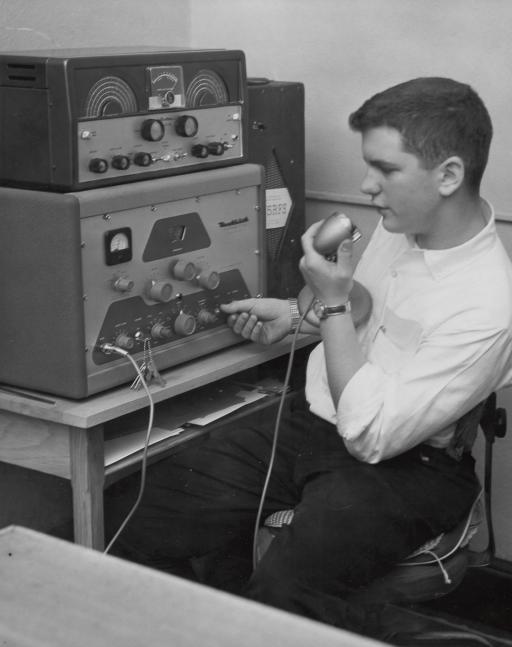
In a sunroom off the master bedroom he had a desk set up with a transmitter, a receiver, an amplifier and a bunch of other accessory gizmos:
The transmitter and receiver were connected via thick black cables to several antennas in the back yard. Amazingly, Dick (who, remember, was blind) was able to operate the radios by touch!
(Dick at the controls of his "rig")
An aside: Amateur Radio has been around nearly as long as radio itself. The Amateur Radio Service is licensed by the Federal Communications Commission (FCC) with the mission of honing radio communications skills (and having fun) so that operators will be available in emergencies. For a beginner's overview of ham radio, click HERE.
To become a ham, you have to get a license. There are several license classes (at the time I got involved there were five classes). The "entry level" license was the Novice Class. Back in 1953, you had to take a 75 question technical exam and demonstrate your ability to send and receive Morse code at five words-per-minute. (Note: The requirement to know "the code" has been dropped over the years; for a long time, "learning the code" was the most significant barrier to the growth of ham radio).
When you pass your ham license exam, the FCC issues you a "callsign"; the way you're known to other hams. Click HERE to read about callsigns and how they're assigned.
Wow! A receiver and an antenna! I could listen -- but I couldn't "talk" without a transmitter. My Mom came through; I "helped" her find a used Harvey-Wells TBS-50D "BandMaster" transmitter for $75.00:
.. and KN5AZL was on the air!
The Novice class license only permitted transmission via Morse code. You'd tap out the callsign of the station you were calling and, when/if they responded, you'd exchange names and locations (location? So that's what "QTH" meant! Click HERE to read about ham "Q" signals.) all by operating a telegraph key. Here's my first key (I still have it):
My first radio contact was, of course, with friend Dick, W5TIZ, up the street. But my next was with a ham in Ohio (more than 1,000 miles away!!) and I quickly made contacts all over the country and Canada. A week or two later I contacted (we call it "worked") a ham in England! Amazing!
Hams confirm contacts by mailing postcards (called "QSL" cards) back and forth; many are quite colorful and paper the walls of "ham shacks" world-wide:
The governing body of ham radio in the US is the American Radio Relay League (ARRL) and they provide a number of operating awards to demonstrate proficiency. The first one most new hams go after is "Worked All States" (WAS). To earn that one, you have to contact at least one ham in each of the fifty states and receive a QSL card from each state. The WAS Certificate is just a 8.5x11 piece of paper but, boy, was I proud to earn it!
(Sharp eyes will notice this is the WAS I earned as W4GKF some years later..)
One last Dick Freeling story. Like most hams, Dick liked to tinker with his equipment and antennas. His principal antenna was at the top of a 57' windmill tower in his backyard:
From time to time the antennas needed adjustment or repair and Dick would climb the tower with tools and do the work.
The neighbors were appalled that a blind man was climbing nearly six stories in the air and working up there for an hour or so. They'd gather and stare in horror as this "poor man" climbed up there.
After a few such episodes a delegation went to Dick and explained that it worried them so much when he did this. In characteristic Dick fashion he said, "No problem; I'll do it at night -- it's all the same to me." And, thereafter, he did!
Here's Dick in August 2004
Ham radio gave me my nickname; here's how that happened. When you communicate with Morse code, part of what you send to the other ham is your name (or "handle"). Written out in Morse Code, here's how long "Charles" is:
-・-・- ・・・・ ・- ・-・ ・-・・ ・ ・・・
Phonetically it's:
"dah dit dah dit dit dit dit dit dit dah dit dah dit dit dah dit dit dit dit dit dit"
You can see that takes quite a long time to send!
So I decided to shorten it to the approved abbreviation for "Charles" which is "Chas.":
-・-・- ・・・・ ・- ・・・ ・-・-・-
Phonetically that's:
"dah dit dah dit dit dit dit dit dit dah dit dit dit dit dah dit dah dit dah"
But that darned period (・-・-・-) takes as long to send as three letters; so I did the sound of "Chas." as "Chaz":
-・-・- ・・・・ ・- --・・
Phonetically it's:
"dah dit dah dit dit dit dit dit dit dah dah dah dit dit"
・・and I've been "Chaz" ever since.
As I made radio contact after radio contact, my proficiency with the code grew; the Novice class license required at least five words-per-minute (5wpm) but most communications took place at a higher rate of speed. The next class of license, the General class, had a tougher written exam and required Morse code proficiency at THIRTEEN words-per-minute (13wpm) -- and that exam was administered by an FCC examiner. Much more pressure than sitting across from Dick, I can tell you!
In less then six months I successfully sat for the General class exam and code test and passed it. Besides being able to drop the "N" from my callsign and becoming K5AZL, I now had voice privileges on most amateur bands. To read a short discourse on "ham bands", click HERE
A girl I dated once in ninth grade drew this cartoon for/of me; I think she had real talent. We never went out again, though...
Ham radio has dozens of sub-specialties one can get involved in. For example, some like designing and building their own radios. Some like "rag-chewing" (just chatting with others around the country and world and sharing interests). Some like contest-ing (seeing how many stations you can work in a fixed time-frame) and so forth.
For me, the attraction was always talking with stations far, far away. Distance (in ham lingo) is called "DX" and "working DX" was and is my special passion. Of course, there are a lot of variables affecting one's ability to "work DX". Those variables are:
Availability of DX stations to work (some countries don't permit ham radio)
Propagation (the ability of radio signals to "bounce" to the desired place on the globe)
Antenna quality, design and elevation
Quality of the receiver; better receivers hear better than poorer ones
Power of the transmitter; in general, more power = talk farther
Operator skill
I was quickly able to confirm contact with hams in twenty-five different countries. This might sound harder to do and more impressive than it really is. A "country" (for ham radio purposes) is more liberally defined than you might think. In addition to the definition of a country that you're familiar with (that is, a sovereign government), a place can exist as a ham radio country even if it's not a sovereign government if it is located a good distance from its government. For example, Puerto Rico wouldn't be thought of as a separate country by most standards -- but it qualifies as a separate country by the "far from home" rule.
Acknowledging this distinction, the ARRL calls them "entities"; there are far more entities (currently 340) than you'd recognize as true "countries".
The point is that working twenty-five entities isn't all that difficult. Heck, the US, Canada, Puerto Rico and even Alaska and Hawaii all count as separate entities for ham radio purposes. At that time there were 320 entities possible -- and I only had twenty-five..
It didn't take long for the limitations of my transmitter, receiver and antenna to make it hard to work a new country. What to do, what to do?
Enhance the station!
In the list above you'll notice that the first two items are pretty much out of your control. The third (a better antenna) was out of a 15 year-old's control, too. I wanted to put up a tower and a "beam" antenna like Dick's (something like this one):
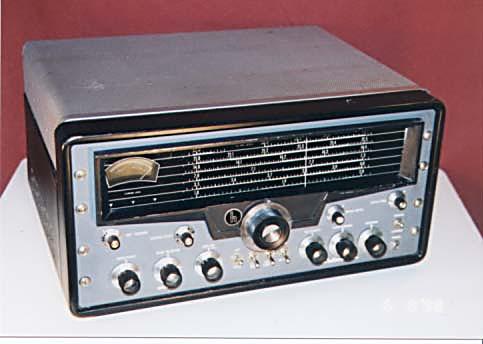
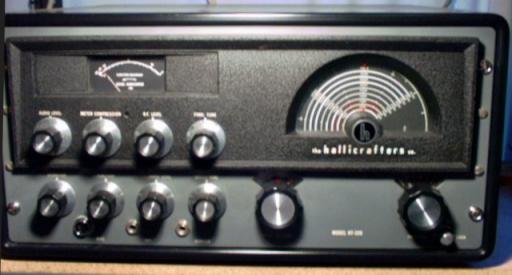
..but the folks said "NO" (loudly). Something about the appearance and cost of the tower, guy wires.. So I moved on to the next most significant way to improve my competitive position: A better receiver! The S38-D was OK as a beginner receiver but I yearned for more sensitivity, more selectivity and better filtering. So I saved my pennies and upgraded to the Hallicrafters SX-99:
It had to be better; it was twice as big and cost twice as costly ($100). And it made a big difference. I was able to work maybe twenty more countries. But the real problem (now) was that the Harvey Wells transmitter just didn't have enough power. 75 watts was next to nothing. I wanted (no, NEEDED) something more powerful (and I didn't even know who the heck Tim Allen was back then...)
$189.50AND it's a kit; you have to BUILD IT before you can use it. That wasn't the problem; the problem was being fifteen and having no money. The solution? Work as a laborer at my Dad's warehouse during the summer at $1.00/hour. Ouch. But it WAS the way to earn the DX-100.
This is what the building looked like in August 2004.
The first summer I worked in the warehouse (in flagrant violation of a number of state and federal child labor laws), I was assigned to moving orders thorugh the warehouse with a handtruck.
Orders were filled and cases stacked in lines according to the sequence in which the trucks were loaded. The handtruck was about 5 feet tall with a sharp, heavy steel blade at the bottom-front and 8" steel wheels at the back. You'd rock a stack of cases forward a bit, slide the blade under, pull them back against the handtruck and tilt the whole thing back towards you onto the wheels at a 30° or so angle. That way, you could roll the cases around to where they belonged and reverse the process to place them in the over-the-road trucks. Handtrucks were powered by the person pushing.
It's not hard to learn and it's not hard to do. In fact, the crew was pretty quick about it. One morning we had some Roma Port Wine to ship out:
I was trucking a stack of cases of gallon bottles the length of the warehouse. A case of wine weighs between 35 and 55 lbs depending on the number of bottles per case. Half-pints were packed 48 to the case and the amount of glass made them the heaviest. Gallons were packed four jugs to the case but were also pretty heavy since the jugs were so big and thick. Anyhow, four cases of gallons of wine (sixteen gallons) weighed about 160lbs -- handtrucking that much weight wasn't really a problem for a grown man. But I was just a kid and not fully grown yet. I was game to show that, just because I'm the boss's son, it didn't mean I couldn't do the work of any man there.
So I was moving 160lbs of wine the length of the warehouse pretty quickly. And then one of the wheels caught in a chipped area of the concrete floor. That wheel slowed, the handtruck shifted in that direction -- and sixteen gallon jugs of Roma Port wine hit the concrete -- at speed.
Some jugs didn't break.
But almost all the rest...
I don't know if you can imagine the size of the pool formed by sixteen gallons of red wine. Believe me, it looked like the Red Sea. Some of it soaked nicely into the concrete floor and the warehouse smelled like port wine until the day the building was sold nearly forty years later; for all I know, it STILL smells like Roma Port wine.
Breakage is normal when moving glass around and I wasn't the first to break something. But I do hold the F. Strauss & Sons world record for a single spill. Thank you; thank you very much.
His accountant told him that the only explanation was theft; someone was stealing from the warehouse. Dad decided to hire a detective firm to put an undercover detective onto the warehouse crew to see if he could spot what was happening.
It only took a few weeks before the detective's report bore fruit. The way the warehouse worked was like this:
Retailers would order full cases and partial cases made up of several dozen products. The warehouse crew would fill the less-than-a-full case orders by pulling individual bottles from cases in the "broken-case" room. This was an enclosed room with shelves where employees would fill orders.
The detective found that six of the warehouse workers would enter the broken case room (legitimately, it was part of their job to fill orders) and steal four pint bottles each, four times a day. They would put a bottle down inside each of their Wellington boots:
.. plus one behind their belt in front and one in back (for those unaware, half-pint and pint bottles of liquor are fairly flat in shape):
This went undetected since they wore their shirttails out. At their morning break, at lunch, at afternoon break and end-of-day, each gang member was able to steal four pints, four times each day. They would leave the building at those opportunities and stash the bottles under the seat of a pickup truck. One of the things the detective noticed was that these six always wore their uniform shirts outside their pants (to cover the bottles).
Just like that, stealing nearly three cases of pints a day, they'd been robbing F. Strauss & Sons for months. The gang was arrested, tried and convicted. Dad did two things right away. He had the walls of the broken-case room torn down and replaced with walls covered in chicken wire:
.. and he issued a memo forbidding employees to wear their shirts outside their pants. Then he turned his attention to two issues:
How did the inventory discrepancy go unnoticed so long?
What could be done to prevent this happening again?
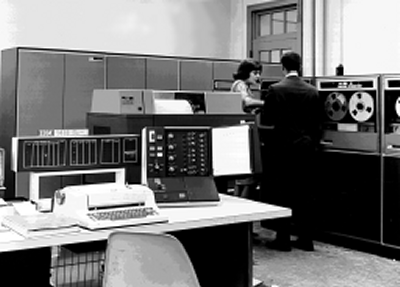
I was fascinated and watched the entire installation and programming operation. "Programming" (in the context of pre-computer IBM accounting machines) involved large metal panels and double-ended plug-wires:
You plugged wires into these panels in patterns to instruct the machine. One of those gray boxes was a punch card sorter:
Unless you were born before 1975, you've probably never seen an IBM punch card (everyone called them "IBM cards":
These things were a bit bigger than a dollar bill and were everywhere in the fifties and sixties. Earlier, IBM card sorters were "magic" machines often found at county fairs for fortune-telling. They were able sort punch cards at 600 to 1,000 cards per minute and put on quite a show with lots of movement and noise.
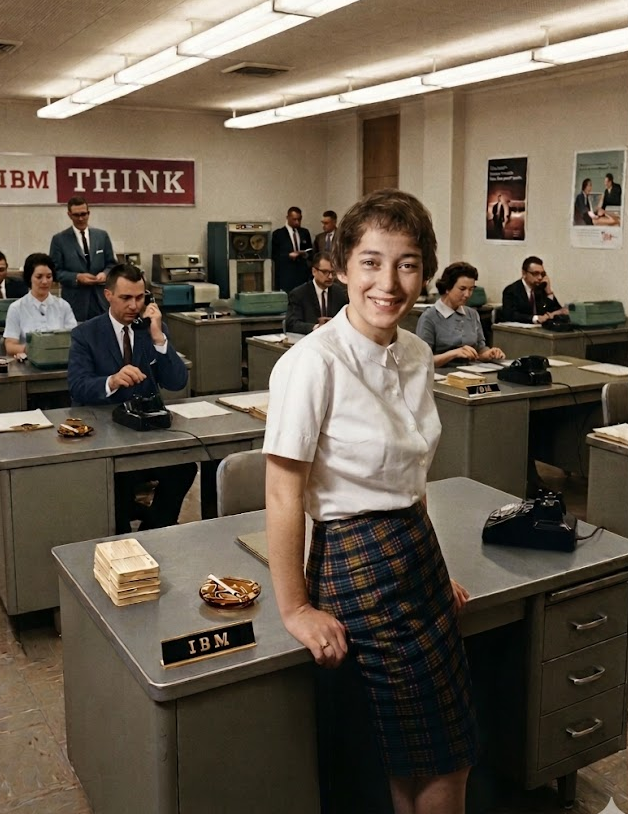
I spent all my spare time in the "IBM room" with Dad's two lady employees who ran this exotic gear. That experience cemented my interest in things technical, further developed my interest in being an electrical engineer -- and set me irrevocably on the path to work (someday) for IBM.
By the end of the summer of '55 I had earned almost all the money needed to buy my DX-100 transmitter (even considering being docked for the Roma Port spill) when a ham radio-related incident occurred that threatened the purchase. I was an officer in the Greater Little Rock Amateur Radio Club. Some years before, the club had been gifted by the City of Little Rock with a retired city bus. The idea was for the club to outfit the bus with radio equipment ao it could be used to travel to sites of tornadoes and other disasters to provide emergency communications.
The bus had been outfitted, used a couple of times and then stored in somebody's barn several years before. At a club meeting, someone suggested that we ought to take it out, clean it up and make sure it was workable. It was agreed that the following weekend a group would take the bus to another member's home and we'd clean 'er up.
Early Saturday morning I was part of the group that went out into the country to the barn to pick up the bus. Fortunately there was one member of the club who was a truck driver and knew how to operate a manual-transmission, cab-over bus. On the way we stopped for five gallons of diesel fuel; after all, the bus had been sitting in that barn for more than a year and no one knew how much fuel it had in it when parked there or the condition of that fuel.
The driver drained the fuel tank (it was mostly fumes) and added our five gallons of fresh fuel. It started up and ran just fine. We drove it over to the house of the young ham (my age) whose Dad had agreed to let us clean it up in their driveway. It was full of cobwebs, dust and deceased small rodents. The radios hadn't been fired up in a long time. We spent all afternoon washing, dusting, cleaning and testing the radios. They were rigged to run off a built-in generator fueled by the bus fuel tank.
At 5pm we were pretty much done and the homeowner asked that we get the thing out of his driveway. We looked around and discovered that the driver had left several hours earlier -- leaving just us six teenagers.
Well, I had a learner's permit (I'm only fifteen, remember) and I had watched the now-absent driver carefully, so I figured, "What the heck? I can drive the bus back to the barn".
So I got behind the (very large, mostly horizontal) wheel:
.. and put my other equally young friends inside the bus at the four corners to spot for me (the bus was BIG!). I got it started, backed out of the driveway into the street and turned up the hill toward the next major street. Everything was going great!
I drove up a short hill to the first cross street and turned left. It was a short block to the next street which headed the direction I needed to go. At the stop sign at the end of the street, just before my left turn, the engine died. It resisted all my attempts to restart it. The starter cranked but no-go. The left turn I needed to make was a bit downhill so I eased off the brake and coasted through the turn. My plan was to roll down the hill and "pop the clutch" to restart the engine as I'd seen my Dad do before with a recalcitrant vehicle (but not a bus).
We're building up a pretty good head of steam. I divided my attention between steering, looking out the windshield, flipping various switches on the dashboard and popping the clutch.
It was HOT in the bus (did I mention it was August?) so I operated the lever that opened the front and rear doors. You know the kind; the doors open like an accordion from the center and fold back, sticking out to the side of the bus about six inches or so.
Oh! Now we need to insert a tutorial in the hydraulic systems of a circa-1950 city bus. Pay close attention:
The diesel engine, in addition to driving the rear wheels and radio generator, also drives a compressor that provides the compressed air that operates two systems: the brakes and the actuator that opens and closes the exterior doors. Got it?
And one more thing. Did you know that a city bus gets only between two and three miles per gallon? And remember we put in five gallons? Oh, and the distance from the barn to the house where we cleaned up the bus was, well, ~fifteen miles. And we'd used the generator to test the radios...
So, the reason the bus wouldn't start was that it was out of fuel. But I didn't know that then.
Soooo.. I'm engaged in a fruitless engine-restart exercise while rolling ever faster down what is now a very steep hill. We're going about 40MPH with the doors folded open..
..and then I hear "CRUNCH!!! SQUEAL!!! CRUNCH!!!"
I looked at the door and there was just the opening; the doors themselves were not in evidence. About then, one of my on-board friends said, "Hey! You hit a car!"
If I did, it didn't slow the bus down at all -- but it DID rip the doors right off the bus. I look back up the hill to the right and I see a brand new 1955 Buick Roadmaster:
.. now looking like an cutaway sculpture of a 1955 Buick Roadmaster . Almost all the body skin on the left side had been scraped off by the protruding doors of the bus. And, yet, the bus is still running 40MPH down the hill.
What would you do? That's right, I hit the brakes.
Remember the air compressor that drives the air brakes and the door mechanism? Turns out that when I opened the doors a while back I used the last bit of air in the tank to do that -- so, with the motor not running to drive the compressor, there was no air left to operate the air-brakes.
We hurtled on.
Until we reached the bottom of the hill and then (ZOOM!) momentum took us up the next hill.
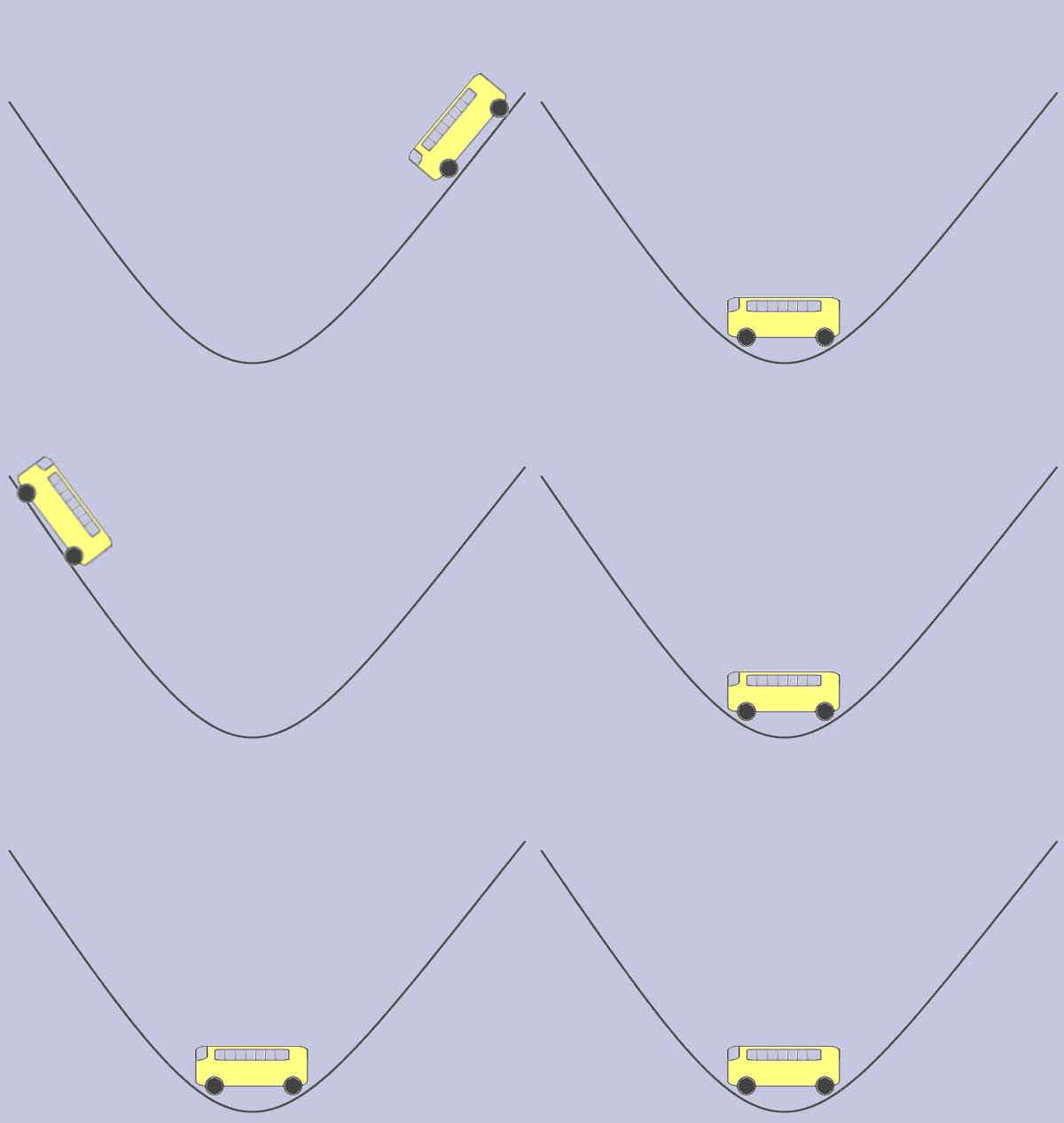
We went about half way up the hill and then, mercifully we ran out of momentum and the bus stopped. Well, "stopped" is an overstatement. It must have stopped since it changed direction and now began rolling backwards back down the hill to the bottom -- and then continued (backwards) up the hill toward the stripped Buick. I'm actually getting pretty good at steering forwards and backwards by this point.
Thankfully it ran out of steam before reaching the Buick and stopped -- and started rolling forward again back down the hill.
We kept this up for a few more (shorter) cycles until the bus came to a rest at the bottom of the two hills. By now, a crowd had gathered led by the chap who owned the Buick. Turns out he'd just picked it up from the dealer the day before (it still had the paper tag). He was not happy. And the rest of the crowd wasn't all that happy either.
I had a few moments to ask my bus-riding compatriots why they didn't do a better spotting job since THAT'S ALL THEY HAD TO DO!!!!!!! but I didn't get much in the way of satisfactory answers.
Across the street was the home of a friend from high school. I ran over and rang the bell and was admitted to use their phone to call my Dad. No one answered at home.
Since my parents only had one set of friends I called over there and they were there. I asked their friend David to put Dad on the phone and he did.
Me: "Dad? I wrecked a bus. No one is hurt."
Me: "Hello?"
Dad: (sighing)"Where are you?"
About ten minutes later the cops arrived. Another ten minutes later my Dad and his friend David arrived. David was laughing his ass off. He was the ONLY one.
Things were eventually sorted out. My Dad let me believe that our insurance wouldn't cover all the replacement cost for the Buick and that my hard-earned $189.50 that I had for my new transmitter would have to go into the pot.
He let me believe that for a month until finally relenting. Turns out the insurance covered the Buick. When the radio club approached Dad to pay for the damage to the bus, I cannot tell you the words he used as he refused. I COULD tell you -- but I don't use that kind of language.
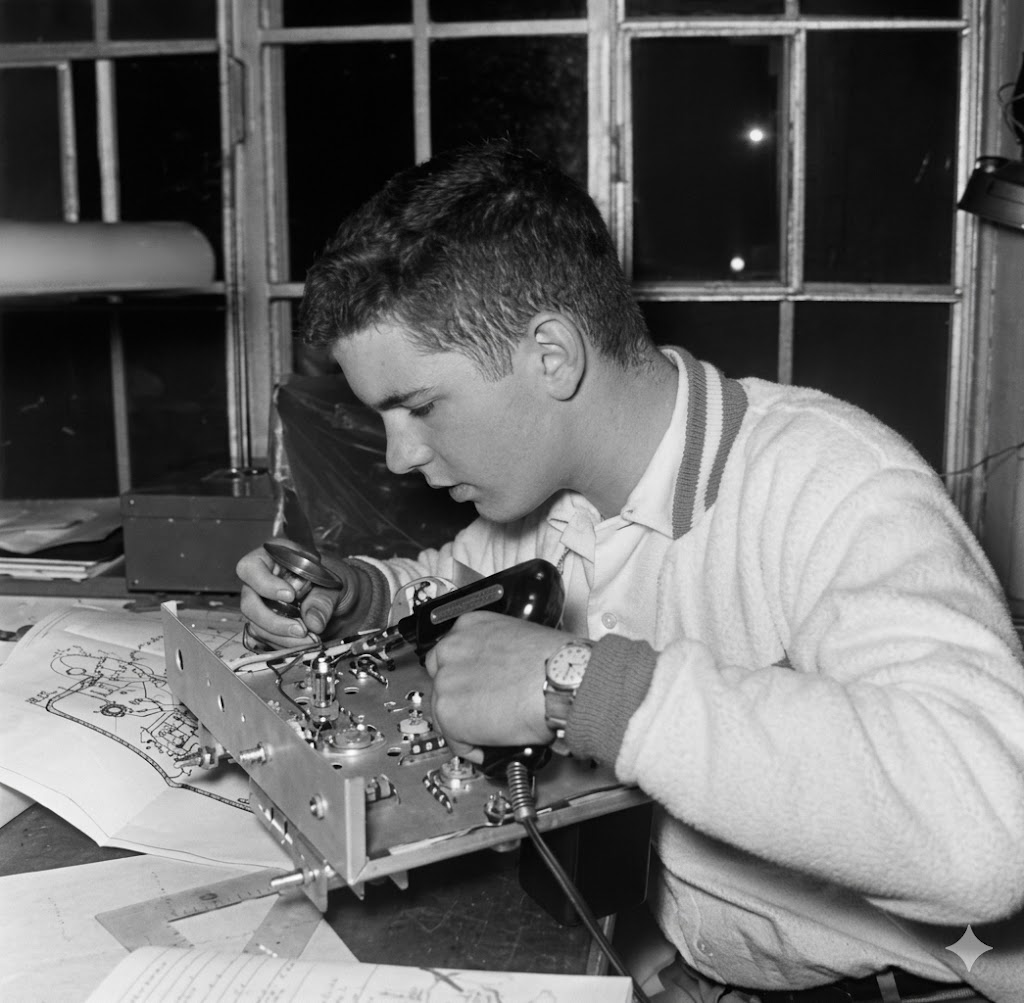
Notice my use of a soldering GUN rather than a proper soldering iron...'nuff said?
So it's not surprising that nothing much worked the first try.
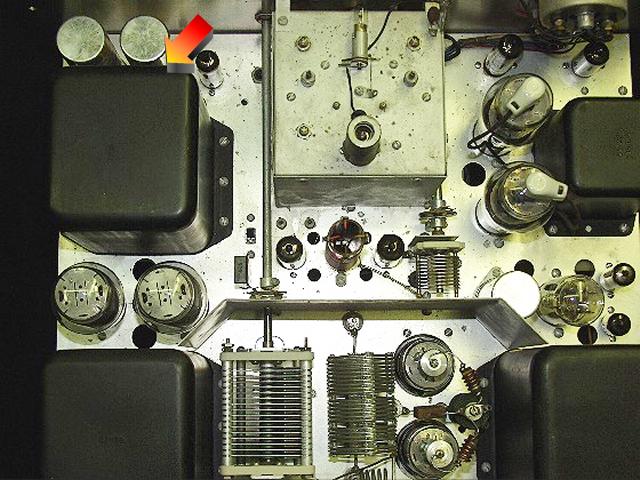
I did learn an important lesson worth imparting however. During the first power up test, I discovered I'd dropped a screw into the chassis between the power transformer and two electrolytic filter capacitors. These capacitors were about 4" high and an inch in diameter and were covered by cardboard sleeves. I couldn't get my fingers down between the capacitors and the transformer housing to pick up the screw; just too tight. So I slipped the cardboard sleeves off the capacitors in order to make a little bit more room:
I poked my fingers down to grab the screw..and then...
... woke up a few minutes later on the floor. The reason for the cardboard sleeves over the capacitors is that there was approximately a 1600 volt difference between the (now-exposed) metal can of the capacitors and the grounded housing of the transformer. My fingers made a pretty good conductor when inserted between them. Got a nice burn and bump on the head. And, not surprisingly, I never did THAT again.
Anyway I was eventually on the air with my new SX-99 receiver and my new DX-100 transmitter.
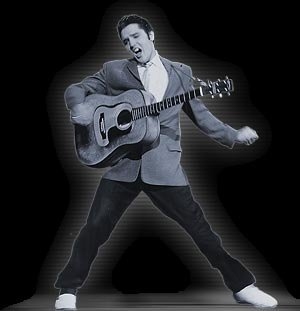
Most of the guys in the audience were put off by Elvis and his stage gyrations; the girls all universally loved him (you could tell by the screaming) -- the guys, not so much. But I thought he was outstanding! And later, after walking back to the car, I learned that girls could be sufficiently turned on by a performance that their dates could get VERY lucky.
.. that I played standup bass. I didn't, of course, but the horn section was so loud no one knew. I faked my way through the dozen or so charts the Swing Band knew -- and soon was going steady with Ann. The whole darned thing worked out pretty well.
She knew (and cared) as much about ham radio as we cared about Shakespeare -- but she was game and came to all our meetings. When we lobbied the school to allow us to set up a club station she went to bat for space for it.
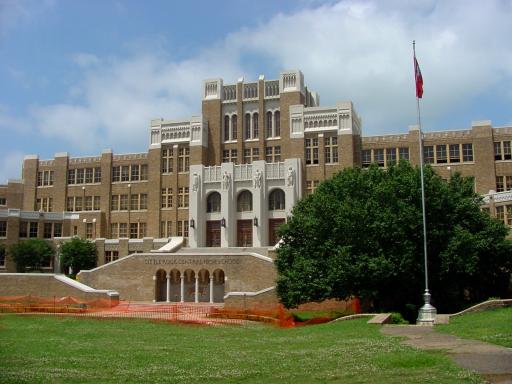
Little Rock Central High (yes, THAT Little Rock Central High) is a BIG school with the center tower being five stories high:
The fifth floor was generally given over to the band for a practice hall and a few homerooms. It was quite a climb to get up there. We, of course, wanted to be "up on five" since we needed access to the roof for antennas.
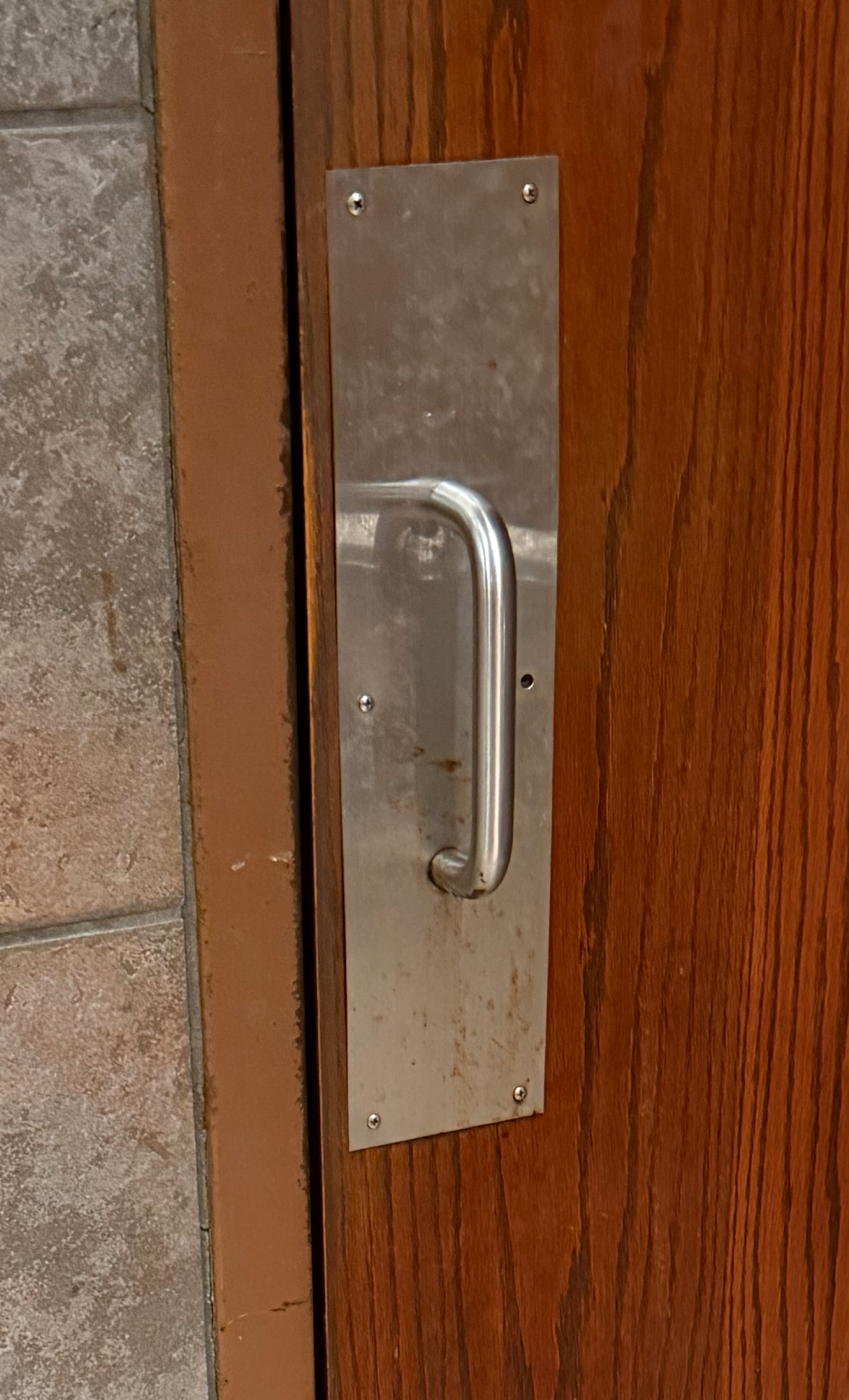
The only space available was a fourth floor abandoned boys' bathroom. It was about eight feet by twelve feet with tile walls and floors but, thankfully, the "appliances" had been removed. The door had an opaque pebbled-glass window (lettered "BOYS" in bold black letters), a transom above it and a U-shaped vertical door pull with no lock. And it had a window giving on the back of the tower to access the antennas. It was perfect!
Dick Freeling applied as trustee for a club license and we were assigned W5RFS. That callsign was a re-issue as the original license holder had either changed callsigns (by moving away from the fifth call area, dropped his license or passed away). We used the phonetics "Radio Free Siberia" (just for fun)! (Click HERE to learn about "ham radio phonetics").
.. along with a 6volt battery and a knife switch. We wired the spark coil to the metal door handle:
.. and to the metal door frame. We sprinkled a bit of water along the floor outside the door and added a bit of salt for good measure. One of us climbed up on a counter to peer through the side of the slightly-open transom above the door. Got the setup?
When our lookout saw the boys across the hall approaching our door, he signaled and we closed the switch.
Time out for a bit of education for those unaware of what comes next:
A Model T spark coil develops about 20,000 volts at nearly no current. This can generate a substantial shock but with no danger of any serious harm.
Anyhow, the boys across the hall grabbed the handle:
-- and they were thrown backwards across the hall against the far wall (some 10-15' away) and landed in a heap. We were victorious! They won't do that again! Yay! 1956-equivalents of high-fives all around!
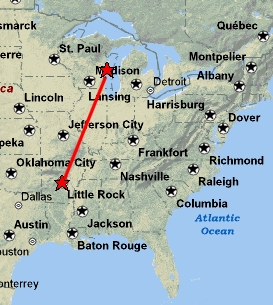
Manitowoc had an amateur radio club; we, of course, no longer did. Part of the planned exercise would be letting the kids talk back home for free via Ham Radio. It was possible (still is) to hook a telephone to a ham rig (it's called a "phone patch") so people could talk to each other using Ham Radio rather than via long distance telephone. Long distance phone rates were pricey in 1957.
I received a summons to the Vice-Principal's office; I had no idea what I'd done now. But he welcomed me warmly and asked if I would bring in my ham rig from home, set it up in his office and provide the Little Rock-end of a communications link to Manitowoc. I jumped at the chance and, for weeks I'd get out of a class to go handle our end of that link. It didn't work every day (the vagaries of propagation on the 40 meter band) but it mostly did. And, I got my picture in the paper:
Omigawd!! Is that a pocket protector?!?!?
This little public-service adventure did end my Ham Radio experiences in high school. In June 1957 I graduated, and by the fall was ensconced at Georgia Tech (a more forgiving environment for techno-geeks).
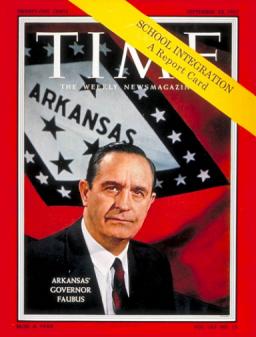
Three months later everyone knew about Little Rock Central High School. School integration came to America that fall and Little Rock was one of the most visible test cases. The Arkansas National Guard, Governor Orval Faubus:
.. the "Little Rock Nine", Justice Department and all. Though I wasn't there, I left behind a girlfriend (remember Ann?) who was a senior that year. She said (newspaper accounts notwithstanding) that the only real problem was this:
The National Guardsmen deployed at the school soon figured out the shower schedule for the girls gym and PE classes -- and chose those times to run inspections...
It was, seriously, part of the reason I aspired to a career in electrical engineering. The other part is another good story from 1955: Click HERE..
Once one decides on a technical degree, one must then choose the appropriate institution of higher learning. I'd decided on electrical engineering (EE) and Dad suggested Tulane and the University of Virginia. He secretly thought I wouldn't make it in engineering and wanted me to be somewhere where I could easily change majors (he wanted me to be a lawyer). I added Georgia Tech to the mix. Tech was arguably the best engineering school in the South and I had no desire to leave the South. In due time I was accepted at all three and had to decide. Y'wanna know how I decided?
(my first airplane trip) from Little Rock to Atlanta. No one visited colleges before actually matriculating there in those days; at least no one we knew did. I had a pretty good idea that Georgia Tech was in Georgia (the name was kind of a giveaway..) but I didn't know it was in Atlanta, just that the nearest airport was there.
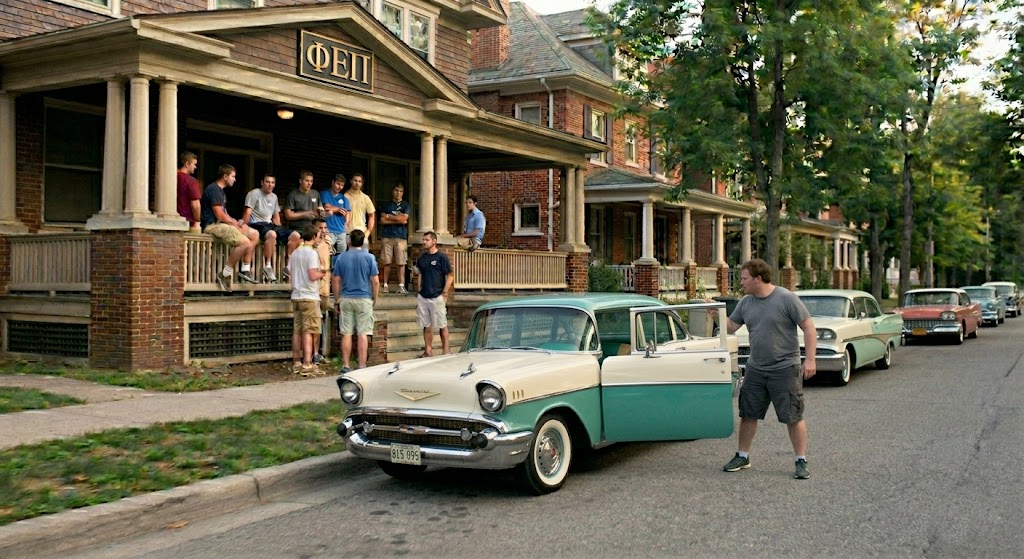
During the summer I'd been rushed by my Dad's fraternity Phi Epsilon Pi:
Dad had gone to the University of Illinois for two years and had pledged Phi Ep. I think it was the only Jewish fraternity at Illinois in 1919. That made me what was called a "legacy"; if your Dad was a member of a fraternity, it was expected that you'd be offered to pledge that one when you went to college.
There were three Jewish fraternities at Georgia Tech with Alpha Epsilon Pi being the biggest, PhiEp the second and Tau Epsilon Phi the third. Since I was a PhiEp legacy, it was assumed that that's the one I'd pledge -- so I didn't get much attention from the other two. During that summer of '57 I was in letter contact with one of the brothers, Phil Weiss. Phil had drawn me to rush because he was from Kansas City which was as close as anyone in the chapter lived to Little Rock. He said that he'd meet my plane and bring me to Tech. Cool.
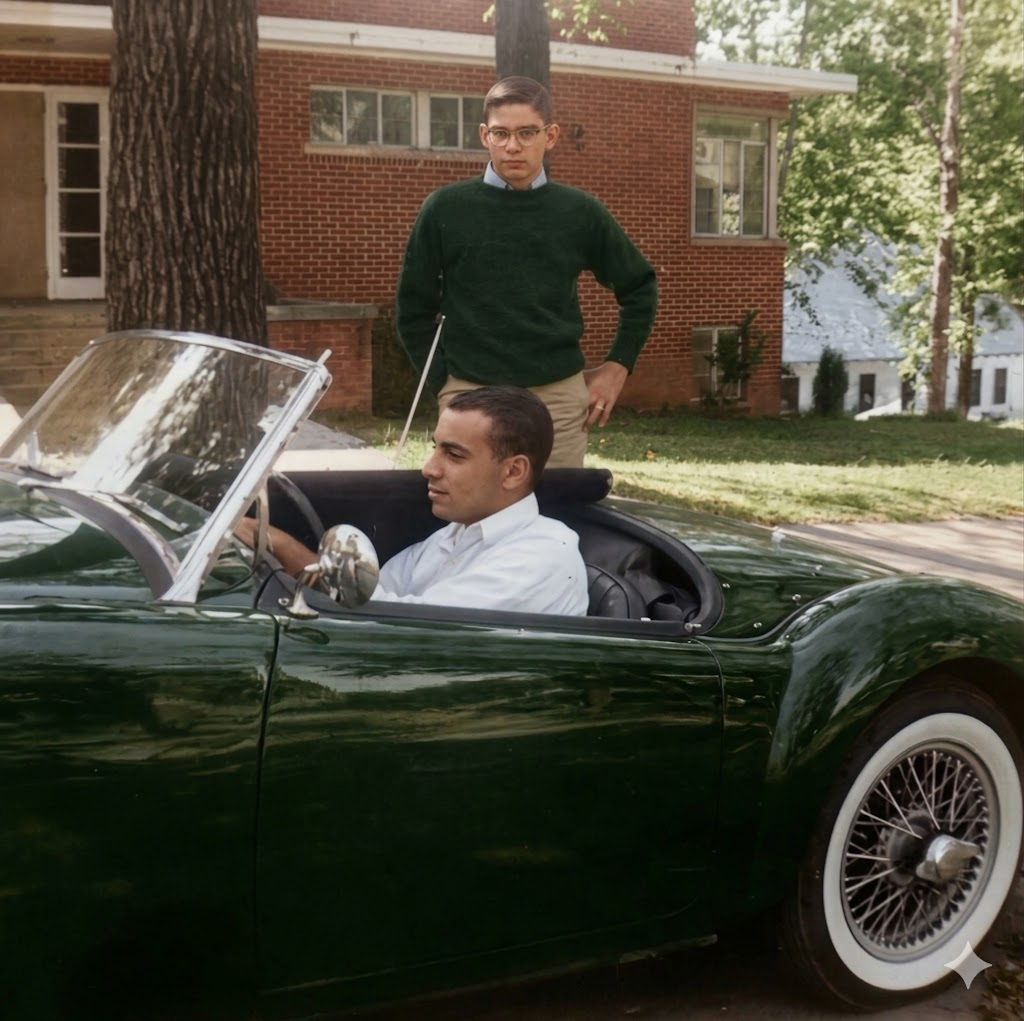
When I got off the plane in Atlanta, there was Phil in his black MGA:
That's fraternity brother Howard Green standing behind Phil in his MGA.
A college man AND a sports car driver! Sports cars weren't all that prevalent in 1957 and there were approximately zero in Little Rock. I had shipped a trunk ahead to the dorm so my suitcase fit nicely on my lap. Top down, off we flew.
I felt as though I knew Phil from our correspondence and felt really comfortable. Little Rock didn't have a very large Jewish community and none of my friends in High School were Jewish. There was only one Jewish boy besides myself in my Temple Confirmation class. In high school and before, I don't remember any anti-Semitism at all -- all the time I was growing up. And I still haven't encountered any, personally.
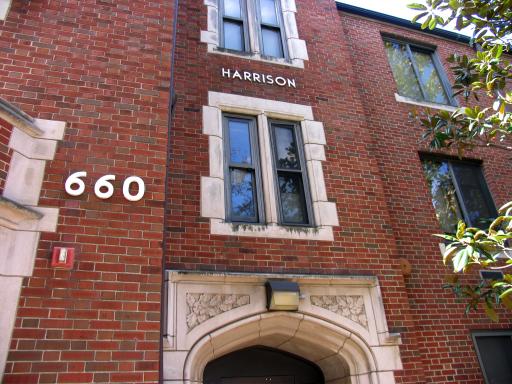
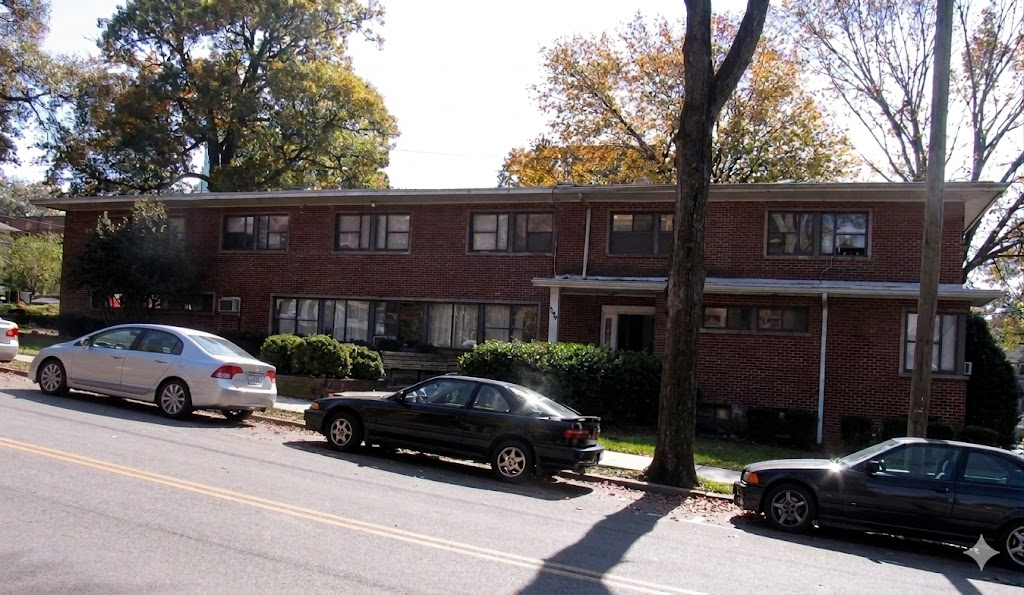
It was driving north from the airport with Phil that I discovered that Georgia Tech was in downtown Atlanta. He brought me to my assigned dormitory, Harrison Hall:
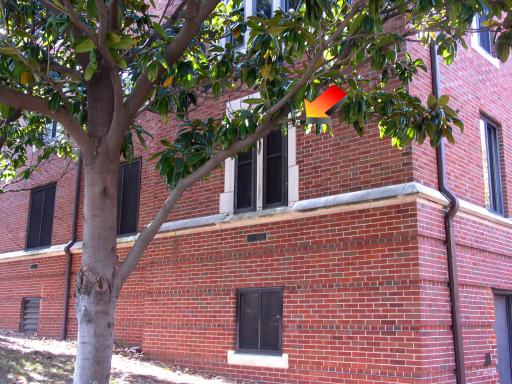
.. where I found I'd been assigned to Room 106:
My roommate, another Jewish fellow (not a coincidence I learned) David Somerstein, was from Charleston, SC. He hadn't arrived yet so I had the whole "enormous" room to myself. Definition of enormous: 8' x 16'. And in that room there were two beds, two desks and two standalone closets. The beds were bunks built into the wall. I was able to choose the lower by virtue of arriving first.
Tech had rules-aplenty for freshmen, among them was no student cars and the requirement to live in the dorm for at least your freshman year. I dropped my bag off, picked up my orientation stuff and Phil took me to the Phi Ep fraternity house.
I know fraternities are out of favor these days but it was the way to go 'way back then.
The PhiEp house was on the corner of Sixth street and Fowler, an easy walk to the rest of the campus:
The house was a long, two-story, flat-topped ranch-style house with fourteen bedrooms upstairs and common areas downstairs. I remember that a large replica of the Phi Ep fraternity pin was inlaid into the entry hall floor.
Everyone was very friendly (Duh! Rush week was just beginning..) and I felt pretty much at home though this was my first encounter with Jewish young men in quantity.
My new roommate in the dorm, Dave Somerstein, wasn't interested in fraternity so I don't think he participated in Rush. I did get to know the other Jewish freshmen as we were shuttled among the three possible fraternities for parties, smokers and such. Of course all the Rush girls were also Jewish. It sounds odd today but there was no such thing as a Jewish member of any non-Jewish fraternities then -- and vice versa.
Rush week was a lot of fun and, at the following Sunday, those Rushees who'd received pledge cards chose from among them (if they received more than one) and walked to their new fraternity house. It was a fairly emotional thing for the brothers because that's when they knew whether their sales pitch had been effective. New pledges are the lifeblood of a fraternity and if you have a bad rush year, the cost for existing brothers has to go up to support the house.
Our pledge class consisted of Bill Arnowich, Ed Belin, Steve Brenner, Dick Levin, Darryl Mexic, Mark Rosen, Dick Schwartz, Art Ziff and me. We thought that now that we'd pledged, we'd be "in", full-fledged members of Phi Epsilon Pi. Wrong (we were so naïve..).
In recent years, there has been a lot on the news about hazing fraternity pledges. Georgia Tech had strict rules about that and the hazing was pretty mild. But it was unpleasant and somewhat humiliating and I never really got the point.
Anyway, you were a pledge from that Sunday for most of the school year. Those who stuck it out (and whose grades were acceptable) were initiated in the Spring.
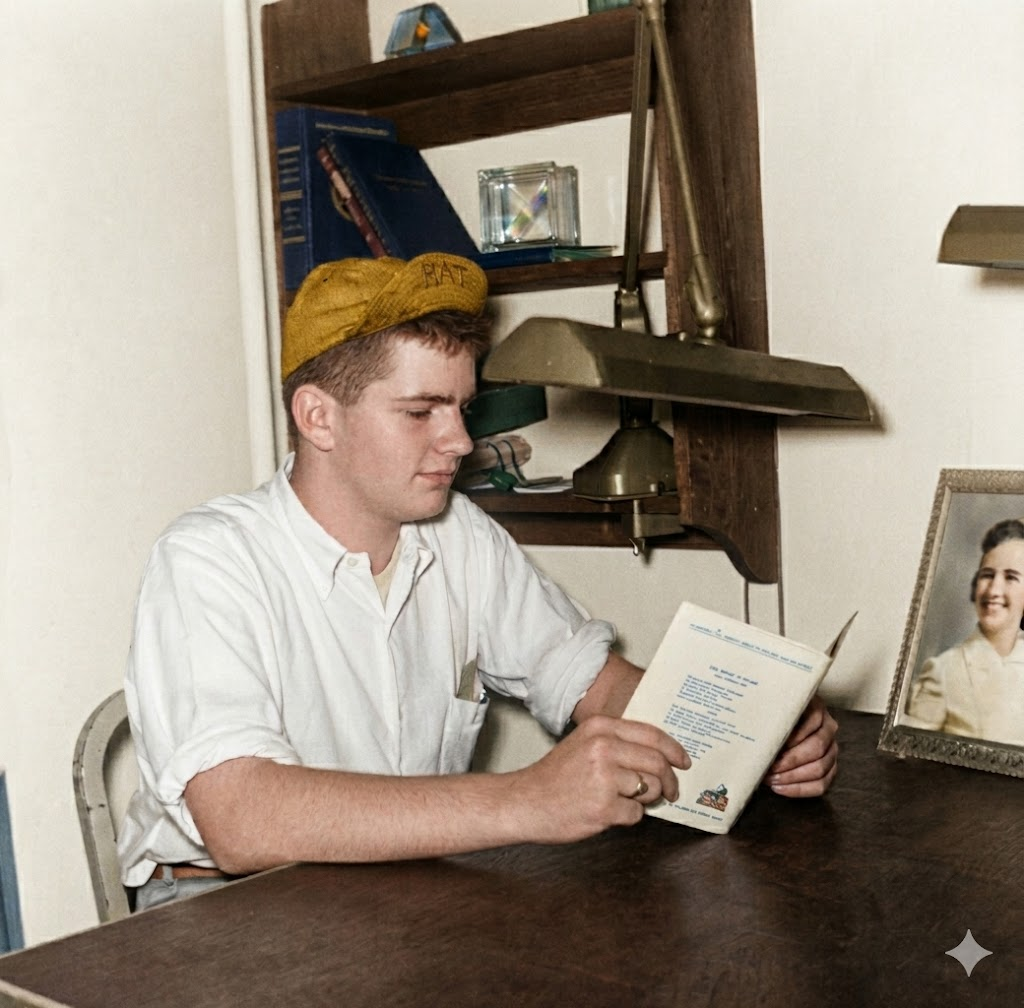
Georgia Tech had some other traditions that are gone today. Freshmen were required to buy an old-gold colored billed cap (called a "Rat Cap") and were required to wear it at all times outdoors. Here's me in mine:
The cap bill was folded up in the front and lettered with your name, class year and home town. Any upperclassman could give you crap and you had to take it. The rat caps were worn for the entire Fall Quarter -- unless Tech beat Georgia in football on Thanksgiving Saturday. We were fortunate in my year and we won. Rat caps came off and were destroyed just after Thanksgiving.
What about classes? Most have heard about the school orientation meeting where someone says to look at the person to your left and right because two of the three of you would not be here in twelve months. That really happened at our orientation. There were about 4,000 freshmen in the class of '61 (as I recall) and only about 1,500 graduated.
The class schedule was daunting and every freshman had the same courses regardless of intended major. Tech was on the quarter system where the school year was three quarters rather than two semesters. Freshmen carried 21 hours. That meant that we went to classes each week to earn 21 hours of credit. But many classes met longer than three hours a week. My fall quarter freshmen schedule:
Math 101
Chemistry 101
Honors English (more about this later)
Mechanical Drawing 101
Social Science 101 (elective)
Geology 101 (elective)
Math and Chemistry met five times each week and English met three times each week; but Chemistry also had a three hour lab as well.
Mechanical Drawing was two three-hour labs each week.
Classes started at 8am and labs were usually 3pm-6pm.
There were half-day Saturday sections, too, depending on your schedule.
The electives were three-hour credit for the most part.
But when you add it all up we were in class maybe 60% of each weekday and three hours on Saturday. And the rest of the time we were free -- to study.
Why did I pick Geology as an elective you might ask? It was reportedly a "crip course" -- easy material with true/false quizzes. I was misled.
Good story on my Dad, though. When he attended the University of Illinois for those two years (1919-1920) he, too, was in search of a crip course to fill out his schedule. He was advised to take Psychology because all the quizzes were true/false and, just by the law of averages, you'd get half right without studying.
Dad was good at many things but logic wasn't one of them.
He took the course, never studied, got half the questions right (as advertised), got a 50 in the course and flunked because, of course, "50" is a failing grade!
But Tech wasn't all work. At least for me it wasn't, because I proceeded to fail Math 101 and Chemistry 101. I'd never failed a class in my life before. I put it down to two things:
I had no study ethic; high school was a breeze for me and I never developed good study habits. The freedom of college life led me to "enjoy the experience" much more than I should have. Shame on me.
Central High did not prepare me properly for college-level math and science.
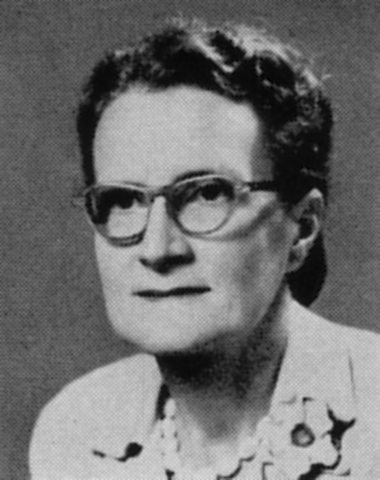
Central High did prepare me well for the English curriculum. I aced honors English (which helped prevent me from flunking out). I owe that success almost entirely to Ms. Blanche Bowen, my senior year English teacher at Central High:
-- oh, and perhaps a little to the guilt I felt over electrocuting Ms. Piercey who was also an English teacher...
In the Winter Quarter I re-took Math and Chemistry 101 and was able to build to a "C" in both. Not that impressive since it was the second time for the same material. I'm now ten credit hours behind the pace and I planned to attend summer school (that's what that fourth quarter is for, I guess) to get back on track to graduate on time in 1961.
It was still a struggle for me but I never flunked another class -- though I did start to think that maybe a person who is no good in math or science was going to have a tough time completing the work for a degree in Electrical Engineering...
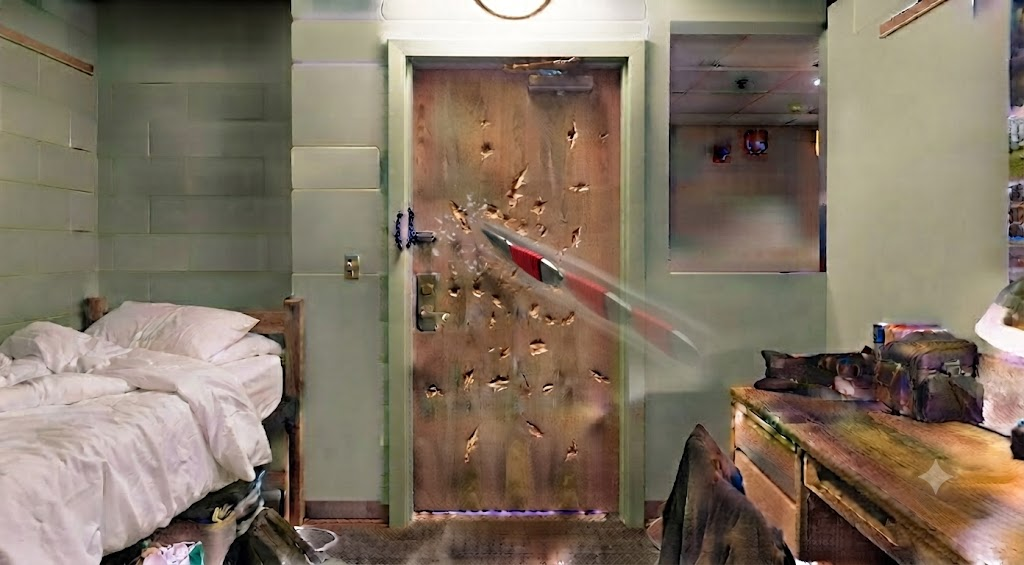
When times were slow, I would routinely throw knives into the back of the closed dorm door. Got to be pretty good at it, too.
Until one day, while so engaged, the dorm floor counselor opened the door -- and a throwing knife whizzed by his head and stuck in the wall behind him. Apparently one or two extra revolutions were just right to get the pointy end into that far wall; I hadn't known that before -- Cool!
The floor counselor didn't think it was cool at all. In fact, he sorta browned his trousers a little. And then he called the Dean's office and Dean Dull (yep; that was his name):
.. summoned me to his office.
Seriously, I thought I was due for expulsion. The doors in the dorm at that time were 2 ½" of solid oak. The inside of my door was marked up pretty well from scores of throwing-knife encounters. They never bothered me, but Dean Dull was plenty pissed about it.
Thankfully this particular transgression wasn't listed in the Official George Tech offense/penalty book I guess, so he got to decide what to do to me on the spot. With my abject apology and groveling, he said the issue would be forgotten if:
I would pay to replace the door
I would refrain from doing this again
All in all it was pretty darned fair of him, I thought, and I readily agreed. He announced that the cost of the new door would be:
$600.00!
WHAT!???? Gulp.. I didn't know how I would raise that much money and asked for several months in which to pay it off. He agreed. And then I asked..
.. if I could please have the old door.
I don't think he was ready for that. I said that since I'm buying the new door, could I keep the old door? He asked why I'd want it and I said I wasn't sure (except I wouldn't use it as a knife target) but that I felt it should be mine after I paid for the new one; even then, I was not without moxie. He shook his head wearily -- but agreed.
You may be wondering what all of this (for the past dozen paragraphs or so) has to do with me and Ham Radio?
But I was on the air as K5AZL/4. The "/4" part was used to show you were operating away from your station home QTH. This was only meant to be used temporarily -- but since college looked like four+ years (now) I applied for a license in the fourth call area and was issued W4GKF which is my callsign today. (Ed note: Many years later I was able to find that the original holder of my callsign was Dewey H Solomon Jr, 137 Spencer St, Randleman NC. I don't know if he gave it up or became a Silent Key (SK).
The station was up and operating for several months until I took it home for the break between Spring and Fall quarter and left it there. Ham radio operation was pretty much over for me until after graduation.
But there are some college stories worth relating, so bear with me.
At the end of the second quarter it became clear to me that, while I had battled with calculus, it had wrestled me to the ground. And, without mastering calculus, differential equations were never going to happen for me and, therefore, neither would an Electrical Engineering degree. EE is all about math and, well, I wasn't.
So I changed my major to Industrial Management. In most colleges, that would be called Business Administration but at Tech, the degree was a Bachelor's of Science in Industrial Management (BSIM). Pretty much every student in that major was a football player on scholarship -- except me and a few others. But it was a degree I thought I could get and I didn't want to give up on Georgia Tech.
Turns out it was the right thing for everyone; and my contact with the Tech football players helped me with a scam I tried to pull on a fraternity brother. I'll tell you about it later.
I stopped dead in my tracks and looked around for the source of this "SOUND" I'd never heard before. There on the back of a flatbed truck were four guys with a standup drum set, bass, guitar, trumpet and trombone and all of this music pouring out.
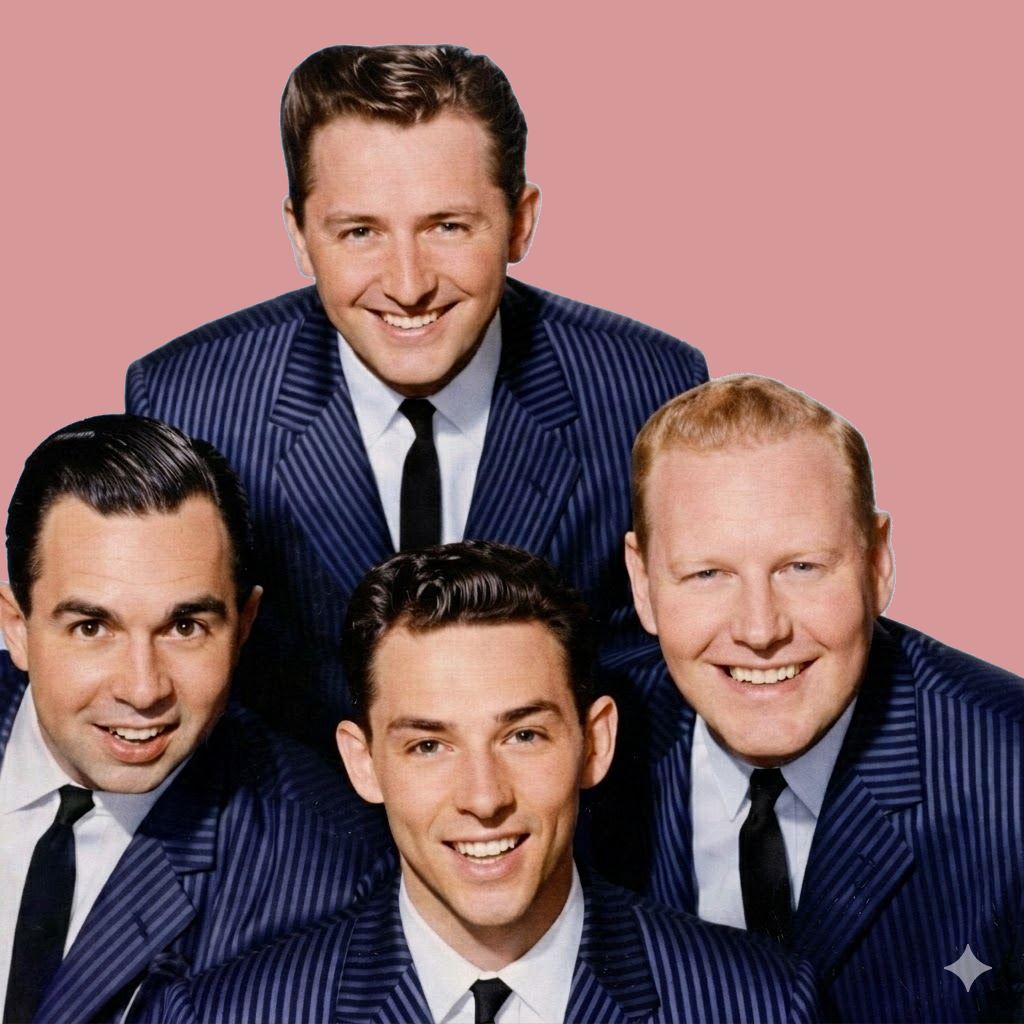
The Four Freshmen!
That was my introduction to The Four Freshmen. Their sound just blew me away. At that time they'd been performing for ten years and had several albums out -- but I didn't know anything about them. I stood mesmerized until they finished the set and then went up to the tall guy who sang lead and told him I'd be a fan for life. And I have been (and still am). I went and bought every LP they'd made and played them constantly. I found that everyone didn't "get" the open harmonies but I didn't care. I did.
That tall guy was Bob Flanigan and he sang lead for the Freshmen for 44 years until retiring in 1992. The current performing Freshmen are all in their early thirties and younger but the SOUND is still as great as it was when I first heard the guys pictured above (from top: Bob Flanigan, Don Barbour, Ross Barbour and Ken Albers) on the back of that truck in the Spring of 1958.
In fact, I'm presently the Membership Director and Webmaster for the Four Freshmen Society. Check 'em out at fourfreshmensociety.com and enjoy!
I rang the doorbell and -- a strange woman answered the door (well, she wasn't "strange" per se, just a stranger to me). We stared at each other for a beat or two, her in her housedress and me standing on the porch with my suitcase.
She asked if she could help me and I mumbled something like: "I live here -- don't I?" Pure Twilight Zone. She said that she and her family had lived there for about two months; they bought the house from Charles and Alma Cone.
I asked if I could please use their phone and called (what used to be and apparently still was) my home phone. My mother answered and I asked her just where the hell she was.
It turned out that I was, for real, the punchline of a Rodney Dangerfield joke:
"I was so ugly, my parents moved away and didn't tell me!" Rimshot..
They had decided to move and were going to surprise me (tomorrow) when they picked me up at the airport and drove me to the new house.
Yeah, right.
I guess if they were trying to ditch me they made a poor job of it by retaining their old phone number -- so I suppose I believed it.
They came to get me, drove me to our new home at 51 Sherrill Heights:
.. and we all had a good laugh about it. That is, until I asked where all my stuff was that had been in my room and in the attic.
"Oh, we didn't think you'd want it so we threw it all away."
Yep. My ham radio desk that Dad's foreman Mr. Ash Haddick had made for me. Gone. All my model airplanes. Gone. All my snapshots. Gone. All my "stuff". Gone.
For some reason they saved my highschool yearbook or I wouldn't have had some of the illustrations for this story. Sigh...
I couldn't believe that my things mattered so little to them that I never even got a chance to look through them before they were pitched. Think that may have something to do with why I'm such a packrat today?. Hmmmm?
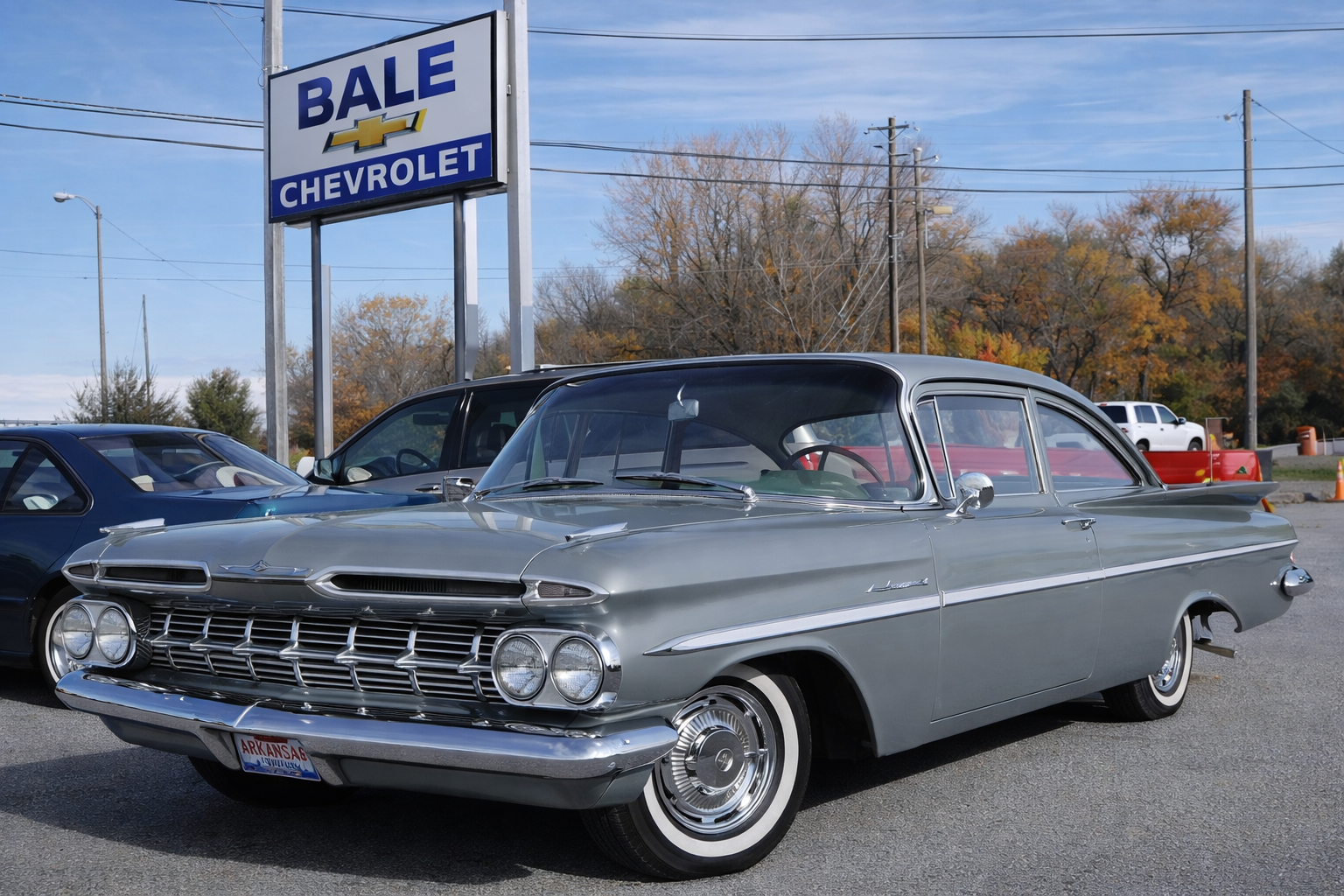
Mother insisted that Dad buy a new car for me; she was concerned about a used car so far away. (Good for you, Mom! Think maybe she felt a little guilty for the "moved and didn't tell me" thing?) but Dad was, well, cheap. He said the only choice therefore would be a 1959 Chevrolet coupe with a six-cylinder engine and manual transmission. This was the absolute bottom of the line for a new 1959 car just introduced in the fall of in 1958. I tried to negotiate for a MGA:
.. (it was only a few hundred dollars more) -- but to no avail. Still, I reasoned that even a bottom-of-the-line Chevy was better than no car at all. I was able to get him to spring for whitewalls and wheel covers instead of hubcaps (an extra $50 as I recall) but that was the limit.
So Dad, Steve and I went down to Bale Chevrolet to pick out my first ride. Dad did fleet business with Bale for his trucks and company cars so he had a good financial arrangement with them. We met with the sales manager and looked over the inventory. Just about the only choice was a gray coupe with a blue interior that they had in stock:
I'm sure I hid my disappointment well in this perfectly charisma-free automobile; we waited for them to clean it up.
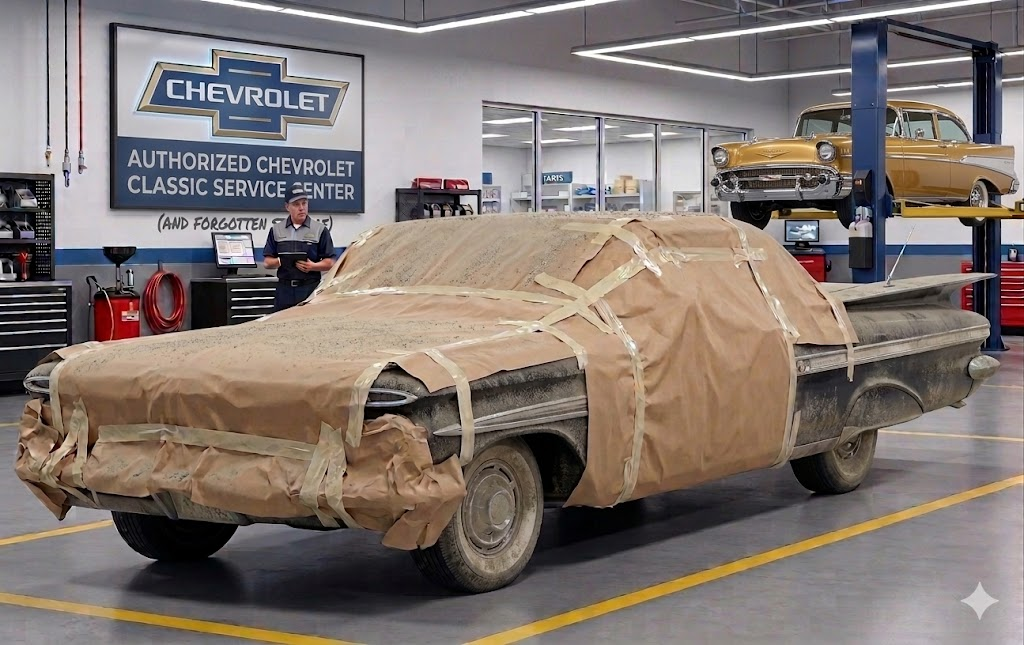
We walked down to the service area to watch them wash it. Over in the corner was a car covered in dust and stuck-on shipping paper. Making conversation, Dad asked the sales manager what the story was. He said that it was special-order car that the buyer didn't show up to take and they were stuck with it. They were stuck because it was ordered with options that no one wanted.
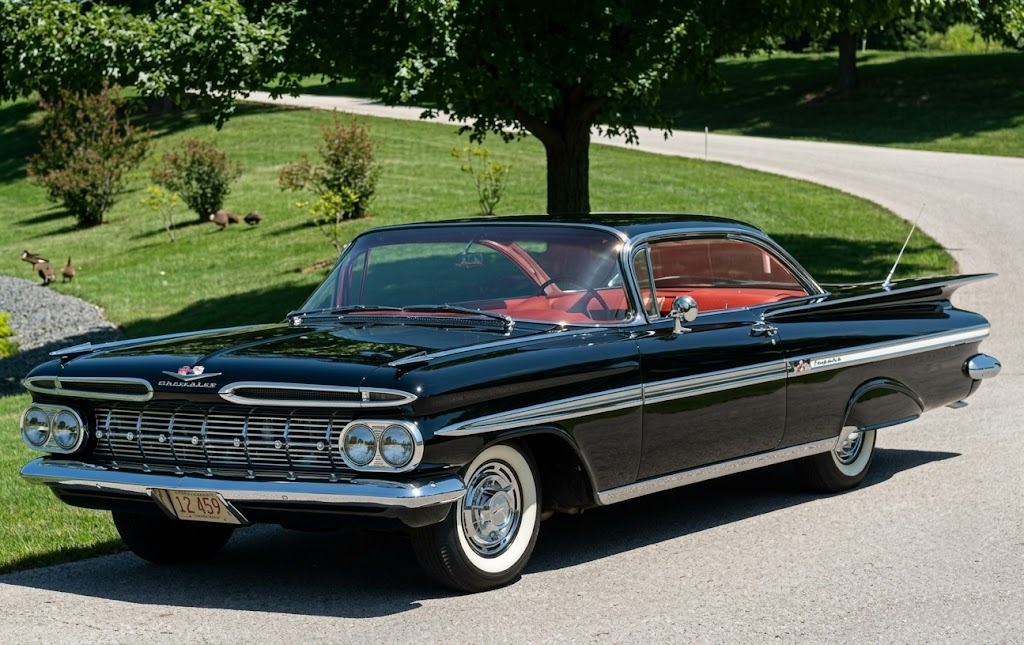
I could see that it was an Impala coupe, black with red plaid interior and the body style that Chevy called a "hardtop convertible." This didn't mean that the top went down (Ford actually had a true "retractable hardtop") but it meant there were no "B" pillars and when the windows were down there was no obstruction -- just like a convertible with the top up. We strolled over to look at it and it had a 348HP V8 and four-speed, floor-mounted shifter (what everyone called "four-on-the-floor").
Oh....My...Gawd!
I lit up like a Christmas tree; Dad noticed and asked the sales guy what kind of a deal he could make on that car. The truth was that Dad saw it as HOT and that a deal could be made; he LOVED to deal.
To make a long story short(er) he closed on that car for $300 more than the bland-mobile. We waited while the paperwork was redone and the cleanup guys shifted their attention to this dream machine. Steve kept trying to calm me down, afraid there'd be some glitch and it wouldn't happen.
But, no, we followed Dad home in this hot rod. It was the happiest day of my life up to that time. My mother shook her head, glared at Dad and said, "Charles, may I see you in the kitchen?" (never a good sign). I don't know what happened in there but he sure looked chastened when he was allowed out.
But she loved me and saw how excited and thrilled I was -- so the car was mine!
We drove it back to Atlanta and Steve was the only one allowed to share driving the car during the school year. It was just a great ride.
What? You thought it was easy? Just poke three holes and go? Not so. Not so at all.
One of the benefits of working for Bob's was free bowling at the bowling alleys he served. All I had to do was wear a "Bob's Sport Shop" shirt and he paid for the bowling. Good advertising.
Fraternity brothers Steve Freiman, Tom Tilchin, Rich Wolf and I bowled a lot. A whole lot. Steve and I weren't as good bowlers as Tom and Rich were, but we did enjoy the game. And, of course we gambled. You can't just go bowling, you have to play for money, you know.
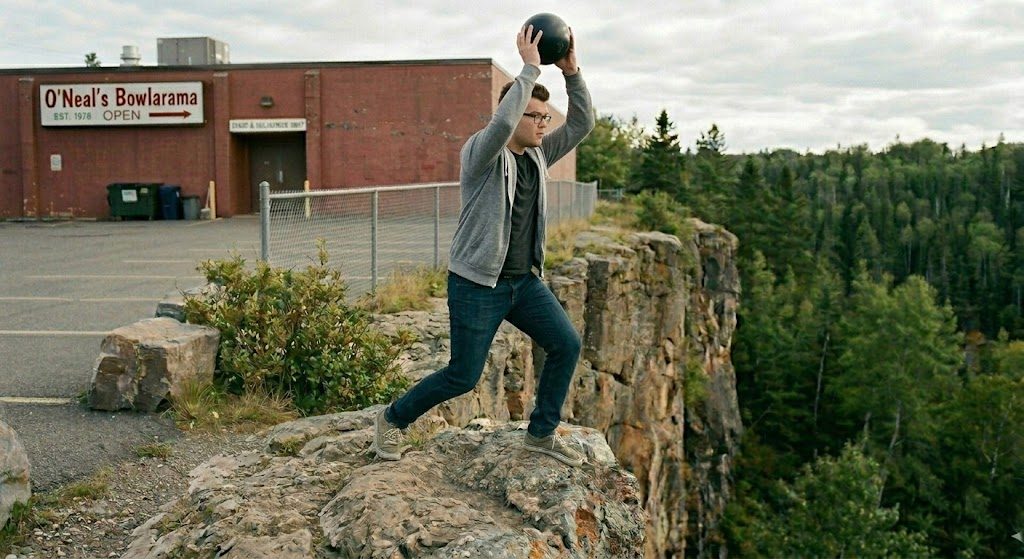
There was a place out on Buford Highway called O'Neal's Bowl-O-Rama. It was there that jackpot games were played just about every other weekend. O'Neals had 24 lanes and they closed them to the public at 8pm on Friday and the jackpot tournament would run until 8am Monday morning. That's right; we'd bowl for sixty hours.
We'd put up a $20 entry fee and there'd be 48 bowlers in a double-elimination format for a jackpot of $960. But the real money was on the side bets.
OK. We were geeks. Geeks with thumbs like hamburger.
That wasn't all the bowling, though; we were in leagues as well. Bob's Sport Shop sponsored us in one of them and we decided to enter our team in the Southeastern Tournament which, this year, just happened to be in Little Rock.
So early one Thursday we cut classes, hopped in my Chevy hotrod and drove the 10+hours to Little Rock. We descended on my folks place, five guys in my car, and challenged Mom to find a place for us to sleep. One of the guys, John Hennessey, had never stayed in a real house before. He was raised and still lived in a trailer park. He was awed by 51 Sherrill Heights.
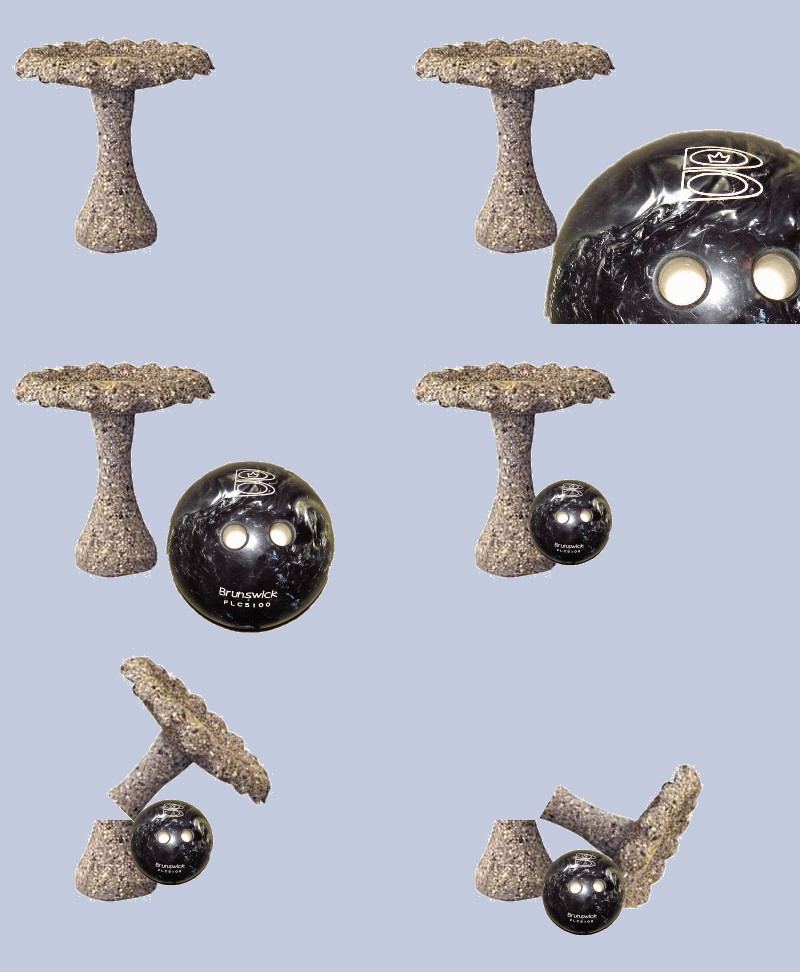
We had something to eat and Rich demonstrated his bowling form (on the lawn) to my Mom. Hit the birdbath squarely with the ball and broke it to bits:
She took it well.
We headed over to the bowling alley and started the tournament. We were going along pretty well when I turned and saw her. My highschool sweetheart, Ann!
We had broken up during my sophomore year at Tech when she went off to the University of Arkansas and found another guy. That was the first time my heart had been broken; she and I had been going together since my junior year in High school (and her sophomore year). We were inseparable and both thought we'd be together forever. Ah, young (first) love...
She had broken up with what's-his-name and saw my name in the paper when they published the teams that were going to compete. And there she was. I was not dating anyone seriously so I was very glad to see her; she looked awesome. Blew my concentration on the bowling, I can tell you.
After being roundly thrashed in the current game, I left with Ann in her car leaving the boyz to find their way home in mine. When I returned to the house the following morning I found them sleeping in the car; they got home late and didn't want to wake my parents (and answer questions as to where I was). Can't speak for them but I had a great time.
On the way back to Atlanta we ran out of gas coming down Monteagle mountain in Tennessee; coasted about five miles to find an open gas station. Very lucky.
The End of Bowling as we know it
The final chapter in my bowling story concerns one of those all-weekend jackpot games. Somehow, early Monday morning it came down to me and one other guy. We were bowling in the last game. Whoever won that game won all the money.
I rolled a 266. That's right; a 266!
He rolled a 279. I lost by thirteen pins with one of the highest games I'd ever rolled.
I went out behind O'Neal's Bowl-O-Rama and threw my ball off the cliff back there. I never bowled again. Go look; it's probably still there. It has "CC" engraved above the finger holes.
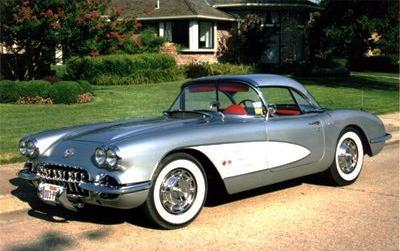
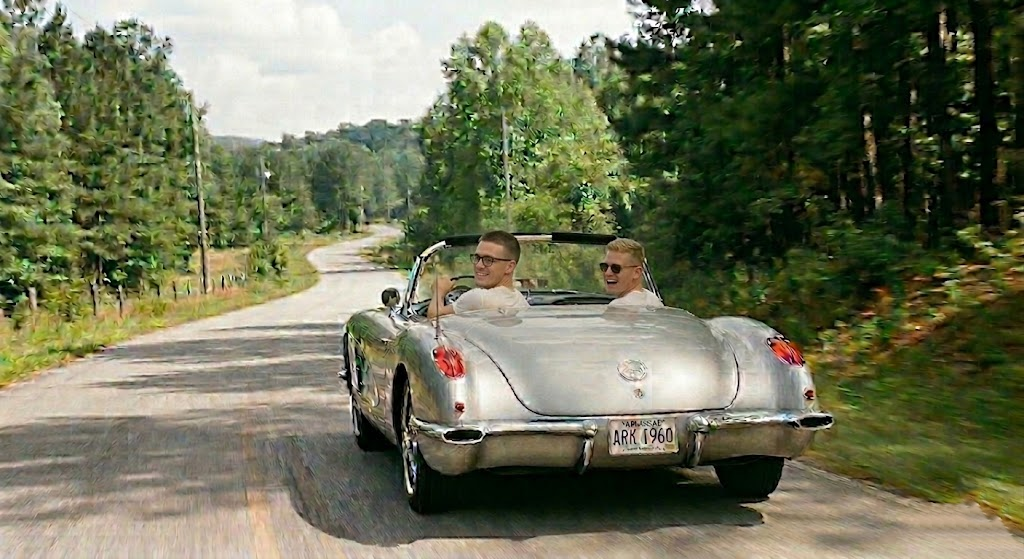
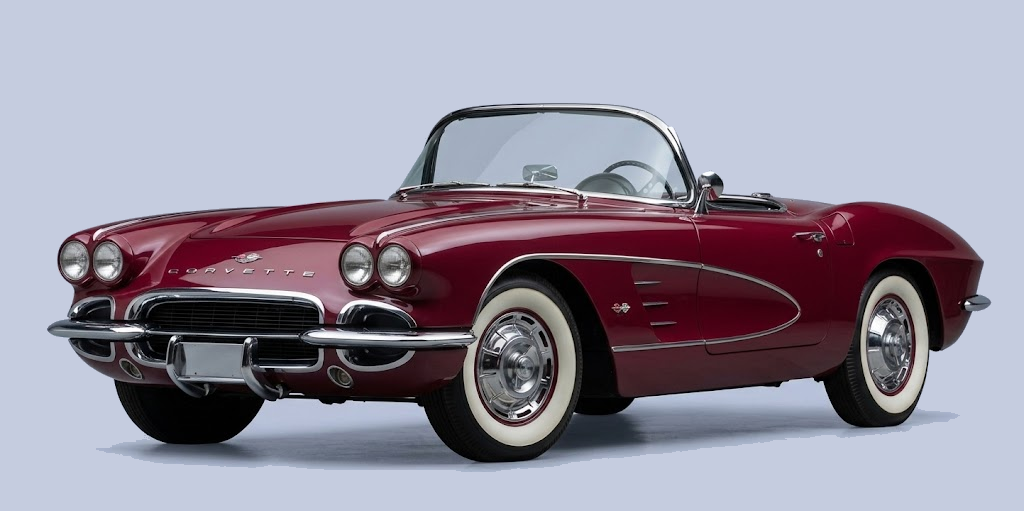
Dad got on the phone and we were off to see the Corvette. Oh, my Gawd! Sateen Silver with white coves, removable hardtop (no soft top), three speed manual transmission. Gotta have it, gotta have it, gotta have it...
We got it!
It's amazing how your first Corvette can make you forget all about your first Impala coupe!
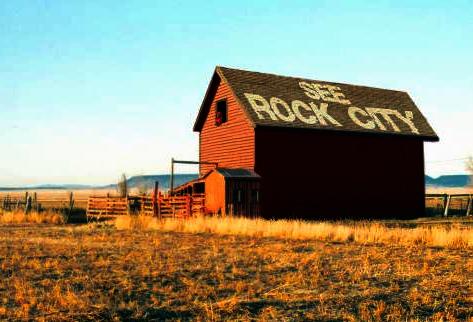
..and asked if she wanted to take a ride up to Chattanooga to "See Rock City". You can't spend much time behind the wheel of a car in the South without passing a barn with "See Rock City" painted on it:
Rock City is a tourist attraction where you walk through caves that are lighted to show off crystal formations and such. I'd lived in the South all my life and I'd never seen Rock City; neither had Faye.
I picked her up early on Saturday morning. It was a beautiful clear summer day. So we removed the hardtop from the Corvette, left it in the carport of her house and headed north.
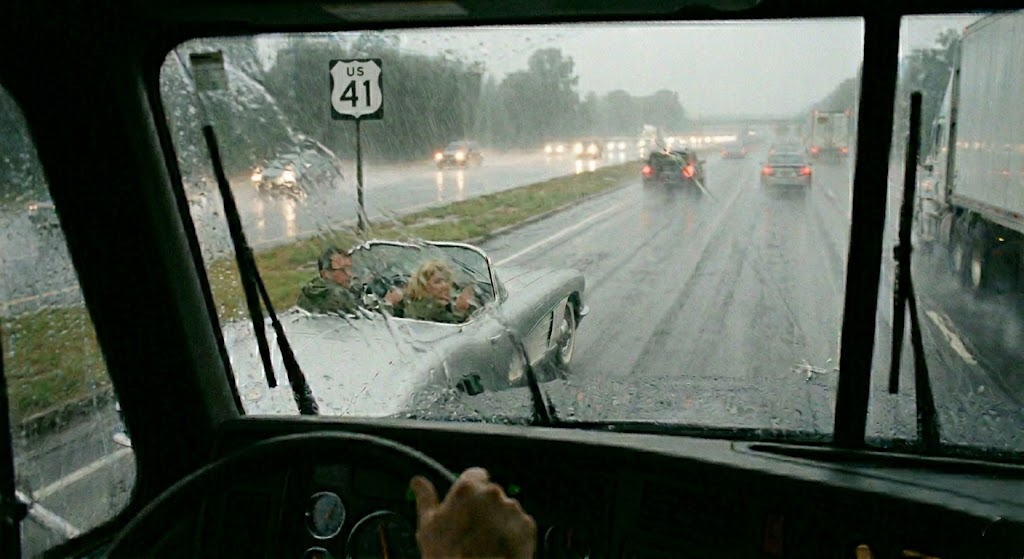
In those days there were no interstate highways in the south. US41 was the way from Atlanta to Chattanooga. It was four-lane in some places, two=lane in others. But we didn't care. Wind in our hair, sports car, summer, our whole lives in front of us.
I don't remember much about Rock City and I've never been back. But it was great fun being with Faye.
Driving back to Atlanta, the sky began to cloud up. That's when I told her that the only top for the car was in the carport at her house in Atlanta. We tried to outrun the rain.
We failed.
About twenty miles outside Atlanta it began to rain - buckets. I swear the raindrops were the size of ping-pong balls! We're in stop-and-go traffic with the big rigs looking down on us soaking wet and them laughing their asses off.
We were laughing too, it was so ridiculous. By the time we got to Faye's house the water was up to our laps.
Wherever Faye is today, I bet she remembers that day, too. It was just a great day! Truly!
... and taught my left hand how to make the guitar chords I knew so well from my piano training. While not always the life of the party, I got by by singing folk songs. Girls liked that.
Needing work, I applied for a troubadour job at a coffee house called "The Golden Horn" at 15th and Peachtree:
.. in a building called "The Castle":
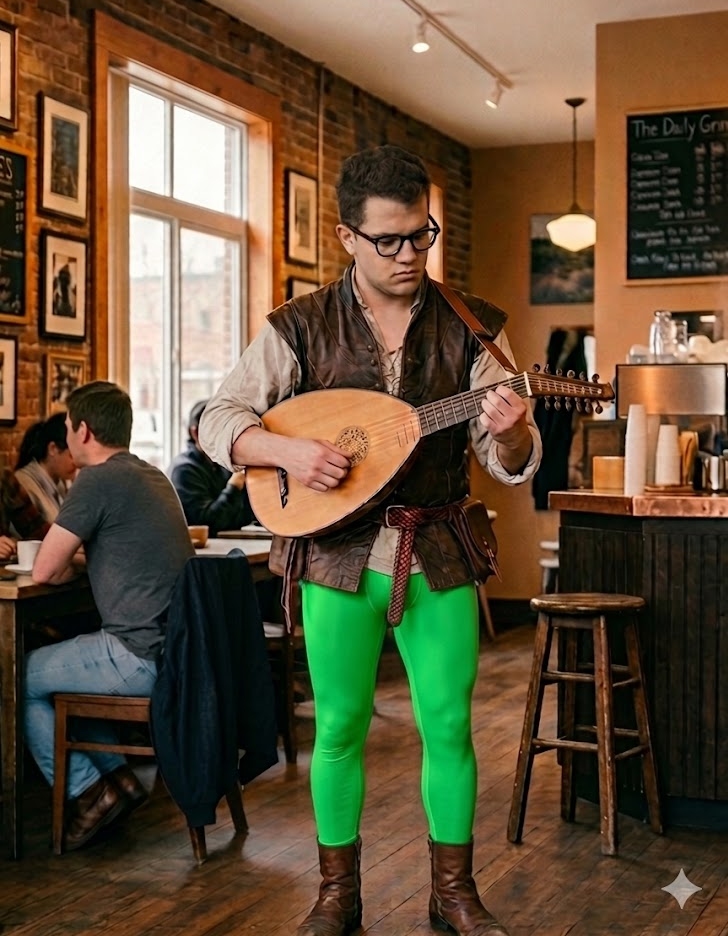
Coffee houses were a big deal and folk music was a bigger deal. My deal was to play a lute...:
...and wear a costume that involved green tights. It's an indication of how badly I wanted the $3/hour plus tips that I took it. It's also why I never sing "Foggy, Foggy Dew" anymore.
Fortunately the lute (which they supplied) is strung just like a guitar; I don't think I could have faked it.
OK; now that I've loaded you up with a mental image of me in tights...
..and, if you flipped the passenger-side visor down, on the back was a small sign that said:
(I'm not making this up!)
Anyway, as you can imagine, Joe didn't get many dates -- and virtually no second dates.
One Sunday morning in the Spring, the word went out up and down the hall of the fraternity house that something worth seeing was going on out front. All the guys gathered on the second floor in the big bathroom, watching the "happening":
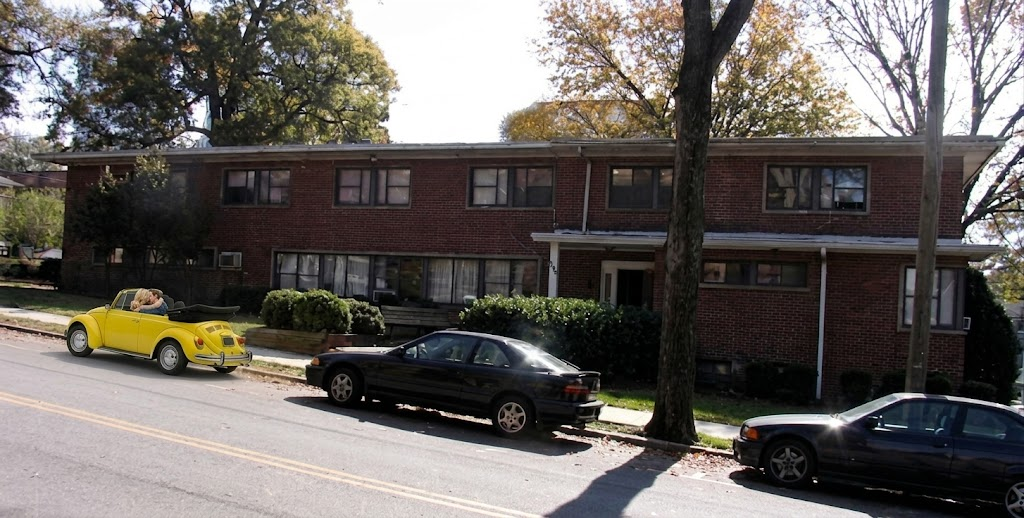
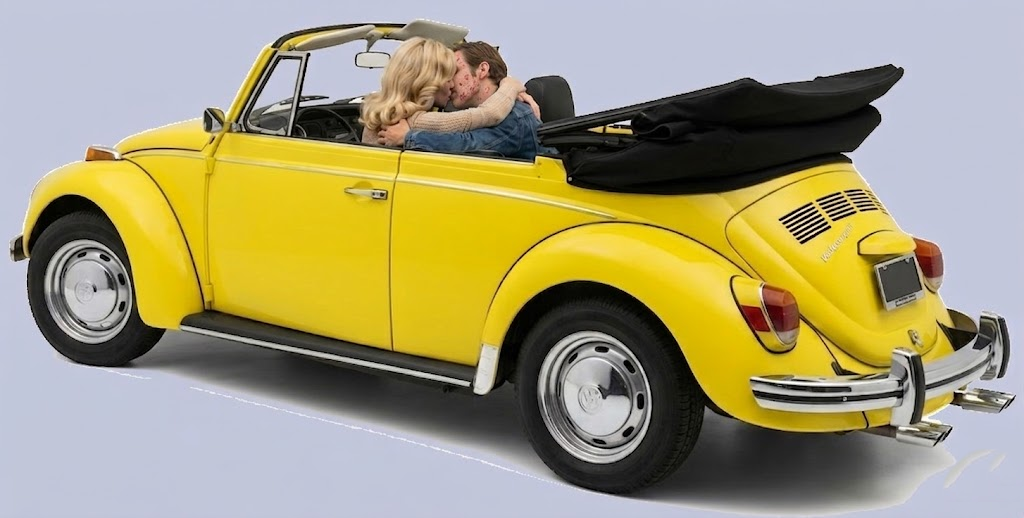
That was unusual on the face of it. When I got there they were all pressed against the front windows looking out. There, parked on Sixth street in front of the house, was a yellow VW convertible with the top down:
In the car was Joe and a very beautiful blonde girl doing -- well, "it".
Sunday, broad daylight, city street, top down, a freakin' VOLKSWAGEN -- the whole works. We gathered in the upstairs bathroom of the fraternity house and watched; it didn't take long.
Knowing Joe, we could only conclude that either she was a paid professional -- or she was nuts.
Turns out the latter was true. As the story unfolded it was learned that her name was Julie and she was married to a student who was a member of the Alpha Tau Omega fraternity at Emory University across town. And, somehow, she found Joe very appealing. Sufficiently appealing to have sex in an open car with him; and heck, it was her Volkswagen!
We looked at Joe with new, well, "respect" may not be the word, but certainly with new eyes. The affair went on for weeks. He brought her to fraternity parties, etc. etc. None of us could figure it out.
Then I had an idea. In one of my classes I sat next to a red-shirt football player named Paul. Paul was a lineman, a pulling guard as I recall. Together we set up a scenario where, Paul, posing as Julie's husband, would drive to a screeching halt in the street in front of the house just before dinnertime (where we typically all sat around on the porch). He'd leave the door open, car in the middle of the street, and storm up the street screaming for Joe, saying he'd tear him limb from limb.
The whole thing went off like clockwork. Paul played his part to perfection. It was awesome!
But -- Joe wasn't there. He had a late class so the whole scene played out without him. We were going to do it again, but Paul had put his soul into that single performance and we never got it together again.
Last year, the movie Where The Boys Are came out and created the "what to do for Spring Break" phenomenon. The movie was set in Fort Lauderdale and now, Spring of 1961, it became the de rigueur place to go. Fraternity brother Mark Rosen and I hopped into my 'Vette and headed south. Along the way we stopped at a roadside stand and bought a half-bushel of Georgia peaches. Rolling along, young men on a mission, covered in peach juice.
Fort Lauderdale was packed. Teenage boys and girls as far as the eye could see.
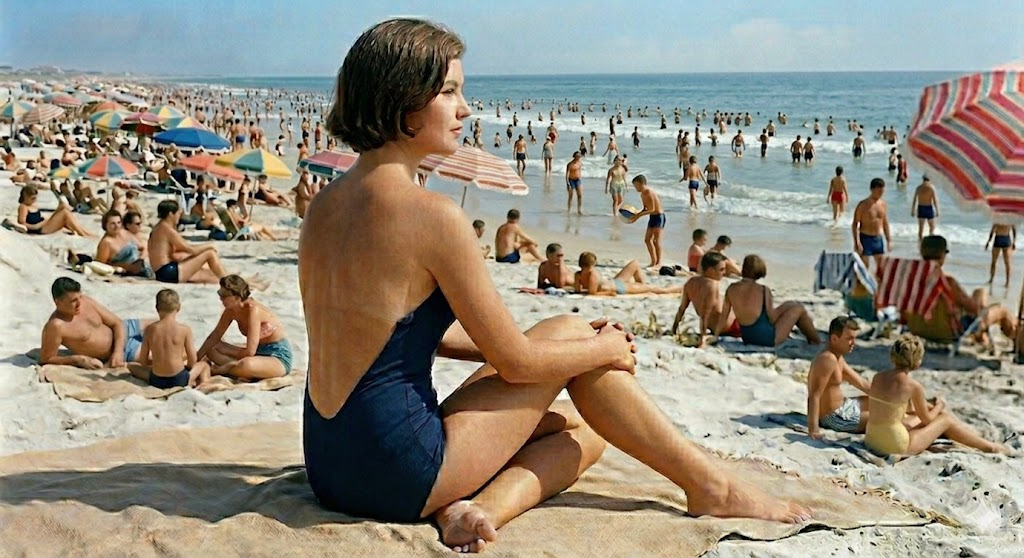
One morning I ran into Joyce, a girl I knew from Little Rock (believe or not) and we joined her and some other girls on the beach. The swimsuit fashion at that time was a one-piece suit that was heavily boned in the front and was backless. A string went around the girl's neck. Well, you wouldn't want that string to block the sun and interfere with your tan -- so Joyce had untied hers and tucked the string into the top of her suit in order to evade the dreaded tan line.
(Hover your mouse for a second over this image..)
We're sitting on a towel and someone called Joyce's name. She turned rapidly to see who it was. Actually "she" turned rapidly but the heavily boned suit -- did not. Everyone saw - and enjoyed - much more of Joyce than I'd ever seen before.
Coach Lanoue was a diminutive man with strong biases. He hated football players (a strange hatred considering he coached at a college where football was king) and he hated Cubans. If you were a Cuban football player, look out!
Coach had a very high voice and, to make himself heard in the pool area he shouted every word. All the time.
These drownproofing skills were taught by his choosing two or three leaders (read: guinea pigs) from every class to whom he would teach the skills and would then supervise while these student leaders taught the rest of the class. It was a pretty good teaching technique.
I wasn't any good at sports (except maybe for bowling) but I was a good swimmer so I volunteered to be in the teaching group. So the two or three of us would get the skill presented by Coach Lanoue, we'd master it and then teach it to the rest on the next class day.
If you want to read about DrownProofing, click HERE. It is an internationally taught and respected set of skills that has saved thoursands of lives over the years. If you can do it, you can save your own life when unexpectedly cast into the water. Oh. And the skills sound like torture when you read about them.
As we learned these skills, I was doing well.
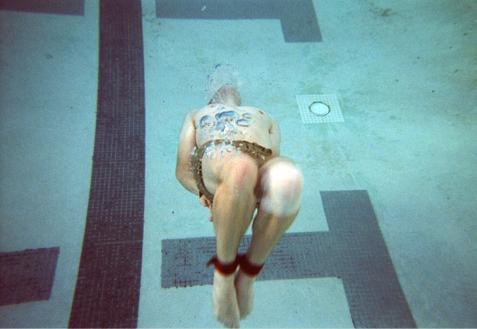
Until we came to one about ¾ths of the way through the course. Here's how it worked:
Your hands are bound behind you with rope
Your legs are bound together at the ankle with rope
Another short rope connects your hands and your ankles which forces your body into a bow.
A rubber ring (bout 6" in diameter) is tossed into the water at a depth of ten feet
You are tossed into the water
The task is to make your way to the bottom, grab the ring between your teeth and make it back to the surface. Hands and feet bound and bound together behind your back. Easy.
I had no difficulty making my way to the bottom; all you have to do is provide enough movement to counteract your natural buoyancy. I found the ring but when I opened my mouth to bite it, both my eardrums exploded.
It didn't hurt much but one of the functions of the eardrum is to keep the middle and inner ear dry. Once they got wet, one becomes disoriented as to up and down. The sides and bottom of the pool were all painted white so I really couldn't tell which way was "up". Of course my companions above had no way of knowing of my distress. Oh, and I'm using up the big breath I took a minute or so ago.
Somehow someone noticed my distress and reached down with a hook on a pole and pulled me up. They rolled me onto the pool apron and did what they could to get the water out of my lungs. That part went well. But I couldn't hear a thing.
I went to the infirmary for a diagnosis and that's when I learned I had two perforated eardrums. I was sent to an ENT specialist and he did some kind of patch involving tissue paper and glue (as I recall). The eardrums re-grew but consequently I have a high-frequency hearing loss today. While I have trouble hearing high notes (and I spent big $$$ on fancy stereo equipment until I figured out it wasn't the gear) there is a bright spot to this story later...
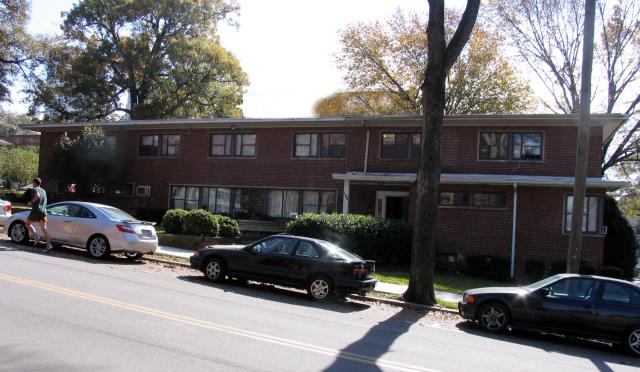
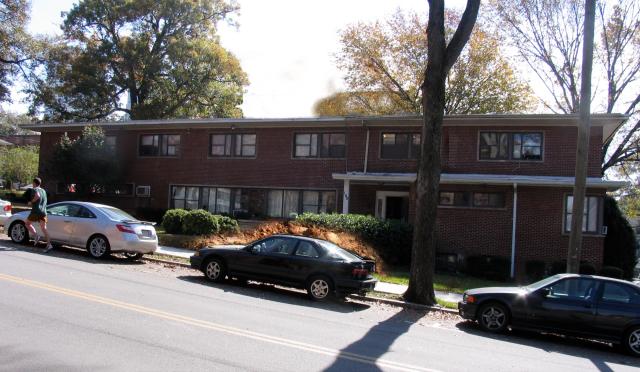
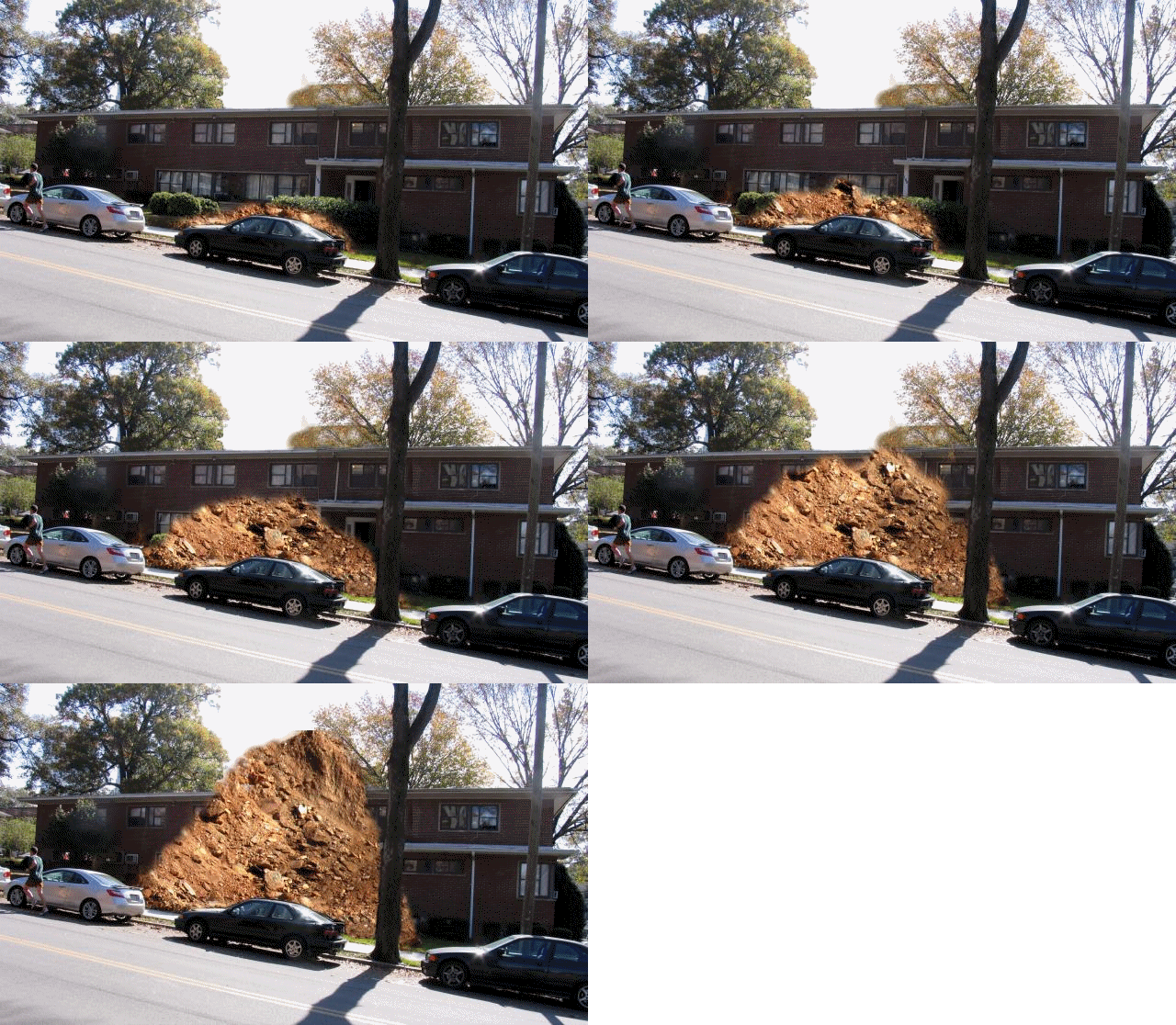
.. I couldn't see the fraternity house for the piles of dirt and other debris in the yard. Apparently "my" truck driver told his buddies about the nearby dump site. All morning, trucks had been dumping on the Phi Ep house front lawn. And not just dirt, either. There was re-bar, broken concrete, rocks -- whatever they dug out of the ground.
Before the House Manager managed to stop it, a dozen truckloads of dirt and debris had been deposited on the lawn.
No one ever found out how that happened. It cost $1,500 (as I recall) to have it picked up and taken away.
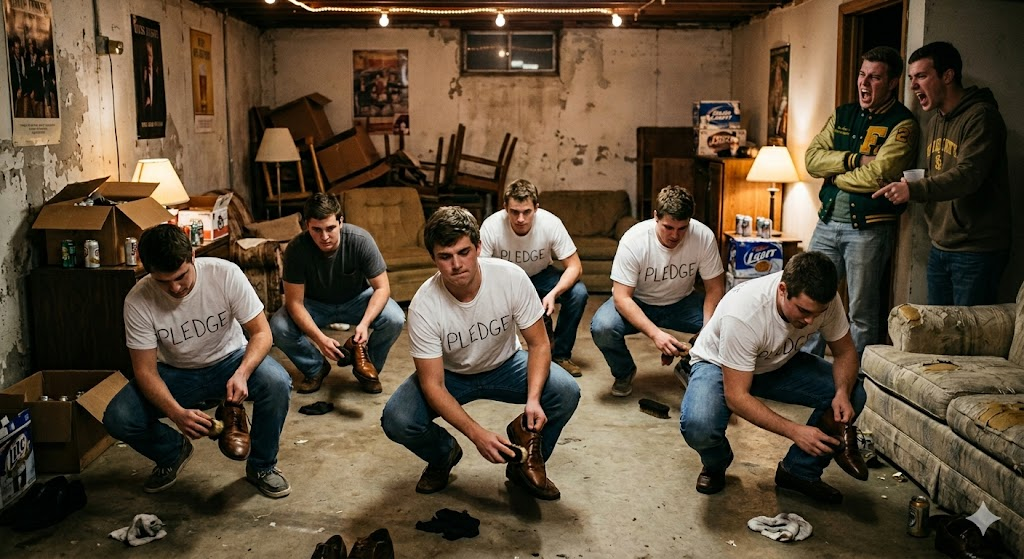
HellNight finished at dawn and the initiation ceremony began. One of the pledges, I'll call him "Howard" (because that was his name), complained that it was tough to stand straight and that his legs and feet hurt. Well duh! Everyone's feet and legs hurt after crouching in a duck-walk position for most of the night.
The rest of the day went uneventfully as we welcomed our new brothers into the fraternity. But, on Monday, Howard went to the infirmary and told the staff that he'd been abused during initiation. They examined him and determined that one of his Achilles tendons had been stretched making it difficult for him to raise his right foot. They made a report to the Dean and..
Our president, vice-president and pledgemaster (me) were called before Dean Dull (yes, that Dean Dull from the "knives-in-the-door" incident). He was furious and said that we'd be expelled (60 days before receiving our degrees). We argued fast and furiously (as did our alumni advisor) that this punishment was out of proportion to the temporary injury to a pledge. We asked for a hearing. We got one. And we survived. I can't imagine what I would have done if I'd been expelled. Dodged a BIG bullet, that time.
BTW, Howard is just fine. But he left the fraternity. No tears from ANYONE.
..on Saturday, June 10th, 1961. Everything went off well and when I opened my diploma folder it was a diploma; I wasn't sure that Dean Dull hadn't changed his mind!
Goin' to work..
I reported to work at the IBM office at 8:30a on Monday, June 12th to start what became a 22 ½ year career. IBM training in those days was delivered in phases. Phase I was learning all about those big gray boxes that Dad had installed in his office in 1955. I had a "leg up" on some of it but learning to program those control panels was tough. We had excellent instructors (Marge Ragsdale and Paul Kreager) and the class had sixteen students. Phase I was scheduled to run eight weeks.
I had an apartment with a fraternity brother and was well settled into Atlanta, but I was given no choice about the transfer (except the city to go to).
I had a day to think about it. Ever since coming to Tech I'd decided I wanted to live in Atlanta. And that plan was about to be reset.
Anyone with any sense, offered those two cities, would have picked the elegant Savannah over the "mill town" Greenville.
I picked Greenville only because it was closer to Atlanta. I received a phone call from the Greenville Branch Manager, Phil Green, welcoming me to his team and asking that I come up and meet him and the rest of the office soon. I had two weeks to go in Phase I and I'd be going to Greenville immediately after. I wish I could say I was excited about it; actually, I was pissed.
But then a wonderful and life-changing thing happened. I got another call from Phil Green asking if I'd mind dropping out of the balance of Phase I and moving straight into Phase III without the usual year of Phase II in the field. Phase III was 1401 COMPUTER SCHOOL!
IBM had been in the computer business for only a few years at this point. The 1401 was a computer system intended for the smaller business; the businesses who could afford only$5,000/month to rent a system from IBM. Yes, $5,000/month was considered a small price to pay for computing in 1961. I would be in one of the first computer classes taught on the 1401 and would have a year jump on everyone else in my class -- AND I'd be working on computers in Greenville rather than the big gray accounting machines. Here's the 1401 (it's about five feet tall):
I jumped at the chance.
The next Monday I crossed the hall into 1401 school. I took to computers instantly; I learned later that one of the reasons I'd been picked, besides the fact that Greenville needed a 1401 person ASAP, was that I'd blown the top off the DPAT aptitude test. The test must have been a good indicator because I've been computing ever since!
1401 school was four weeks long so I reported to Greenville two weeks later than I would have had I completed Phase I. I was a bit nervous. IBM was a pretty straight-laced working environment. Everyone wore a suit, tie and white shirts. Even the Customer Engineers (CEs) who did the actual nuts, bolts and grease work on the machines wore that uniform. And here I came, in my Corvette. I was pretty sure sports cars were frowned on.
When I reached the IBM office on Sunday afternoon (Phil had asked that I meet him there before reporting on Monday officially) I breathed a sigh of relief. Parked in the slot marked "Branch Manager" was a black Mercedes-Benz 190SL -- one of the classiest sports cars of the era:
She was a Systems Engineer (as was I) but she'd been at it a year longer. IBM had just switched the title for females from "System Service Girl" (what a title) to the gender-neutral (and non-sexist) "Systems Engineer". Good move I thought. Her name was Frances McFadden (though everyone called her "Babe", a nickname bestowed by her family at birth) and she had a math degree. Darned smart.
Greenville being "eligible girl-deprived", and there being no non-fraternization rule in the branch office, we began to date. Oh, and she had a Sunbeam Alpine (the third sports car in the office):
I was the freshly-minted 1401 expert in Greenville (well, the only 1401-trained person) so I was assigned to all of the office's 1401 accounts. I loved the 1401 and I loved programming it. In those days, IBM System Engineers were a free resource to customers. We often wrote programs for the customer to supplement/augment their own programming staff. The programming language of choice was Autocoder - a one-line-at-time procedural language much like Assembly Language.
It wasn't too long before IBM announced the 1410:
The 1410 was kind of a "supersized" 1401 with more memory, more devices and higher performance. It used the same programming language, Autocoder, but an enhanced version for higher function. 1401 Autocoder was "compatible" with 1410 Autocoder but didn't have its enhanced capability. The bad news is that client programs written in 1401 Autocoder had to be re-written in 1410 Autocoder to take advantage of the new 1410 functions/performance. This was a semi-tedious exercise. Not difficult, but tedious.
Our biggest 1401 account was Chemstrand Corporation. They were quick to upgrade to the 1410 and I was charged with creating a plan to convert all of the 1401 programs (about 180 of 'em) to 1410 Autocoder. After doing one or two, it occurred to me that I could write a program to handle the conversion. A program to convert programs. This could speed up the implementation of new 1410 upgrades everywhere.
I dubbed the program SymAn (For Symbolic Analyzer) and IBM soon made it available to everyone. I earned a significant award later for that contribution.
This was top-of-the line stuff in 1961. And it was capable of transmitting Single Sideband (SSB); up until the advent of SSB, voice transmission was in AM (like local AM radio today). Want to know more about SSB and its history? Click HERE.
I strung a wire antenna up on the apartment house roof and W4GKF was on the air again.
After a month or so, my steady $500/month income was burning a hole in my pocket. I lived in the Poinsett Apartments ($75/month), and couldn't spend as much as $100/month on everything else no matter how hard I tried. I had to bail out my checking account every few weeks to keep it from overflowing. That period was the last in my life where I had enough money. Enough money, but no credit. I decided I needed to "establish credit" - i.e. get a car loan.
Funny how the young man's mind worked. I have a perfectly good silver/white 1960 Corvette - completely paid for. Its only shortcoming was that it had a three-speed transmission and no soft-top. I drove into Mike Persia Chevrolet there in Greenville and ran into a salesman. The only Corvette on the floor was a Honduras Maroon 1961 with fuel injection and a four-speed -- and only a hardtop (no soft-top -- again):
If you recall, my 1960 'Vette had a removable hardtop but no soft top (remember the rain coming home from seeing "Rock City")? The '61 was outfitted the same way. You'd think I'd have learned my lesson about removable hardtops after this experience, but, no. To lower the price in order to close the deal, I had them take off the fuel injection manifold and replace it with a 4-barrel carburetor to save a couple hundred bucks. Yeah, I know, dumb..
Bye-Bye, '60
But I drove out in a brand new Corvette with a brand-new car payment. Yay.
Shortly thereafter there was a "negative Corvette incident". Read on...
OK. So it got to be October, 1961 and was time for Homecoming Weekend at Georgia Tech. Hey, I’m a big shot COLLEGE GRADUATE WITH A BRAND NEW CORVETTE (and a girlfriend at Emory University in Atlanta) so I headed on over to Atlanta to snow the underclassmen – and the girl. A fine time was had by all. A very fine time...
It's now midnight, Sunday. Tech beat the Duke Blue Devils 21-0 and it’s time to go home. I have to be at work at 8:30a in the morning and (at that time) it took 3+ hours to drive back to Greenville on good old US 29. It was a beautiful clear night. I mean "clear". Very clear. Very.
This was just barely before the interstate highway system was built. The road then from Atlanta to Greenville was US 29, two-lane blacktop. I was heading north and the moon was full. The night was cold, crisp and the visibility was unlimited. I was happy. I was going fast. Very fast. Very, very fast. It was glorious. Just glorious.
The moonlight was bright but not quite so bright as the red flasher I noticed in my rearview: Two Georgia State troopers. They were exceedingly polite and quite impressed with my car. I thought for a while that we’d just have a nice 1:15am chat on the side of the road and that I’d be allowed to go on my way. Well, I was young and naïve. They thought it better that I follow them into Carnesville, GA (just a few miles back down the road toward Atlanta) and meet the local sheriff. No problem. I had no trouble following them; they weren’t going all that fast.
We reached Carnesville in due course and they accompanied me to the front door of a small house on the town square and rang the doorbell. It was five minutes before the door was opened by a giant in a nightshirt. Imagine a really tall Charlie Daniels look-alike in a long nightshirt – with his badge pinned to his chest.
Apparently being awakened in the middle of the night by the State Patrol was routine for the Sheriff. He directed us to the basement entrance and said he’d meet us there. We walked down and around to the back of the house and the Sheriff met us at an outside door. We (the Sheriff and I) bid goodnight to the two troopers and they drove away. And left me there. With the man-mountain.
He turned out to be a cordial man. We sat down in his basement office which was pretty much like the set in the old Andy Griffith Show.
There were two empty jail cells (doors open) on the far wall. We had a nice chat.
Sheriff:
"Well, son, the troopers clocked you at 95 in a 50 zone. Does that sound about right?"
Chaz:
"If that’s what they said, sir, I guess it’s true."
Sheriff:
"The fine for 45mph over the limit is $90. Just pay the fine and you’re free to go."
Chaz:
"Sheriff, I’d be happy to pay that fine but I’ve been in Atlanta all weekend and all the cash I have is $15. But I’d be happy to write you a check."
Sheriff:
"Son, this is a small town but I’m not a fool. It’s cash on the barrel-head or you can spend the night here in my jail."
Chaz:
"But if I stay here I won’t have the money in the morning, either. Isn’t there another way?"
Sheriff:
"Well, you could call your boss and have him bring the money down."
Chaz:
"I just reported for work in Greenville a few weeks ago. I don’t think my career would survive waking up an IBM branch manager in the middle of the night to drive money dowm to Carnesville to pay off a speeding ticket fine."
Sheriff:
"I can understand that. Tell you what: why don’t you leave your spare tire here so I can be sure you’ll come back with the fine?"
Chaz:
"Sheriff, I really appreciate that. But the way my luck’s running I’d get ten miles out of town, have a flat and spend the night on the side of the road. But I’ll tell you what I CAN do. In my car I have a Gibson LG-3 flattop guitar worth more than $300. Suppose I leave it here and come back next week to pay the fine?"
Sheriff:
"Go get it, son."
I was back in a flash with my guitar.
Sheriff:
"You play that?"
(I rejected my first three wise-ass answers.)
Chaz:
"I play a little."
Sheriff:
"Play me somethin’."
Chaz:
"It’s almost two o’clock in the morning!"
Sheriff:
"Play me somethin’."
So I sat down on the bunk in one of the cells and played a few folk songs (remember this was 1961…) So help me, he went upstairs, woke his wife and two small sons. I sat there and played Kingston Trio songs for a half-hour. Little boys about four and six rubbing the sleep from their eyes. All four of them just sittin’ and listenin’ while I was pickin’ and a-grinnin’.
Eventually they let me stop. We put the guitar into its case, put the case on the bunk...
...and he locked it up (clang!). I got into my car and drove (observing the speed limit carefully) back to Greenville and fell into bed.
Fast-forward forty-eight hours to Tuesday afternoon. At lunch, I went to the bank, got $90 in cash and, after work, headed on down to Carnesville just as it began to get dark. Remember now, I was on my way to pay a speeding ticket. Would ANYONE speed under those circumstances? No, and neither would I. I was driving south on US 29 at a sedate 55 miles per hour.
As I approached the Georgia State line I noticed a sign that said "Interstate Highway 85 Open". Wow! I can get to Carnesville and back much faster! I got onto the new interstate. It was beautiful, four lanes as far as the eye could see with a nice median. But I set it carefully on the double-nickel and it was a great road. I noticed that there wasn’t any signage yet and there weren’t any lines painted but it was a full moon (remember) and visibility was great.
Great, that is, until I topped a little rise (going 55 mph) and found that I-85 ended and there was a 90 degree cutback to the left taking one back to US 29. Seems that they hadn’t yet gotten around to building the bridge over Lake Hartwell.
I spun the wheel and braked and downshifted furiously and succeeded in getting the ‘Vette turned a few degrees to the left – and then we went down a 20 foot embankment into Lake Hartwell. I remember thinking that Corvettes, being plastic, might float. Sigh.
The only thing keeping me from converting the 'Vette into a fiberglass inboard runabout was a stump in the water about a foot below the surface. We struck it and stopped immediately. I mean "immediately"! My glasses flew off and broke the windshield but I was securely belted in and wasn’t injured (the luck of the stupid, I guess). The car was sitting in about two feet of water and the water was, therefore, about halfway up the side.
I opened the door a little; water came in so I closed it again.
I was sitting there dazed and pissed off and then I noticed a revolving red light up on the road behind me. No, it was a different policeman; this time, a South Carolina State trooper. He got out of his car, stood behind his door (proper police training), cupped his hands around his mouth and yelled,
"RUN OFF THE ROAD?"
I rejected the first half-dozen wise-ass remarks (I was getting good at suppressing wise-ass remarks) and yelled back, "Yes, sir!"
He walked a rope down and tied it (I learned later) to some apparently fragile part of my rear suspension.
Note: Hauling a Corvette around by a rope tied to a sensitive rear suspension component is not a good idea. Not at all.
He used his prowler to pull us (me and the Corvette) back up onto the road. A cursory inspection showed cracks in both front fenders and a smashed area below the grill. But the car started (hallelujah!). The trooper told me that I was the third one that day. Later (much later) I tried to get some relief from the DOT, the contractors, the state of South Carolina and the State of Georgia for opening a road with no signage and no barrier to a lake entry by car – but to no avail.
I thanked the trooper and limped on down to Carnesville. I visited the sheriff, showed him the damage (a lot of "tsk, tsk-ing"), paid the fine, recovered my guitar and started back to Greenville.
The suspension felt funny but I was able to make it all the way back to Greenville.
Here’s a little-known fact. Mike Persia Chevrolet (in those days) had a service department that was open 24 hours a day. I drove the car down a ramp and into the service bay and turned it over to a service writer. I didn’t get the car back for nine weeks!
That’s how long it took in those days to obtain all the plastic forward of the windshield from St. Louis (where Corvettes were built in those days). The transmission was never quite right after that – and here’s the sad part – I decided to get married while the car was in the shop.
And my fiancee, who drove a Sunbeam Alpine,
.. reasoned that we didn’t need two sports cars and that I, of course, would be the one to give his up. I should have known the marriage wouldn’t work. So at the age of 22 I was married and Corvette-less.

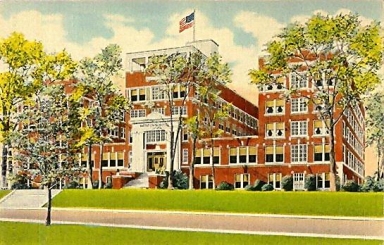
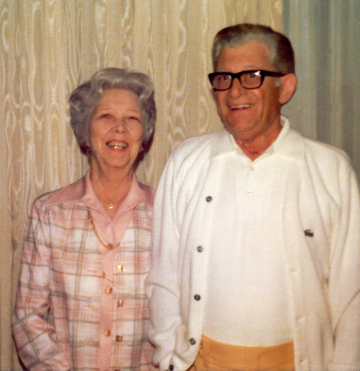
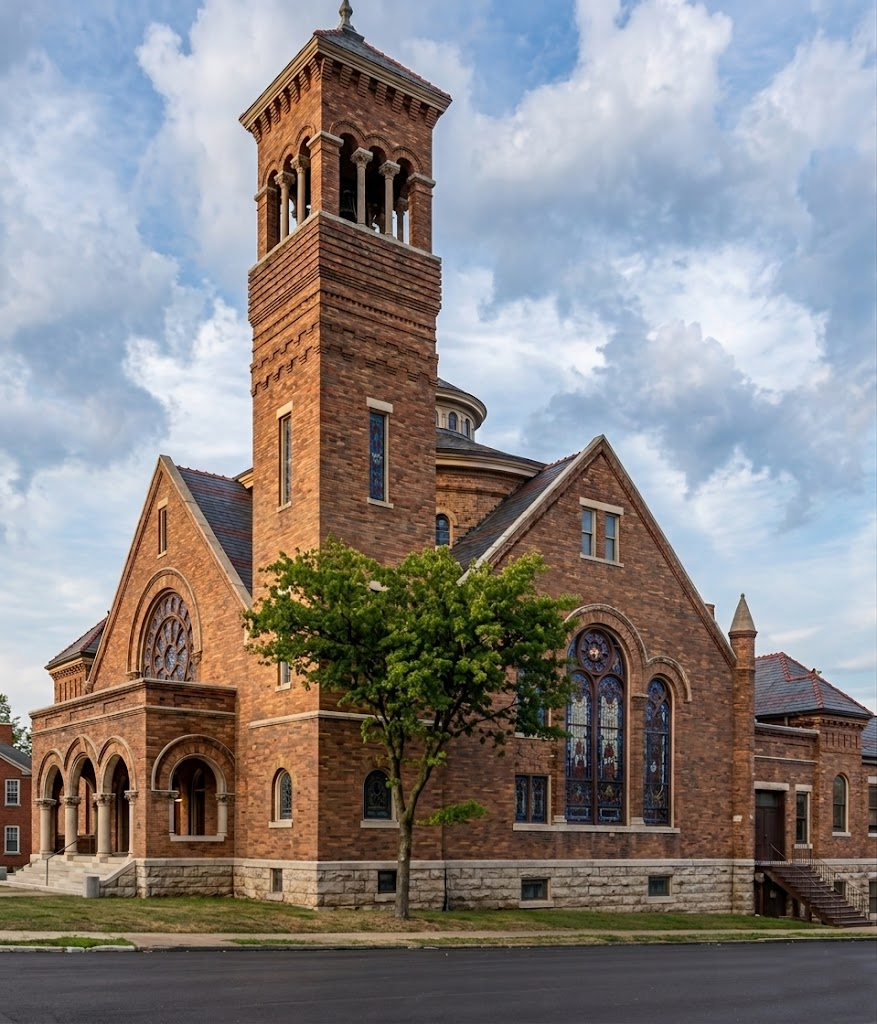
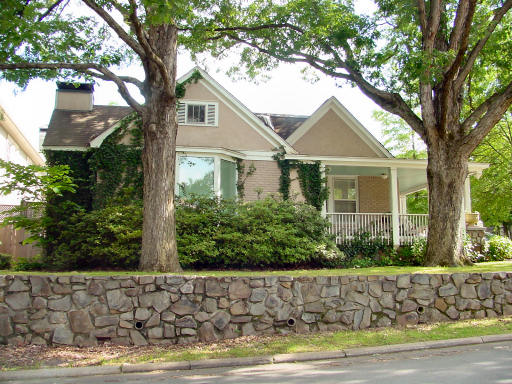
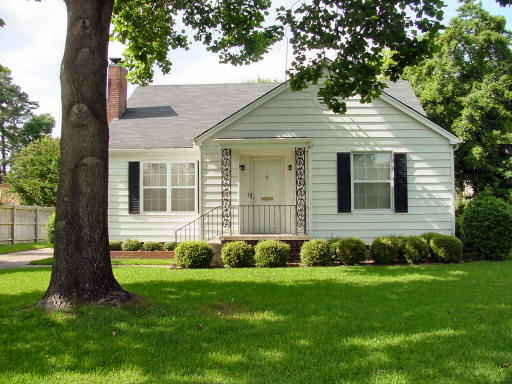
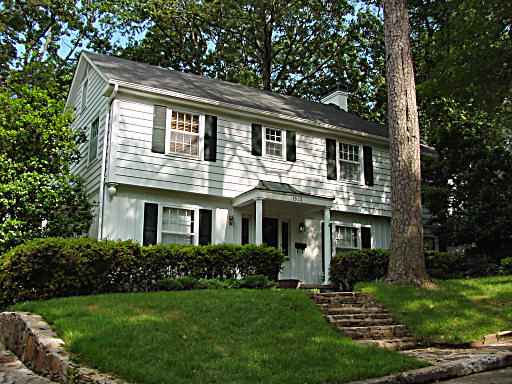

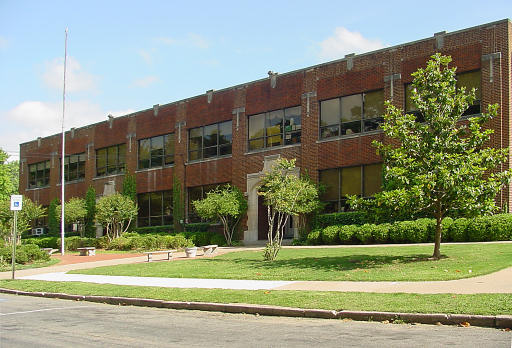

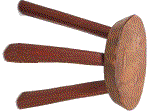
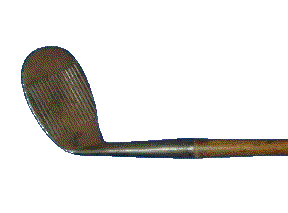

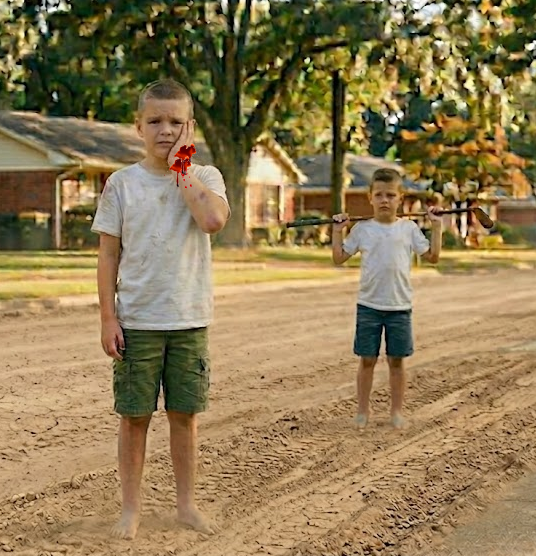

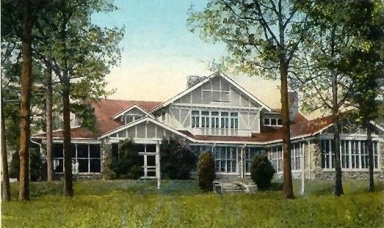
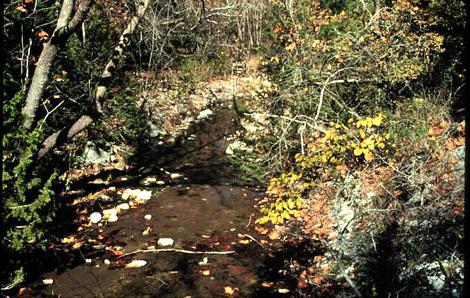


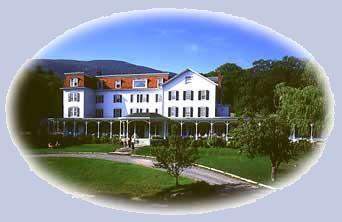
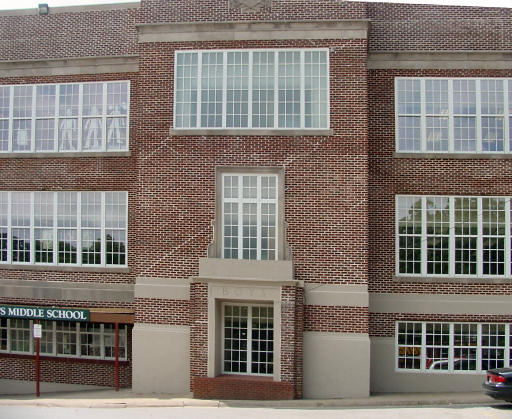
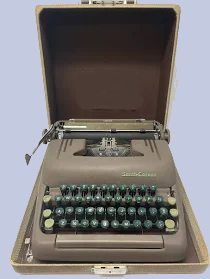
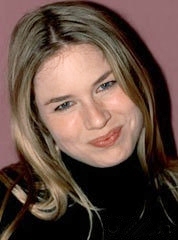
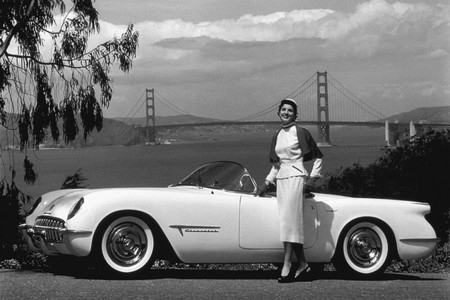
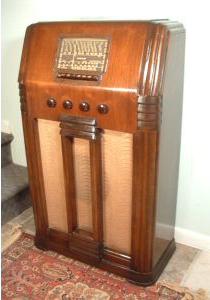
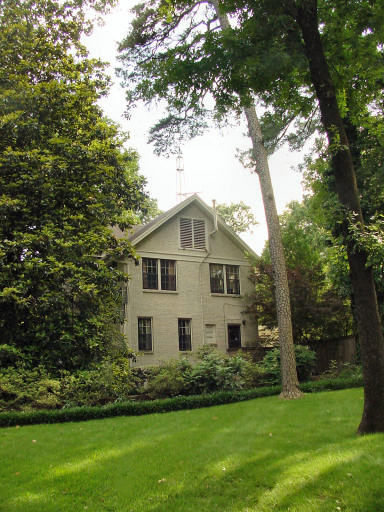
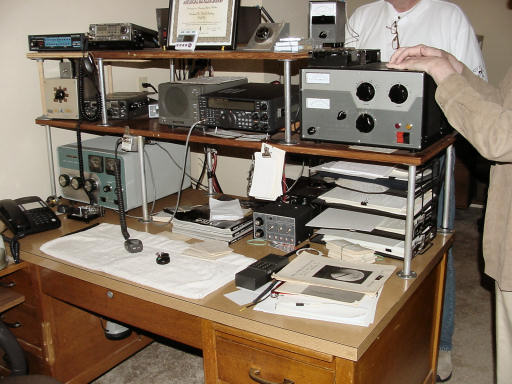
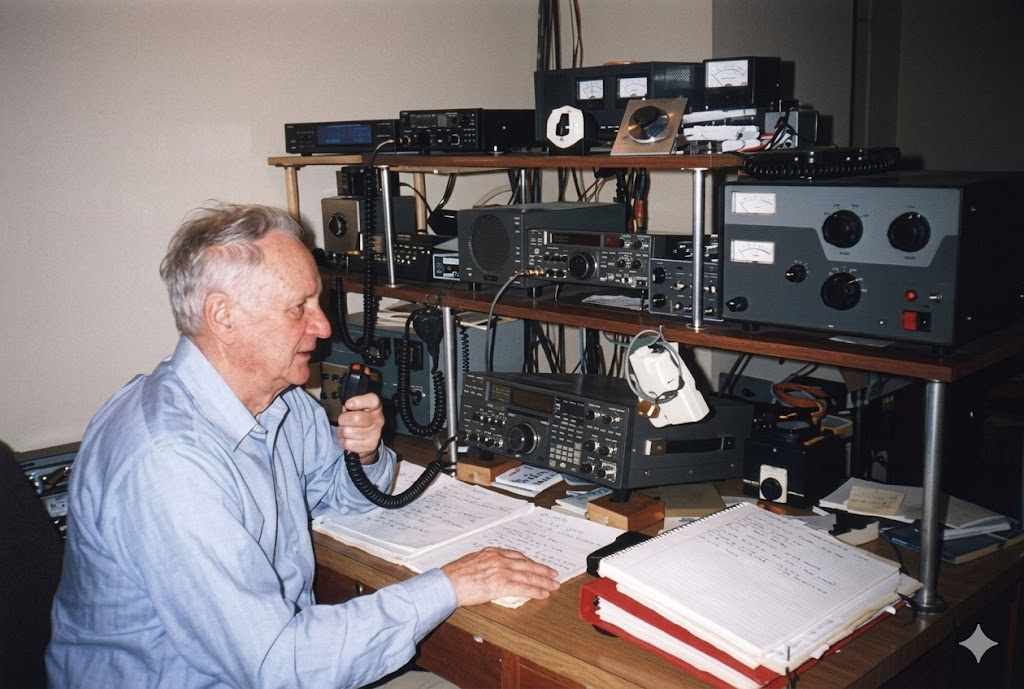
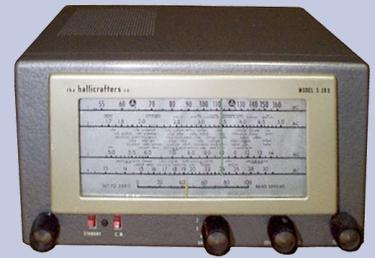
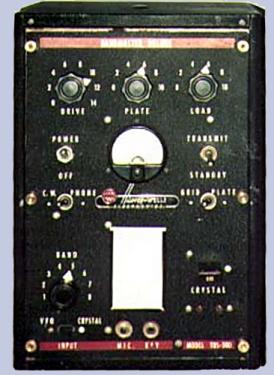
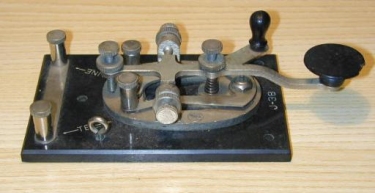
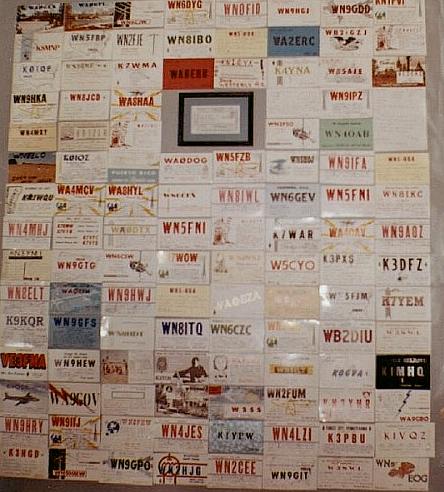
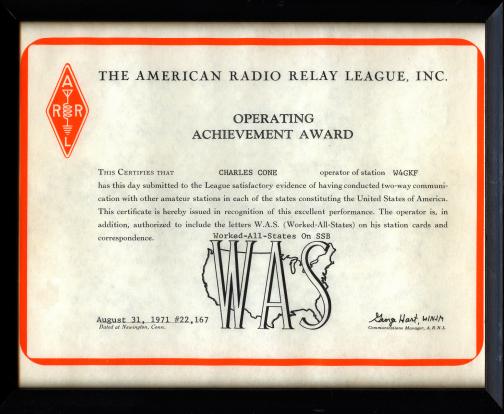
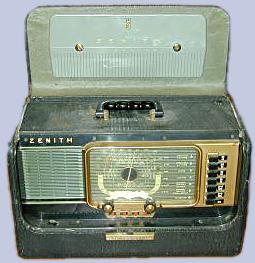
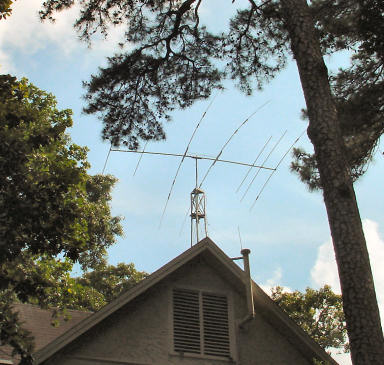
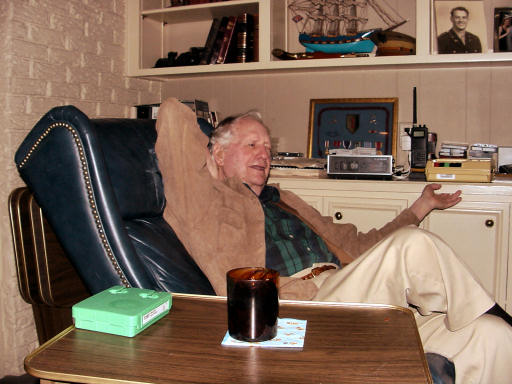
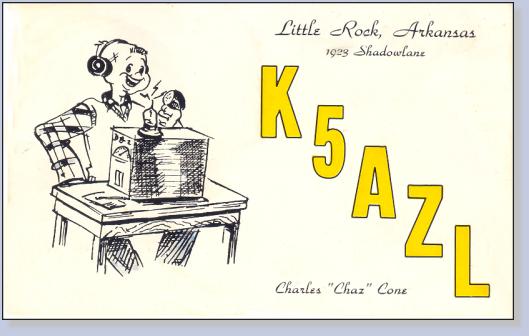
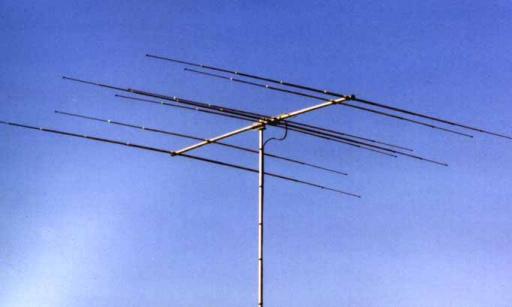
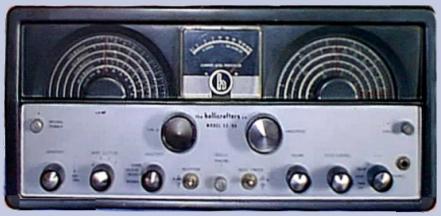

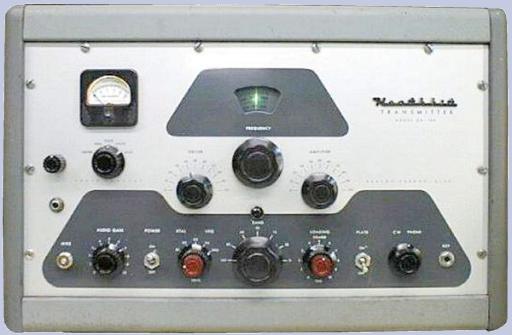
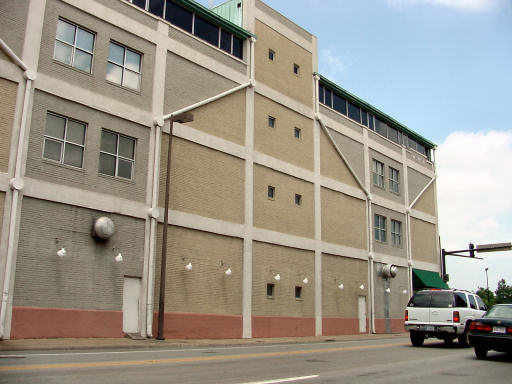
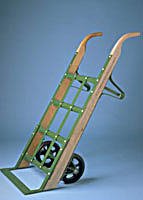

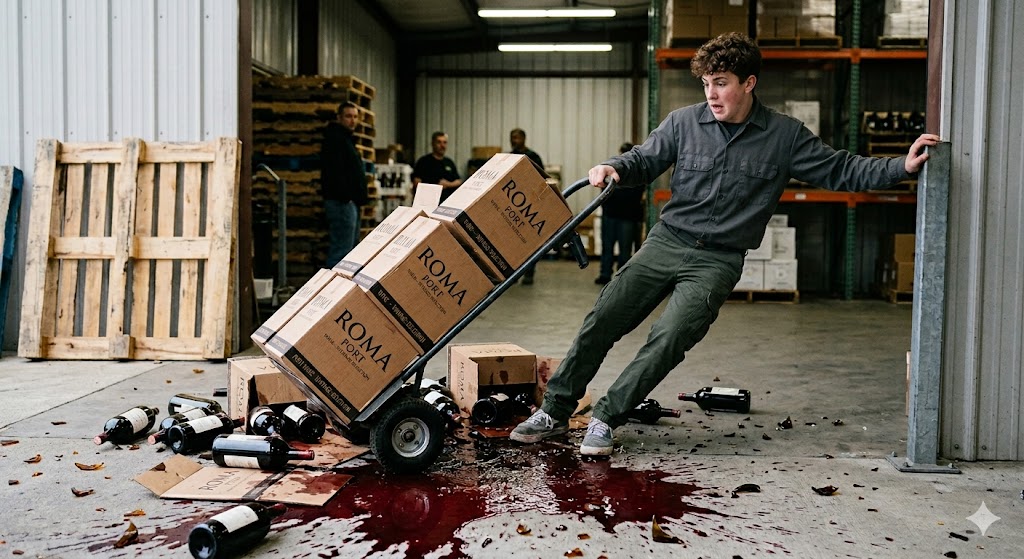
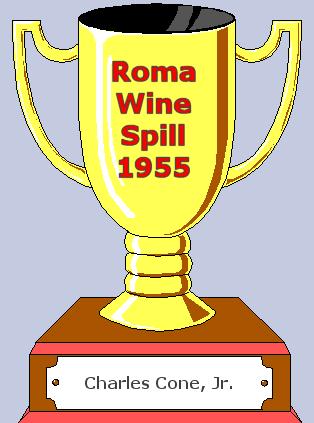
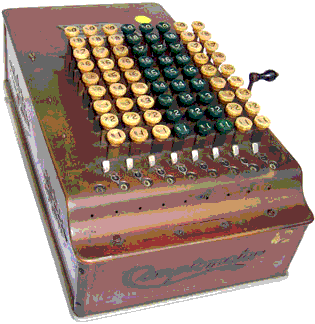
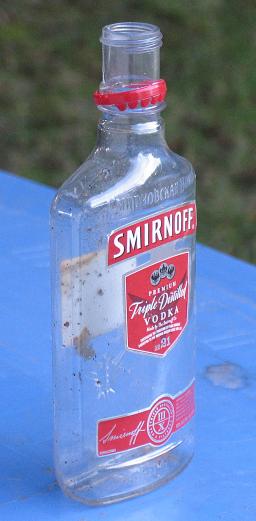
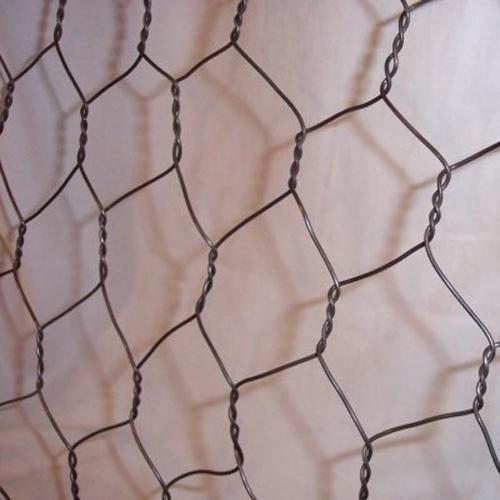

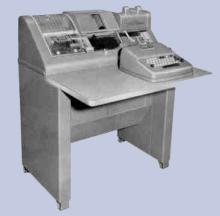
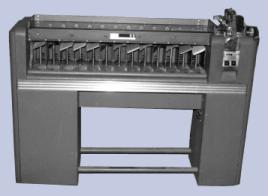
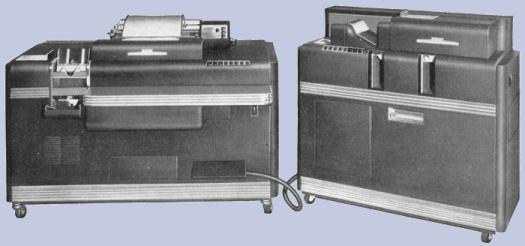
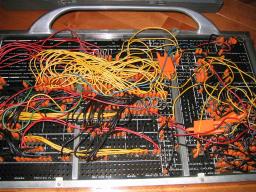
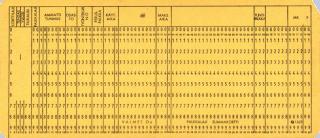
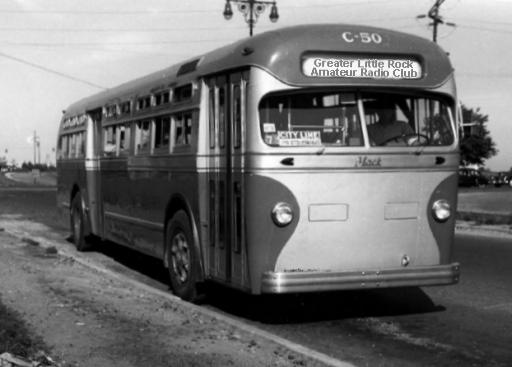
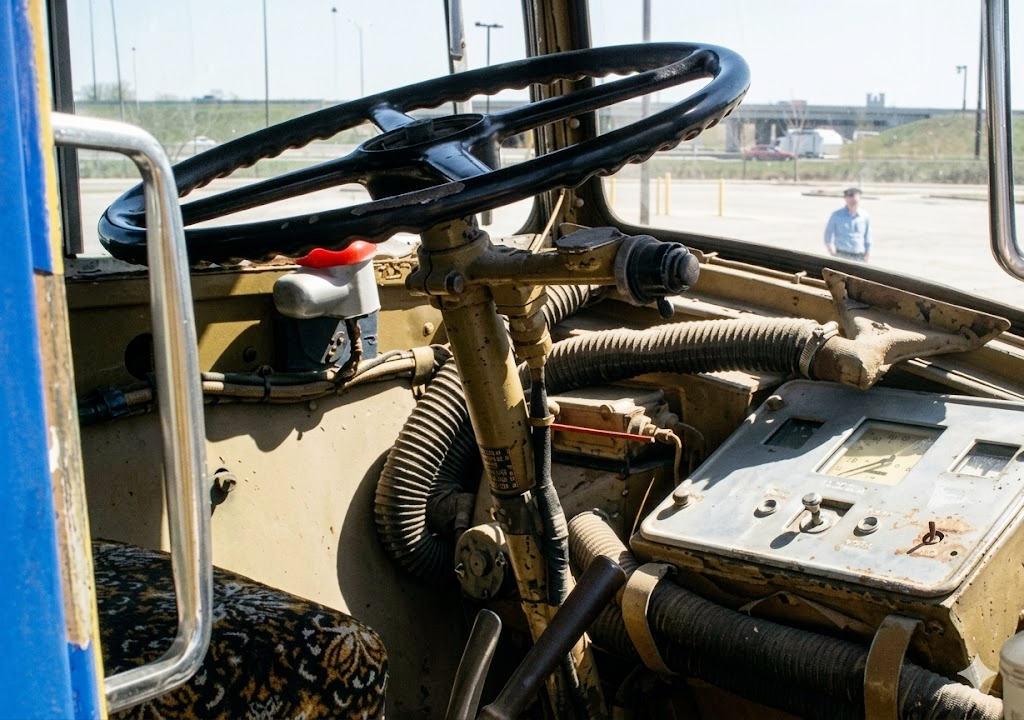
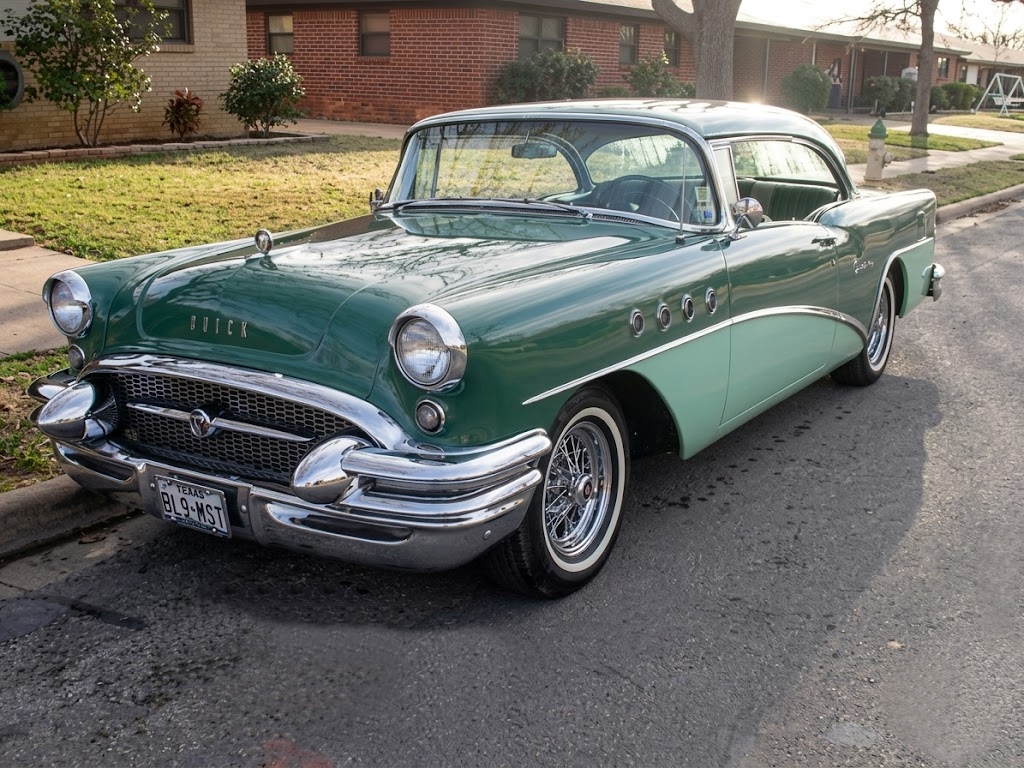
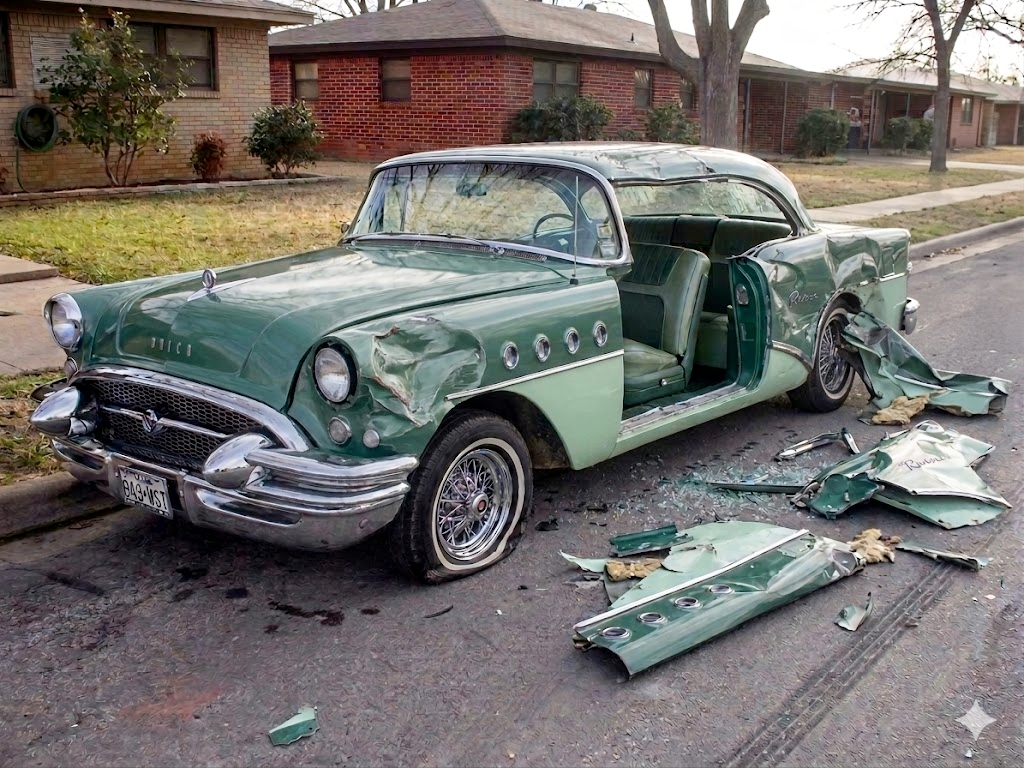
 . Almost all the body skin on the left side had been scraped off by the protruding doors of the bus. And, yet, the bus is still running 40MPH down the hill.